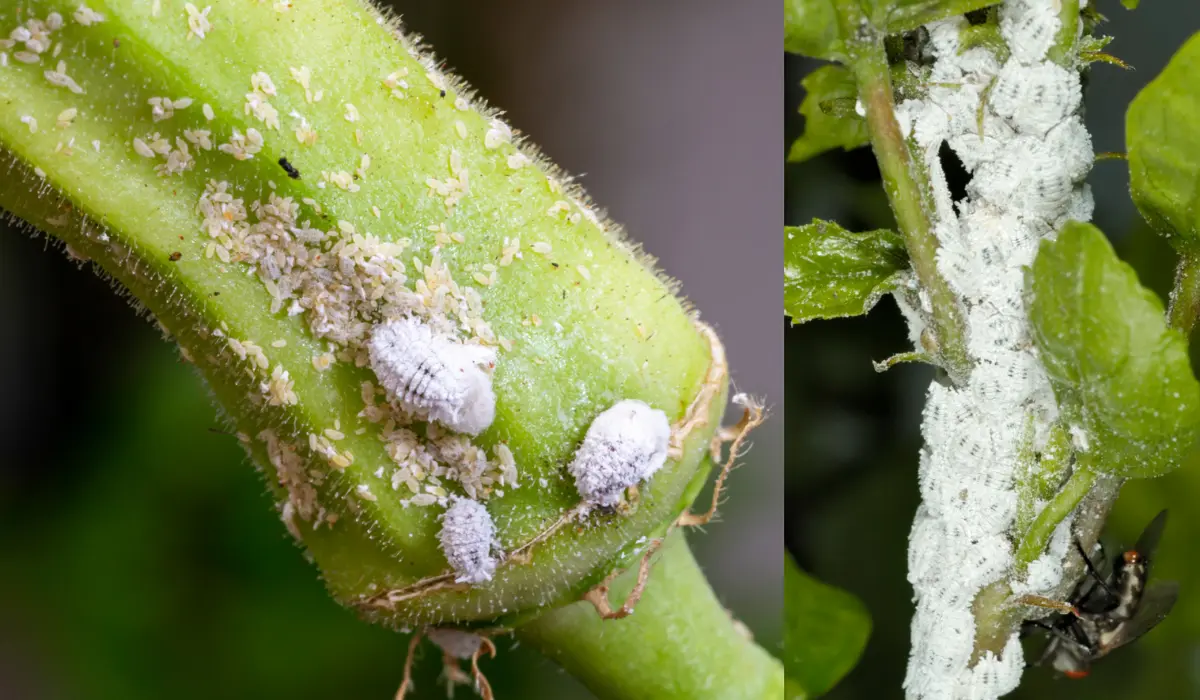
I’ve battled mealybugs more times than I can count, and I know firsthand how quickly they can take over a garden. These tiny white pests may look harmless at first, but once they multiply, they weaken plants, spread disease, and invite other problems like ants.
Instead of relying on harsh chemical pesticides that can damage soil and beneficial insects, I turn to homemade remedies that work just as effectively without compromising the health of my garden.
What Are Mealybugs?
Before I share my go-to ingredients, it’s important to understand what mealybugs are and why they’re so persistent. Mealybugs are small, soft-bodied insects that hide in leaf joints, under stems, and even around roots.
They cover themselves in a cottony white wax that protects them from predators and makes them tough to control with water alone.
Their damage shows up in several ways. They suck sap from plants, leaving leaves yellow and wilted, and they excrete a sticky substance called honeydew.
This honeydew attracts ants and leads to sooty mold, a black fungus that coats leaves and blocks photosynthesis. Left untreated, a mealybug infestation can kill even healthy plants.
The key to eliminating them is consistency and precision. Since they reproduce quickly, one round of treatment is rarely enough.
Homemade remedies work because they disrupt the mealybug’s defenses, kill them on contact, and create conditions that make it harder for them to come back.
Ingredient 1: Neem Oil
Neem oil has become one of my most trusted tools against mealybugs. It’s extracted from the seeds of the neem tree and has natural insecticidal properties.
Unlike synthetic pesticides, neem oil doesn’t just kill on contact, it also interferes with the insect’s ability to feed and reproduce, which helps break the infestation cycle.
This makes it a powerful long-term solution, not just a quick fix.
To prepare neem oil at home, I mix one teaspoon of pure cold-pressed neem oil with a few drops of liquid dish soap in a quart of warm water.
The soap helps the oil mix properly with the water instead of floating on top. I shake it well and pour it into a spray bottle. When I spray it on affected plants, I focus on the undersides of leaves and around stems where mealybugs hide.
Consistent weekly applications usually wipe out the infestation within a few weeks.
The beauty of neem oil is that it’s safe for most plants and doesn’t harm beneficial insects if applied correctly. I usually spray in the early morning or evening to avoid sunburn on leaves.
The key is patience, neem oil works steadily, and while I don’t always see immediate results, the reduction in mealybugs becomes very clear after a few treatments.
Also Read: How to Hunt Tomato Hornworms with UV Flashlights
Ingredient 2: Isopropyl Alcohol (Rubbing Alcohol)
If I need a fast and effective solution, I reach for isopropyl alcohol. This is one of the few treatments that kills mealybugs instantly by dissolving their waxy coating and penetrating their soft bodies.
It’s especially handy for small infestations where I can spot-treat individual pests before they spread too far.
I typically use a cotton swab dipped in 70% isopropyl alcohol and dab it directly onto the mealybugs. Within minutes, they turn brown and die.
For larger infestations, I mix one part alcohol with three parts water, add a few drops of liquid soap, and spray the entire plant. This method not only kills visible bugs but also reaches hidden clusters that I might miss with a cotton swab.
Still, caution is important. Alcohol can sometimes damage delicate leaves, especially if it’s too concentrated. I always test a small section of the plant first and wait 24 hours to see how it reacts.
If there’s no damage, I move forward with a full application. Used carefully, alcohol has saved several of my plants from what seemed like hopeless infestations.
Ingredient 3: Soap and Water Solution
Sometimes the simplest ingredients are the most effective. A mild soap and water solution has been a classic remedy for generations, and I rely on it often to smother and weaken mealybugs.
The soap breaks down their protective coating, causing them to dehydrate and die. It also makes it harder for them to cling to leaves and stems.
To make the solution, I mix one tablespoon of liquid castile soap or fragrance-free dish soap with a quart of water. I avoid soaps with degreasers or additives since those can harm plants.
After shaking the mixture well, I spray it directly on the mealybugs, making sure to cover every corner of the plant. The trick is to repeat the treatment every few days until I no longer see signs of pests.
Soap sprays are most effective when used alongside other methods. For instance, I sometimes use soap and water to knock down the bulk of the infestation, then follow up with neem oil to ensure they don’t return.
It’s a gentle yet reliable solution that works for both indoor and outdoor plants.
Also Read: Eco-Friendly Ways to Get Rid of Earwigs from Your Garden
Preventive Practices to Keep Mealybugs Away
Treating mealybugs is only half the battle, the other half is prevention. Over the years, I’ve learned that healthy plants are less likely to suffer from infestations.
That’s why I focus on building strong soil, watering consistently, and providing enough light. Stress-free plants can resist pests much better than weak ones.
I also inspect my garden regularly, especially new plants, before introducing them. Quarantining new additions for a week or two has saved me from major headaches in the past.
Another strategy I use is encouraging natural predators like ladybugs and lacewings, which love feeding on mealybugs and keep their population in check.
Finally, I’ve found that pruning affected areas quickly helps prevent spread. Removing heavily infested stems or leaves keeps the bugs from traveling to healthy parts of the plant.
When combined with homemade sprays, these practices create a system that keeps my garden resilient against future outbreaks.
FAQs
Weekly applications are usually enough. For severe infestations, I sometimes treat every 3–4 days until I see improvement. Not if applied carefully. I spray early or late in the day and focus only on affected plants, minimizing risk to pollinators. Yes, especially if nearby plants are infested. Regular inspection and preventive care are essential to keep them away for good. How often should I apply homemade sprays?
Will these methods harm beneficial insects?
Can mealybugs return after treatment?