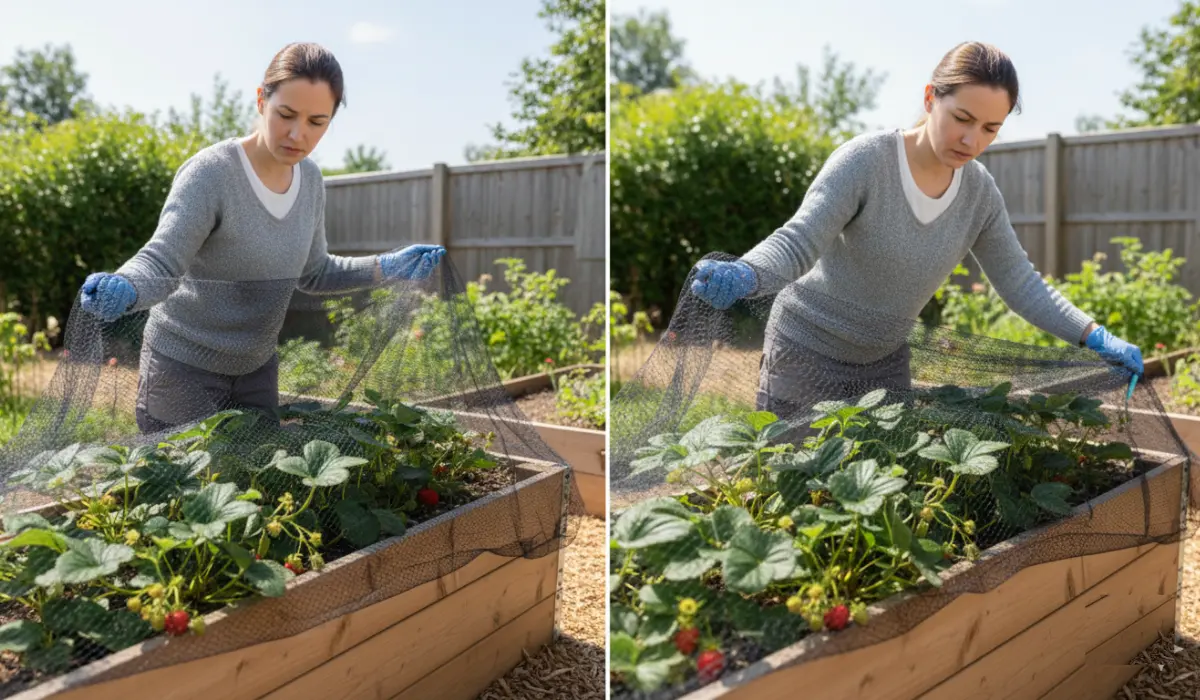
Growing strawberries has always been one of the highlights of my gardening season. There’s nothing like the taste of a sun-ripened berry straight from the patch.
The problem is, birds feel the same way. If I leave my strawberries unprotected, I can lose an entire harvest overnight. Over the years, I’ve tried and tested many strategies.
Some failed, some worked better than I expected. What I’ve learned is that protecting strawberries from birds isn’t about fighting nature, it’s about working smarter.
1. Physical Barriers
The most reliable method I’ve used to keep birds out is netting. It’s straightforward: create a barrier that physically prevents birds from reaching the fruit.
I prefer lightweight, UV-resistant garden netting with a fine mesh size, about 15–20 mm. It keeps out everything from blackbirds to sparrows without tangling or harming them.
When I set up netting, I always elevate it using hoops or stakes so it doesn’t touch the plants directly. If the netting lies on top of the fruit, birds will peck right through it.
I also make sure the edges are secured tightly to the ground with pegs or bricks, because a determined bird can slip under the smallest gap.
The mistake I see many gardeners make is reusing old, frayed netting or leaving it loose. That not only lets birds sneak through, but it can also trap them if they get tangled.
I replace my netting every couple of seasons and store it properly when not in use. Done right, this method is humane, effective, and surprisingly low-maintenance.
2. Garden Layout and Strategic Planting
Beyond barriers, the design of the strawberry patch itself plays a huge role in protecting it.
Birds are opportunists, they’ll target the easiest and most visible food source.
By mixing strawberries with other plants, I make the patch less obvious. Companion planting with flowers like marigolds or herbs like basil not only confuses birds but also helps deter pests and improve pollination.
Another strategy I’ve found useful is sacrificial planting. I grow a few berry bushes or other fruiting plants nearby that I don’t mind losing.
Birds naturally gravitate toward them first, sparing the strawberries. This works especially well with mulberries or sunflowers, which ripen around the same time.
Finally, I rotate my strawberry beds every couple of years. Birds remember food sources, and if the patch keeps moving, they take longer to find it again.
This rotation also improves soil health, reduces disease build-up, and gives me a fresh start with layout and protection.
Also Read: How to Effectively Use Coffee Grounds to Fertilize Plants in Your Garden
3. Visual Deterrents That Actually Work
Visual deterrents are a classic approach, but many people give up on them too quickly. The truth is, they work best when they’re varied and rotated often.
Reflective tape fluttering in the breeze, shiny old CDs hanging on strings, or pinwheels that spin with the wind all create flashes of light and sudden movement that unsettle birds.
I’ve also used balloon scare devices with big “predator eyes” painted on them. They look odd in the garden, but they’re surprisingly effective, at least for a while.
Birds eventually adapt, which is why I change things up every few days. I’ll move the tape, swap balloons for pinwheels, or add a new reflective object.
What I’ve found is that layering deterrents makes the biggest difference. A patch with just one visual device becomes predictable, but a patch with a mix of moving, flashing, and changing objects keeps birds second-guessing.
It’s not a perfect solution on its own, but combined with other strategies, it buys me a lot more strawberries.
4. Creating Distractions – Decoy Feeding Stations
Sometimes, the best defense is simply giving birds another option. I’ve set up bird feeders at the far end of my garden, well away from the strawberries.
I fill them with seeds or suet cakes, things birds love but won’t compete directly with the berries. This often diverts their attention and keeps them occupied.
The trick is not to overfeed. If I leave feeders constantly full, I attract more birds than I can handle. Instead, I use them strategically during peak strawberry season.
I’ll also place shallow water dishes nearby, because many birds peck at strawberries for moisture as much as for food. Giving them an easier source reduces pressure on the patch.
It’s a balancing act. I don’t want to invite a bird population explosion, but I also don’t mind sharing a little space.
By creating a distraction zone, I can protect my strawberries while still supporting local wildlife in a controlled way.
5. Raised Beds, Covers, and Frames
I’ve also had great success using raised beds. Elevating strawberries a foot or more above ground makes them less accessible and gives me more control over how I cover them.
Raised beds allow me to build simple frames from wood or PVC pipe, which I then drape with netting or garden fabric.
The beauty of frames is that they provide structure. Instead of netting collapsing onto plants, it forms a protective dome or tunnel.
This prevents birds from reaching through and also makes it easier for me to access the strawberries for watering and harvesting. I simply lift one side of the cover when I need to get in.
Combining raised beds with barriers is especially effective. I can use lightweight floating row covers early in the season to protect blossoms, then switch to netting once fruit sets.
This layered approach ensures that from flower to harvest, my strawberries are guarded.
Also Read: How To Naturally Attract Ladybugs in Your Garden to Fight Pests
6. Timing and Harvesting Practices
Even with the best barriers and deterrents, timing matters. I’ve learned not to leave ripe strawberries on the plant any longer than necessary.
As soon as they turn fully red, I pick them. Birds are quick to spot bright fruit, so the less time it spends exposed, the better.
I also make it a habit to harvest early in the morning. Many bird species feed most actively after sunrise. By collecting ripe berries first thing, I reduce the temptation. If I wait until the afternoon, I’m often too late.
Another tactic I use is succession planting. By staggering when different patches ripen, I spread the harvest over weeks instead of all at once.
This keeps birds from overwhelming a single area and ensures I always get my fair share. Timing, more than anything, teaches me to stay one step ahead.
FAQs
For small spaces, cloches, mesh cages, or even fine laundry bags over pots work well. Compact netting solutions are your best bet. Yes, some gardeners use predator calls or ultrasonic devices. They can work for a while, but like visual deterrents, birds adapt, so rotate methods regularly. A mesh size of 15–20 mm is ideal. It’s small enough to keep sparrows out but still large enough to avoid trapping them. How do I protect strawberries if I only have a small balcony or patio garden?
Can I use sound deterrents for birds, and are they effective?
What’s the best netting size for keeping out small birds like sparrows?