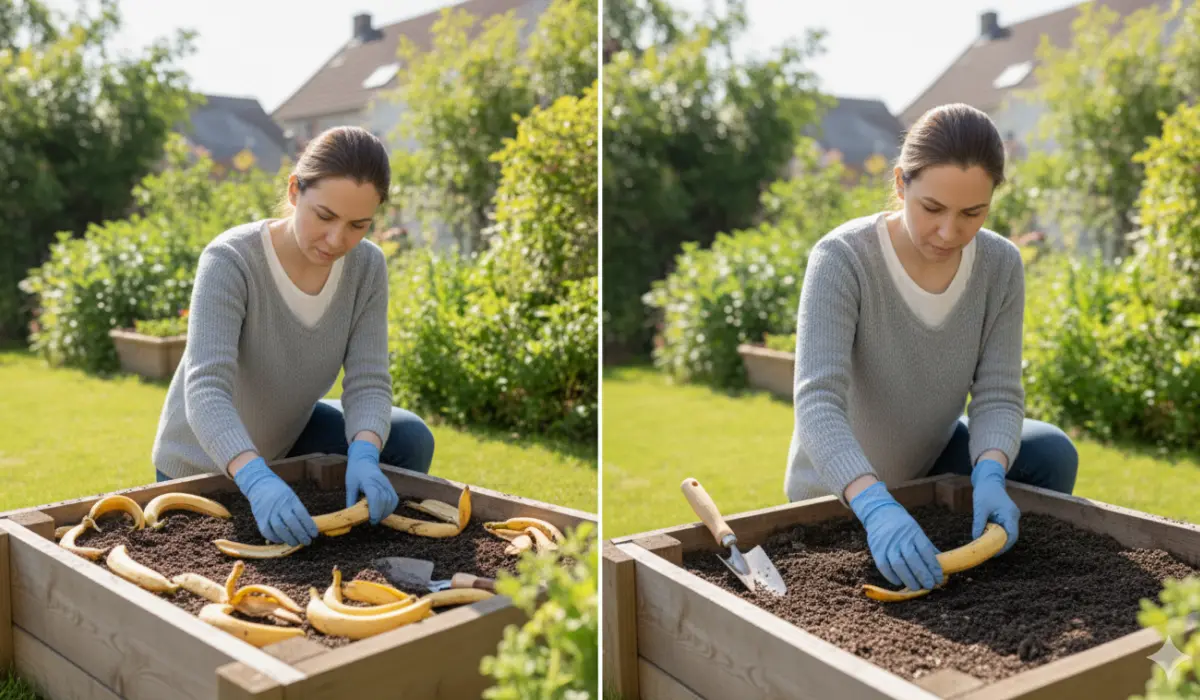
Most people toss banana peels into the trash without a second thought, but in my garden, they’re one of the most valuable natural resources I use.
Over the years, I’ve experimented with different ways to recycle banana peels, and the results have been impressive. From strengthening my soil to giving my plants an extra growth boost, banana peels have become an essential part of my gardening routine.
Let me walk you through the seven smart ways I use banana peels and why they work so well.
1. Compost Booster
When it comes to composting, banana peels are one of my favorite quick-acting ingredients. They’re packed with potassium, phosphorus, calcium, and trace minerals that most garden plants thrive on.
Unlike tougher materials such as woody stems or corn cobs, banana peels break down quickly, so they jumpstart the composting process.
I like to chop my banana peels into smaller pieces before tossing them into my compost bin. This gives microbes more surface area to work on and speeds up decomposition.
If I leave them whole, they still break down, but it takes longer, and sometimes they attract flies. Mixing the peels with “brown” material like dried leaves or shredded cardboard keeps the compost balanced and prevents it from getting too slimy.
By the time my compost is ready, the banana peels have fully broken down and turned into rich, dark humus.
This enriched compost helps my plants stay strong throughout the growing season, and I love knowing that something as simple as a peel plays such an important role in soil health.
2. Direct Soil Amendment
Another simple way I use banana peels is by burying them directly into the soil near my plants. This is especially useful when I’m preparing a bed for heavy feeders like tomatoes, roses, or squash.
As the peels decompose underground, they release nutrients slowly and consistently, right where the roots need them.
The trick is not to bury them whole. A whole peel takes longer to break down and sometimes attracts raccoons or other animals. Instead, I chop or tear the peel into smaller pieces and dig them a few inches into the soil.
This way, they decompose more evenly, and the nutrients are less likely to leach away before the plant can use them.
I’ve found that plants fed with this method often develop sturdier stems and greener foliage. The slow-release nature of the peel ensures the nutrients are available over time, unlike synthetic fertilizers that can cause sudden spikes followed by depletion.
Also Read: How to Turn This Simple Herb Into a Fresh Home Air Freshener
3. Liquid Banana Peel Fertilizer
For container plants and seedlings, I often make what I call “banana peel tea.” It’s a simple liquid fertilizer that’s easy to prepare.
I soak banana peels in a jar of water for two to three days, sometimes blending the softened peels into the water for extra potency. The result is a nutrient-rich liquid that my plants absolutely love.
I pour this solution at the base of my plants about once a week, especially during their active growing phase. Because it’s liquid, the nutrients get to the root zone faster than solid peels would.
I’ve noticed that seedlings respond especially well, showing faster root development and more vigorous early growth.
This method is also a lifesaver for potted plants, which have limited soil volume and need frequent nutrient replenishment. The banana peel tea keeps them nourished without overwhelming them the way chemical fertilizers sometimes can.
4. Banana Peel Mulch
Mulching is one of the best things you can do for soil health, and banana peels can play a role here, too. I shred or chop the peels and spread them beneath my usual layer of mulch.
As they break down, they provide a steady trickle of nutrients to the soil while the mulch layer above keeps everything tidy.
This method has a double benefit: it reduces evaporation from the soil and enriches it at the same time. I’ve noticed healthier earthworm activity in areas where I’ve used banana peel mulch, which tells me the soil ecosystem is thriving.
Earthworms help pull the nutrients deeper into the soil and improve aeration.
To avoid odors or pests, I always make sure the peels are well covered with dry mulch like straw, wood chips, or shredded leaves. This creates a balanced environment where the banana peels can decompose without becoming a magnet for flies.
5. Pest Deterrent and Trap
Banana peels have another unexpected use: pest control. Aphids and fruit flies are drawn to the sugars in banana peels, which makes them a great natural lure.
I sometimes place small pieces of peel near problem areas to pull aphids away from my plants. Once they gather, I dispose of the peel and the pests with it.
For fruit flies, I drop a bit of peel into a jar with a splash of vinegar and cover it with plastic wrap punched with tiny holes. The flies crawl in but can’t get out, making this a simple and non-toxic trap. I find it especially useful around compost bins or fruit trees.
Once I’m done using the peel as a lure, I don’t throw it away. Instead, I bury it in the soil so its nutrients go back into the garden. That way, even when a peel’s first job is pest control, it eventually feeds the soil too.
6. Seedling Starter Boost
When I’m potting up seedlings, I like to mix chopped banana peels directly into the potting soil. This gives young plants a gentle, organic nutrient source right from the start.
It’s not too strong, so there’s no risk of burning tender roots the way chemical fertilizers might.
Tomatoes and peppers are two crops that especially benefit from this method. They’re heavy feeders, and the phosphorus in the peels helps support early root and flower development.
By the time the plants are large enough to be transplanted into the garden, they already have a nutrient boost behind them.
For seedlings that grow in trays, I sometimes place tiny strips of peel at the bottom of each cell before filling with soil. By the time roots reach that layer, the peel is already decomposing and releasing nutrients.
It’s a small trick, but it makes a noticeable difference in how strong the seedlings look.
Also Read: Grow These 5 Plants in Your Yard to Create Privacy Without the Need for Expensive Fences
7. Banana Peel Vinegar for Acid-Loving Plants
Some plants prefer slightly acidic soil, and banana peel vinegar is a gentle way to provide that. I make it by fermenting banana peels in water with a little sugar for about a week, then straining the liquid.
The result is a mild vinegar rich in minerals.
I dilute this banana vinegar heavily, about one part vinegar to five parts water, before applying it around acid-loving plants like blueberries, hydrangeas, or azaleas.
Used sparingly, it lowers the pH just enough to keep these plants happy without risking soil damage.
The first time I tried this, my blueberry bushes responded with more vigorous growth and darker leaves. Since then, I’ve kept it as a regular part of my routine.
It’s a sustainable, low-cost way to fine-tune soil acidity while still recycling waste.
FAQs
In warm, moist soil, chopped peels break down within two to three weeks. If left exposed, they can. Burying or covering them with mulch prevents this. Yes, though acid-loving plants may benefit more from banana peel vinegar than raw peels. How long do banana peels take to decompose in the garden?
Do banana peels attract animals or pests?
Are banana peels safe for all types of plants?