Few things frustrate me more than pulling up a row of carrots I’ve nurtured for months only to find them riddled with tunnels from carrot fly larvae.
It feels like all the watering, thinning, and weeding were wasted. I’ve been there, and I’ve learned the hard way that carrot fly isn’t just a minor nuisance, it can wipe out an entire harvest.
Over the years, I’ve refined methods that keep this pest at bay, and I want to share them so you can grow crisp, sweet, and pest-free carrots with confidence.
What is Carrot Fly?
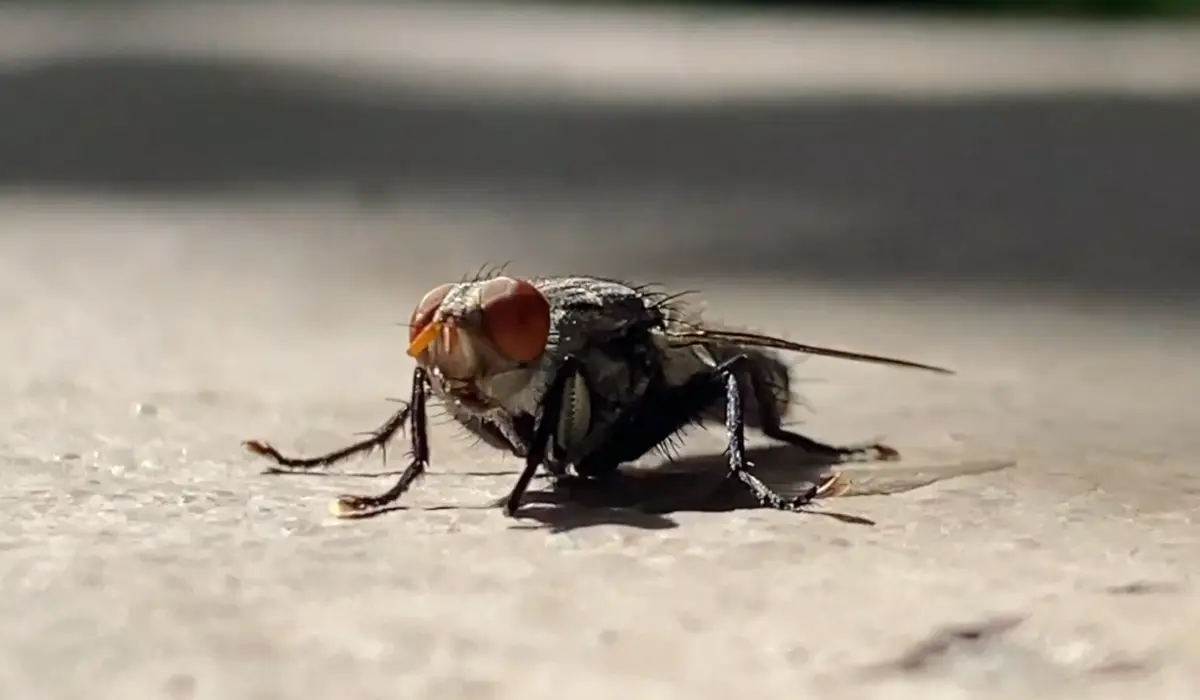
Carrot fly (Psila rosae) is a tiny but persistent pest, and its damage is far more serious than its size suggests. The adult fly looks harmless, slim, dark, and low-flying, but its real threat comes from the eggs it lays at the base of carrot plants.
When those eggs hatch, the larvae burrow into the soil and attack the roots, creating rust-colored tunnels and ruining both flavor and texture.
Their lifecycle is sneaky. There are usually two to three generations a year, depending on the climate. The first wave arrives in spring when temperatures rise, then a second flush appears in mid-summer, sometimes even stretching into autumn.
This means they’re present during the very months we’re sowing and growing carrots. Because the larvae live underground, you rarely notice them until it’s too late.
The first sign I usually spot isn’t the larvae themselves but the plants’ response. Carrot leaves may wilt or turn a reddish-purple at the edges.
Pulling up a root reveals the worst: tunnels, rot, and sometimes a foul smell. Understanding their behavior and knowing when they’re most active has been key to planning my defense.
Also Read: How to Treat Powdery Mildew in Muskmelon – A Step-By-Step Guide
Why Prevention Matters More Than Cure
I learned early on that once carrot fly larvae are inside the roots, there’s no salvaging the crop. Unlike pests that can be washed off or sprayed away, these larvae are shielded within the very part we’re trying to eat.
That’s why prevention is absolutely non-negotiable. If you wait to react after spotting damage, the battle is already lost.
Shifting my mindset from “damage control” to “damage prevention” was a turning point. Instead of scrambling to rescue crops, I plan my entire carrot season around keeping carrot fly out in the first place.
This means thinking ahead about planting times, protective measures, and how my garden layout affects pest pressure.
I often remind fellow gardeners: the effort you put in at the start pays off exponentially later. Carrot fly doesn’t forgive mistakes, but with proactive steps, you can harvest clean, healthy roots year after year.
Prevention isn’t just a strategy, it’s the only real solution.
Strategic Crop Placement and Timing
One of carrot fly’s quirks is that it doesn’t fly very high, usually no more than about 18 inches above the soil. This means raised beds or tall containers give me an edge.
By lifting the crop off the ground, I’ve significantly reduced the number of eggs laid around my plants. It’s a simple adjustment with a big payoff.
Timing also plays a critical role. Carrot fly activity peaks in spring and again in late summer. By avoiding sowing during those windows, I cut down exposure.
For instance, I’ll often sow early in March under protection or wait until late June for a second round. Both timings dodge the worst of the egg-laying periods, giving the crop a head start.
Succession sowing has been another valuable tactic. Instead of planting all at once, I stagger my sowings. This way, even if one batch suffers some damage, others escape the worst. It spreads the risk and keeps my carrot supply steady throughout the season.
The Role of Companion Planting
Over time, I’ve come to appreciate the power of companion planting. Carrot fly finds its host by smell, homing in on the distinctive scent of carrot foliage.
Planting strong-scented neighbors like onions, garlic, or leeks confuses the fly and makes it harder for them to zero in on carrots. In my garden, alternating rows of carrots and alliums has made a visible difference.
The beauty of companion planting is that it isn’t just about pest control. Onions deter carrot fly, but carrots also benefit onions by repelling onion fly, a win-win.
Plus, mixing crops adds biodiversity to the soil and creates a more resilient garden ecosystem overall.
I’ve had the most success by planting carrots alongside shallots and chives, which require similar soil conditions. It’s not a silver bullet, but it adds another protective layer.
The goal isn’t just to mask the smell but to build a multi-layered defense system.
Barriers and Physical Protections
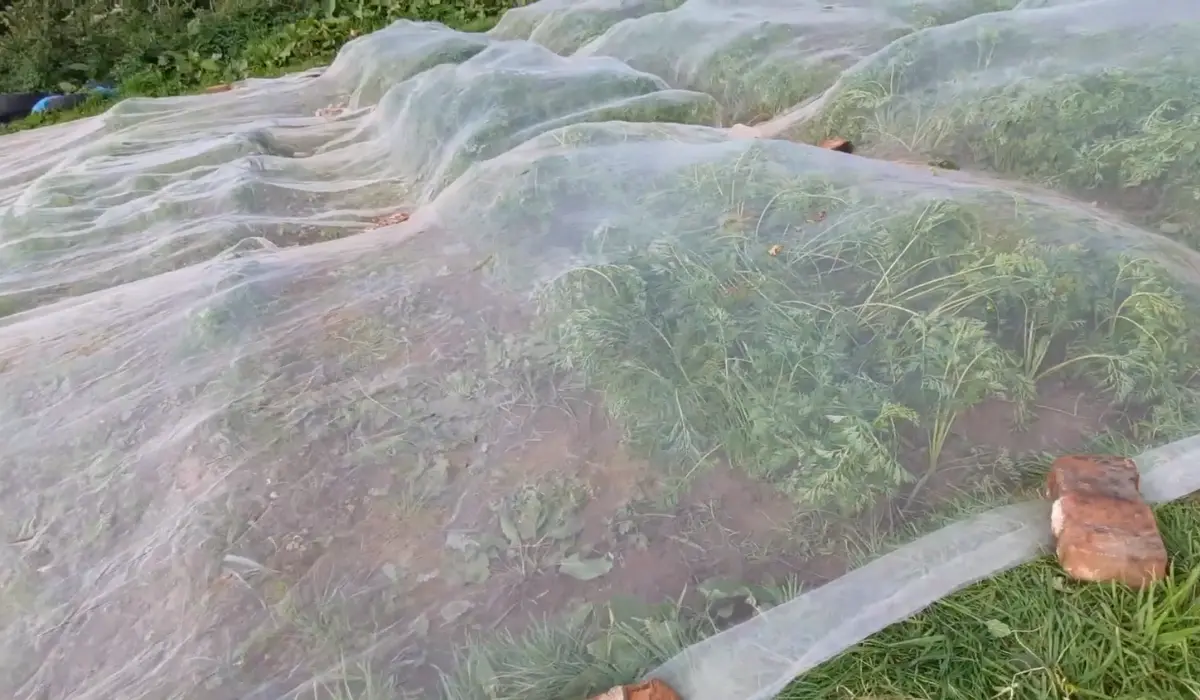
Even with careful timing and companions, I still rely on physical barriers as my strongest line of defense. Fine mesh netting or horticultural fleece creates an impenetrable shield that carrot fly simply can’t bypass.
The trick is choosing a mesh with holes small enough to block them, around 0.6mm is ideal. Anything larger risks letting them through.
Setup is everything. I make sure the barrier stands at least 18 inches tall, with edges securely buried or weighted down. Any gaps, even small ones, can become entry points.
It’s a bit of work to set up, but once it’s in place, I can relax knowing my crop is safe underneath.
Through trial and error, I’ve found EnviroMesh lasts longer and allows better airflow compared to fleece, which can get damp and heavy.
Either works, but durability matters if you plan to reuse it season after season. A well-built barrier has saved my carrots countless times.
Soil Health and Crop Rotation
Healthy soil is often overlooked in pest management, but it plays a huge role. When plants are strong, they withstand stress better, even pest attacks.
By adding compost and organic matter regularly, I keep the soil rich and full of beneficial microbes that help plants resist disease.
Rotation is another critical practice. Carrot fly larvae can overwinter in the soil, waiting for the next carrot crop. If I sow in the same spot year after year, I’m practically inviting them back.
By rotating carrots with unrelated crops, like brassicas or legumes, I break the cycle and reduce pest pressure.
I also cover bare soil with green manures or mulch to maintain structure and fertility. Over time, I’ve noticed that healthier soil not only supports better crops but also attracts more beneficial predators that keep pests in check.
It’s a long-term investment that pays off across the garden.
Also Read: How to Treat Yellow Mosaic Virus in Soybeans
Natural Predators and Biological Controls
Nature offers powerful allies against carrot flies if we know how to support them. Ground beetles, for example, feed on larvae in the soil.
By avoiding chemical sprays and providing habitat like log piles and mulched beds, I encourage these natural predators to thrive.
Parasitic wasps are another unseen helper. They may be tiny, but they target and kill fly larvae effectively. Encouraging flowers like dill, fennel, and yarrow provides nectar to sustain them. I think of it as creating a neighborhood that predators want to live in.
For more direct intervention, I’ve used nematodes, microscopic worms that actively seek out and kill carrot fly larvae underground.
They’re applied through watering, and while not always necessary, they provide an extra layer of security in bad years. Combined with other methods, they help tip the balance in my favor.
Mindset of an Observant Gardener
Over the years, I’ve realized that observation is my strongest tool. Carrot fly doesn’t announce itself, so I make a habit of checking plants closely, especially during known risk periods.
Subtle signs like discolored leaves often reveal a problem before it spreads.
I also keep records: sowing dates, pest outbreaks, even weather notes. Patterns emerge when I look back, and that knowledge informs my future planting decisions.
It turns trial and error into a learning curve instead of repeated mistakes.
Above all, I’ve learned not to get discouraged. Carrot fly is persistent, but so am I.
Each season teaches me something new, and with every adjustment, my harvests improve. Gardening is about resilience, for the plants and for me.
FAQs
At least 18 inches tall, with edges sealed to the ground, is usually effective. Not really. Because the larvae live inside the roots, surface sprays do little good. Mildly damaged carrots can be trimmed and eaten, but badly tunneled ones are best discarded. Typically from spring through autumn, with peaks in May–June and August–September. How high should barriers be to keep carrot flies out?
Are chemical pesticides effective against carrot fly?
Can I still eat carrots damaged by carrot fly?
How long does the carrot fly season last?