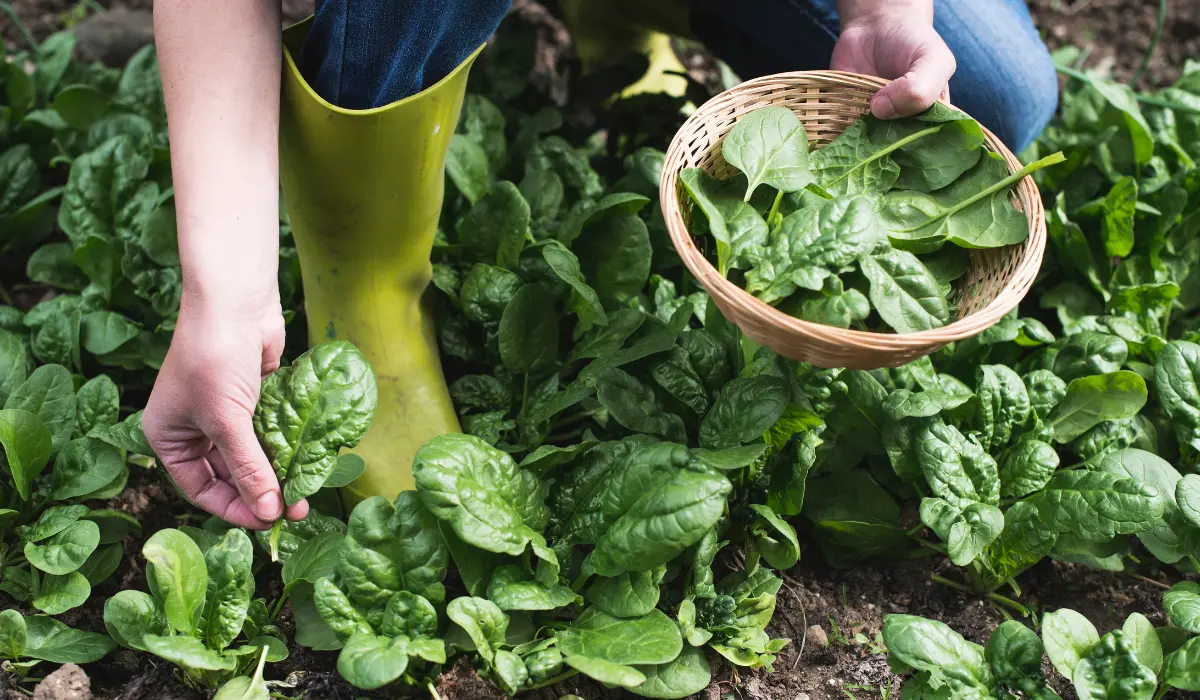
As a gardening expert, I’ve learned that harvesting spinach is more than just picking leaves, it’s about timing, technique, and care.
Spinach is one of the most rewarding greens to grow because it produces quickly and generously, but only if you handle it the right way.
If you harvest too aggressively, you risk damaging the plant and cutting its productivity short. Today, I want to share the methods I use to ensure that every spinach harvest is abundant while keeping the plants healthy for weeks of continued growth.
Know Your Spinach Growth
Spinach grows in a rosette pattern, which means the leaves radiate outward from a central crown at the base. This crown is the life force of the plant.
If it’s damaged, the plant cannot regenerate properly, and your harvest will end prematurely. That’s why knowing where the leaves emerge and how the plant directs its energy is key to harvesting without harm.
I often see beginners pluck spinach by pulling upward at the base or cutting across the crown. While it might seem harmless, this practice disrupts the plant’s growth cycle.
Once the crown is cut or crushed, spinach cannot recover. Instead, the goal is to leave the crown intact while carefully removing only the mature leaves around it.
The beauty of spinach lies in its resilience, when you harvest it correctly, it responds by producing new flushes of leaves. But this only happens if the crown is protected.
Think of the crown as the “engine” of the plant. Treat it with respect, and it will reward you with harvest after harvest.
Also Read: Grow These 5 Plants Close to Your Cucumbers If You Want Bigger Yields
Timing the First Harvest
Timing is one of the most overlooked parts of spinach harvesting. If you harvest too early, the plant doesn’t have enough leaf surface to photosynthesize, and it stalls in growth.
If you wait too long, the leaves toughen, and the plant may bolt, sending up a flower stalk that ends the harvest season.
I usually recommend waiting until the leaves are at least four inches long before taking the first harvest. At that size, they’re tender enough for salads but large enough that the plant can still photosynthesize efficiently.
If the weather is warming quickly, I try to harvest sooner to get the best quality leaves before the plant senses the heat and prepares to bolt.
The season matters, too. In spring and fall, spinach thrives in cooler temperatures, and growth is steady. But during unpredictable weather shifts, maturity can come faster than expected.
That’s why I walk through my garden daily, checking leaf size and overall plant vigor to know exactly when the first harvest should begin.
The Right Harvesting Technique
When it comes to technique, the rule is simple: harvest the outer leaves and leave the inner ones alone. The young leaves in the center are the future growth of the plant.
By picking from the outside in, you give the plant time to keep producing without interruption.
I like to use clean, sharp scissors or a small knife for harvesting, especially when I want a precise cut close to the stem. That said, I also hand-pick when working with tender leaves.
The important part is to avoid yanking or twisting, as that can tear tissue and leave the plant vulnerable to disease. Clean cuts are healthier for the plant and also keep your harvested spinach looking fresher.
Gentle handling goes a long way. Spinach is delicate, and rough harvesting can bruise leaves or stress the plant. I treat each harvest as a routine checkup, removing mature leaves, scanning for pests, and making sure the crown remains untouched.
This method not only extends the life of the plant but also ensures the spinach I bring into the kitchen is in top condition.
Encouraging Continuous Growth
Spinach is generous when managed correctly, and harvesting is one of the best ways to stimulate new growth. By removing mature leaves, you signal the plant to push out new ones. This “cut-and-come-again” method turns a single planting into a long, rolling harvest.
But continuous growth requires balance. If you strip too many leaves at once, the plant doesn’t have enough surface area to photosynthesize and fuel recovery.
I aim to take no more than a third of the plant’s leaves in one session. This keeps it strong enough to bounce back quickly.
After each harvest, I always give the plants a good watering and, if needed, a light feeding with compost tea or a nitrogen-rich fertilizer.
Moist soil and steady nutrition support regrowth, and healthy plants can give me weeks, even months, of harvests. Without this aftercare, spinach can stall, leaving you with small, slow-to-grow leaves.
Extending the Harvest Season
One of the joys of spinach is that it can be coaxed into producing well beyond its natural window. Staggering plantings every two to three weeks means I always have new spinach coming up while older plants are being harvested.
This method spreads the harvest across the entire season instead of giving me one overwhelming flush.
Weather is always a factor. Spinach prefers cool temperatures, and heat is its enemy. As spring turns into summer, I use shade cloth to keep the plants cooler and delay bolting.
In the fall, I extend the season with row covers or cold frames, protecting plants from frost and giving myself spinach well into the colder months.
Bolting is the greatest challenge when extending the season. Once the central stalk begins to rise, leaf production declines sharply, and leaves turn bitter.
When I see the first signs of bolting, I harvest generously and replant. This way, I maximize yield before the plant completes its natural cycle.
Common Mistakes and How to Avoid Them
I’ve watched many gardeners unintentionally cut their spinach harvest short with a few simple mistakes. The first is harvesting too early, which weakens the plant before it can establish itself.
Another is harvesting too late, which leads to tough leaves and reduces regrowth potential.
The most damaging mistake is cutting into the crown. I’ve seen it happen when gardeners try to grab large handfuls of leaves at once or use dull tools that crush rather than slice.
Once the crown is injured, that plant’s productivity is essentially over. A little patience and precision prevent this entirely.
Finally, some gardeners neglect their spinach after harvesting. The plant is working hard to recover, and without water or light nutrition, it becomes stressed. Stress leads to slower growth and makes the plant more vulnerable to pests.
I always say: harvesting is only half the job, caring for the plant afterward is what ensures success.
FAQs
Cut-and-come-again means harvesting outer leaves over time, while full harvest is cutting the entire plant. The first extends productivity; the second ends it. Yes, but do it quickly. The leaves will be smaller and more bitter, so it’s best to use them cooked rather than raw. Yes. Washing right away removes soil and insects. Dry the leaves gently and store them in a breathable container for freshness. What’s the difference between cut-and-come-again vs. full harvest for spinach?
Can I harvest spinach that has started to bolt?
Should I wash spinach leaves immediately after harvesting?