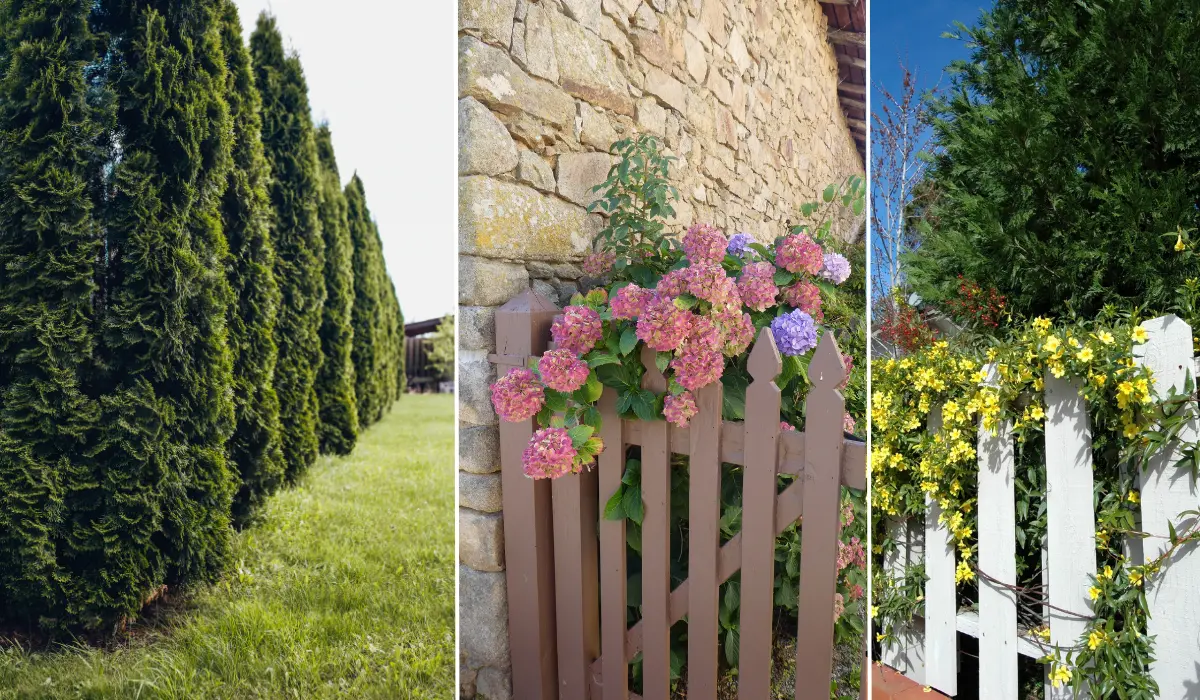
I often hear homeowners complain about how exposed their yards feel. They want privacy, but the price of a new fence can make anyone hesitate.
My answer is always the same: you don’t need a fence to get seclusion. Plants can create just as much privacy, if not more, while adding beauty, texture, and even wildlife benefits to your landscape.
Over the years, I’ve found five types of plants that work especially well for turning an open yard into a private retreat.
1. Evergreen Hedges (Thuja/Arborvitae)
When I want guaranteed privacy throughout the year, I always turn to evergreen hedges, especially arborvitae. Unlike fences that can feel stark, evergreens form a living wall that stays green even in the dead of winter.
They’re tall, dense, and incredibly reliable once established, which makes them one of my first recommendations to homeowners who want a no-nonsense screen.
The key with evergreens is proper spacing. Too close, and they compete with each other; too far apart, and you’ll be waiting years for them to fill in.
I usually plant them three to four feet apart for a continuous hedge, and I always emphasize the importance of watering during the first two years to encourage strong root systems.
Once established, they require surprisingly little attention beyond the occasional trim to maintain their shape.
I’ve also noticed that evergreens give off a sense of permanence that fences don’t. They soften property lines while still signaling boundaries, and they block not only views but also noise and wind.
With careful planning, an evergreen hedge becomes a privacy solution that lasts decades without ever feeling artificial.
2. Bamboo
Few plants deliver privacy as quickly as bamboo. I’ve seen it grow three feet in a single season, transforming an exposed yard into a hidden sanctuary almost overnight.
Its upright, column-like growth makes it ideal for narrow spaces where you need a vertical screen without sacrificing horizontal yard space.
That said, not all bamboo is created equal. Running bamboo spreads aggressively and can take over a yard if not contained.
I always recommend clumping varieties for homeowners who want the beauty of bamboo without the headache of constant control.
Clumping bamboo stays where you plant it, gradually thickening into a dense cluster that provides excellent coverage.
When properly maintained, bamboo feels almost architectural. The rustling sound of the leaves in the wind adds another layer of atmosphere, making your private yard not just hidden but soothing.
With the right choice of variety and good management, bamboo becomes one of the fastest and most striking privacy plants you can grow.
Also Read: This is the Most Effective Way to Stop Raccoons from Eating Your Crops
3. Ornamental Grasses (Miscanthus, Pampas, Fountain Grass)
Ornamental grasses offer a completely different take on privacy. Instead of creating a rigid wall, they form tall, flowing curtains that move with the breeze.
I’ve found that planting a row of grasses can create a sense of seclusion while still keeping the yard light, airy, and welcoming.
One of the best features of ornamental grasses is their seasonal beauty. In spring and summer, they fill out with lush, green blades.
By late summer, many varieties send up feathery plumes that add height and texture. Even in winter, the dry golden stalks provide visual interest while still offering some degree of screening.
This year-round appeal makes them one of my favorite low-maintenance privacy options.
I often use grasses as part of a layered design. Instead of relying on them alone, I’ll plant them in front of shrubs or along fences to soften hard edges.
They don’t provide the full coverage of a dense hedge, but they work beautifully when combined with other plants, adding movement and variety to the landscape while contributing to privacy.
4. Flowering Shrubs (Lilac, Hydrangea, Viburnum)
Privacy doesn’t have to come at the cost of beauty. Flowering shrubs like lilac, hydrangea, and viburnum give you both a solid screen of foliage and seasonal blooms that transform the yard. I’ve used these shrubs in countless projects, and they always bring smiles to homeowners when the first flowers appear.
Each shrub offers something unique. Lilacs are famous for their fragrance and springtime blooms. Hydrangeas add big, showy flowers in mid to late summer.
Viburnum can provide both flowers and berries, which attract birds. By mixing different varieties, I can create a hedge that evolves throughout the seasons, keeping the yard lively and colorful.
The real secret with flowering shrubs is placement. I prefer to stagger them rather than plant in a strict row. This creates depth and allows each shrub to shine without crowding the others.
Over time, they knit together into a lush privacy barrier that feels more like a living garden than a wall.
Also Read: 6 Ways To Protect Your Strawberry Patches From Birds
5. Climbing Vines on Trellises (Clematis, Honeysuckle, Ivy)
For smaller yards, where space is at a premium, climbing vines are my go-to solution. A trellis, pergola, or even an existing wall can become the framework for a green privacy screen that grows upward instead of outward.
I’ve transformed countless patios with vines that quickly cloak bare structures in green.
The choice of vine depends on the effect you want. Clematis offers large, colorful flowers that make a striking seasonal display.
Honeysuckle not only looks beautiful but also attracts hummingbirds with its sweet nectar. Ivy, on the other hand, provides dense, evergreen coverage that works year-round, though it requires more management to keep from becoming invasive.
I encourage homeowners to see vines as flexible privacy tools. They can be used to shield a deck from neighbors, block sightlines through a fence, or create a secluded corner in the yard.
With the right support structure, vines become one of the most space-efficient and versatile options for natural privacy.
FAQs
Climbing vines on trellises are the most efficient for small areas. Compact shrubs or clumping bamboo also work well without spreading too wide. Most need regular watering during the first year or two. After that, many, like evergreens and ornamental grasses, become low-maintenance with only occasional trimming. Yes, and I often recommend it. Combining shrubs, grasses, and vines adds texture, seasonal variety, and stronger coverage than relying on a single plant type. Which plants are best for small yards with limited space?
Do these plants require a lot of water or maintenance?
Can I mix different types of plants for a layered privacy effect?