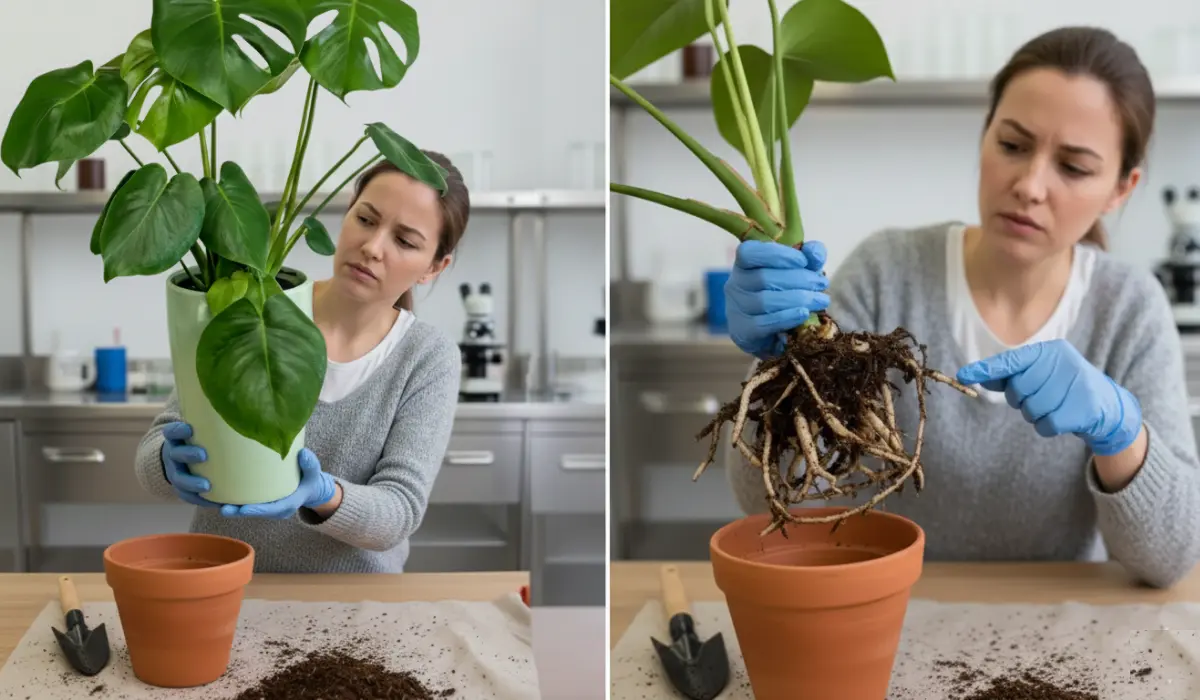
Monstera plants are stunning, with their large, split leaves bringing a touch of the tropics indoors. But nothing shatters that lush beauty faster than root rot.
It’s a problem that sneaks up on even experienced plant lovers, and if left untreated, it can kill a plant that’s taken years to grow.
Over time, I’ve learned not only how to rescue Monstera suffering from root rot, but also how to strengthen them against future issues.
Recognizing the Early Signs of Root Rot
The first step in saving a Monstera is knowing when something is wrong. When I see yellowing leaves that refuse to perk up after watering, I immediately suspect the roots.
Healthy roots deliver nutrients efficiently, so if the leaves look dull or start drooping even in good light, I take it as a red flag.
Black or brown spots that spread quickly are also a sign that the roots aren’t functioning properly.
But the clearest evidence comes from below the soil line. If I unpot the plant and find roots that are brown, mushy, or smell like decay, I know I’m dealing with rot.
Healthy Monstera roots should be firm and white, sometimes with a slight tan or green tint. The contrast between crisp, living roots and slimy, dead ones is obvious once you’ve seen it.
It’s also important not to mistake root rot for other problems. Overwatering stress without rot might cause temporary yellowing, but the roots remain firm.
Nutrient deficiency might create pale leaves, but it doesn’t make them collapse. Knowing how to separate these issues helps me act quickly before damage spreads.
Also Read: These 6 Strawberry Diseases Could Wipe Out Your Entire Strawberry Crop: Here is What to Do!
Why Root Rot Happens in Monstera
Root rot doesn’t appear out of thin air. Almost always, the underlying cause is excess moisture combined with poor oxygen flow in the soil.
Monsteras are tropical plants, but in the wild, their roots cling to trees and drain freely after rainfall. When we confine them to pots with dense soil and water too frequently, the roots suffocate, creating the perfect breeding ground for rot.
The type of pot and soil makes a huge difference. If I use a heavy mix designed for outdoor gardening, it holds too much water around the roots.
Likewise, decorative pots without drainage holes turn into swamps that trap excess moisture. Even if I’m careful about watering, poor soil and pot choices can set the stage for root rot.
Pathogens also play a role. Fungi like Pythium thrive in damp, oxygen-starved soil, spreading quickly once conditions are right. Once established, they attack weakened roots, breaking them down into mush.
That’s why prevention isn’t only about watering less, it’s about creating an environment where harmful microbes can’t take hold.
First Things First
When I discover root rot, the first thing I do is act fast. I gently remove the Monstera from its pot, shaking away as much soil as possible.
Sometimes I even rinse the roots under lukewarm water to see what I’m working with. Once exposed, it becomes clear which roots are salvageable.
Using sterilized scissors or pruning shears, I trim away every section of brown, mushy root. It feels harsh at first, but leaving decayed roots attached only invites more rot.
I make sure my tools are clean before each cut to avoid spreading pathogens. What I’m aiming for are healthy, white roots that can still absorb water and nutrients.
After trimming, I disinfect the remaining roots. A mild hydrogen peroxide solution works well, it kills bacteria and adds oxygen to the root zone.
Once the roots are clean, I set the plant aside to dry for an hour or two before repotting. That drying period helps reduce the chance of rot reappearing.
Choosing the Right Soil and Pot
Repotting a Monstera after root rot isn’t just about giving it fresh soil, it’s about creating the right environment for recovery. I always choose a light, airy mix that drains quickly.
A blend of potting soil, orchid bark, perlite, and a little activated charcoal creates the perfect balance. The bark and perlite add large air pockets, while charcoal helps keep the mix clean.
The pot itself matters just as much. I prefer terracotta pots because they breathe and wick away excess moisture, unlike plastic pots that trap it.
No matter the material, drainage holes are non-negotiable. I also avoid using cachepots without drainage unless I place a plastic nursery pot inside and remove it for watering.
By upgrading the soil and pot, I give the Monstera a healthier root environment. This step isn’t only about treating rot, it’s also about ensuring the plant won’t face the same conditions that caused the issue in the first place.
Adjusting Watering Practices
After treating root rot, I changed how I approach watering. I don’t follow a rigid schedule because conditions change with the season, pot size, and even where the plant sits in my home.
Instead, I always check the soil before reaching for the watering can. If the top two inches are still damp, I wait.
For accuracy, I sometimes use a moisture meter, but the finger test works just as well. Over time, I’ve also experimented with bottom watering, letting the soil soak from below so the roots take in only what they need.
This prevents me from accidentally dumping too much water at once.
Seasonal changes matter too. In winter, Monsteras slow its growth, so I water it far less than in summer.
By adapting my watering habits, I ensure the roots get enough hydration without ever sitting in stagnant moisture.
Also Read: What Will Happen If We Ignore the Threat of Bunchy Top Virus to Global Food Security?
Supporting Recovery After Treatment
A Monstera fresh out of surgery, so to speak, needs a gentle recovery period. I place it in bright, indirect light, never direct sun, which can stress weakened leaves.
Good airflow around the plant also helps keep the soil from staying too damp.
I resist the urge to fertilize right away. Roots need time to regrow, and adding fertilizer too soon can burn them. Instead, I wait until I see new leaf growth, which tells me the plant is ready to take in extra nutrients again.
During recovery, I watch closely for progress. When I see strong new roots forming or leaves unfurling, I know the plant is on the mend.
Root rot recovery isn’t instant, but with patience, a Monstera can bounce back beautifully.
Preventing Future Root Rot
Treating root rot once taught me that prevention is far easier than rescue. Now, I make it a habit to check my plants regularly. When repotting, I always inspect the roots, trimming anything suspicious before it turns into a larger problem.
I also refresh the soil every couple of years, since organic matter breaks down and compacts over time.
Old soil holds water more tightly, which is exactly what Monstera doesn’t need. A fresh, airy mix restores balance and reduces risks.
Most importantly, I’ve learned not to over-care for my Monstera. These plants thrive on attention, but too much water or fertilizer often does more harm than good.
By focusing on balance, enough light, the right soil, and smart watering, I keep root rot from becoming a recurring issue.
FAQs
Every 2–3 years is ideal, or sooner if the soil compacts or drainage slows down. Yes, a diluted solution (about 3% mixed with water) is safe for disinfecting roots during treatment. Underwatered leaves perk up quickly after watering, while leaves affected by root rot remain limp and discolored despite watering. How often should I repot my Monstera to avoid root rot?
Is hydrogen peroxide safe to use on Monstera roots?
What’s the difference between underwatering stress and root rot symptoms?