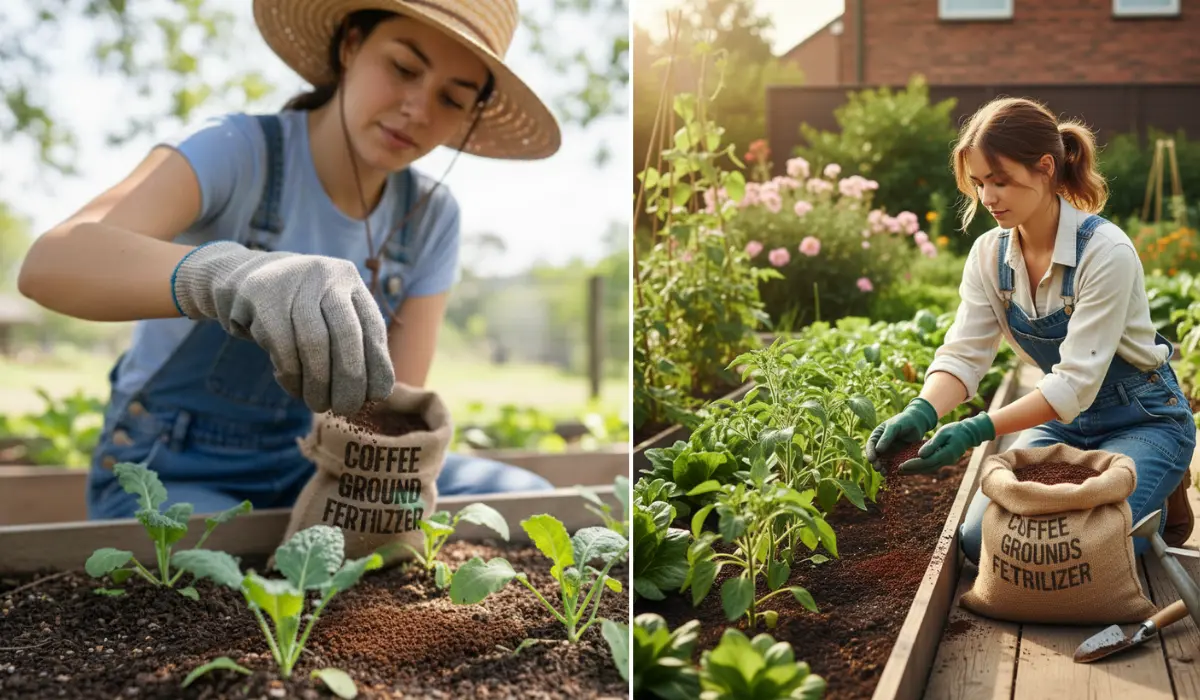
When I first started gardening, I hated the idea of throwing away used coffee grounds. They seemed too valuable to just dump in the trash.
Over time, I discovered that coffee grounds can be an incredible addition to the garden, but only if used correctly. Many gardeners either overdo it or apply them in ways that actually harm their plants.
Through trial, error, and plenty of muddy hands, I’ve figured out how to use coffee grounds effectively as a natural fertilizer, and today I want to share what really works.
Nutritional Value of Coffee Grounds
The first thing I learned was that coffee grounds are not a miracle fertilizer, but they do offer unique benefits. They contain a good amount of nitrogen, which is essential for leafy plant growth, as well as trace amounts of potassium, phosphorus, calcium, and magnesium.
These nutrients are released slowly, which means they enrich the soil over time instead of creating a sudden nutrient spike that fades quickly.
That slow release is actually a huge advantage in gardening. It helps create steady growth rather than the quick bursts you sometimes get with synthetic fertilizers.
Plus, the nitrogen in the grounds is particularly helpful for building strong, lush foliage in vegetables and ornamentals.
I noticed the difference most in crops like lettuce, kale, and spinach, where the leaves became darker green and healthier with regular applications.
At the same time, it’s important to recognize what coffee grounds are not. They don’t contain enough phosphorus or potassium to serve as a complete fertilizer, so I never rely on them alone.
Instead, I treat them as a valuable supplement, one piece of a bigger soil health strategy.
Also Read: How To Naturally Attract Ladybugs in Your Garden to Fight Pests
Fresh vs. Used Coffee Grounds: What’s the Difference?
One of the biggest misconceptions I see is that coffee grounds are universally acidic. The truth is more nuanced. Fresh, unused grounds are acidic, which can alter the pH of your soil if you use them in large amounts.
This can create problems for plants that prefer neutral or alkaline conditions.
Used coffee grounds, on the other hand, are much closer to neutral because most of the acidity ends up in your cup of coffee. That makes them much safer for widespread use in the garden.
I stick almost exclusively to used grounds, since they offer the benefits without throwing off soil balance. Occasionally, I’ll use fresh grounds on acid-loving plants like blueberries or azaleas, but I apply them sparingly.
Knowing this difference changed the way I garden. Early on, I made the mistake of dumping fresh grounds around tomatoes, thinking they’d love the nitrogen.
Instead, the plants turned yellow and struggled. Once I switched to used grounds and applied them in moderation, the results improved dramatically.
How Coffee Grounds Improve Soil Structure
Beyond nutrition, coffee grounds shine in the way they improve soil structure. Grounds are rich in organic matter, which is critical for soil health.
When incorporated into the soil, they help improve aeration, prevent compaction, and increase the soil’s ability to hold water without becoming waterlogged.
Another benefit I’ve seen firsthand is how coffee grounds encourage microbial life. Soil microorganisms break down organic matter, releasing nutrients and making them available to plants.
When I add coffee grounds, I notice earthworms moving into the soil more readily, which is always a good sign of a healthy underground ecosystem.
Over time, the cumulative effect is clear: looser, darker, healthier soil. My garden beds that receive regular additions of coffee grounds have a crumbly texture that roots love.
They also hold moisture better during hot summers, which reduces the amount of watering I need to do.
The Right Way to Apply Coffee Grounds
The way you apply coffee grounds matters as much as the amount you use. A common mistake is to dump thick layers directly onto the soil.
When wet, this creates a compacted, dense mat that prevents air and water from reaching plant roots. It can also foster mold growth, which is not ideal for your garden.
Instead, I either mix the grounds into the top few inches of soil or add them to my compost pile. When worked lightly into the soil, they blend with other organic material and decompose more evenly.
In compost, coffee grounds act as a “green” material, rich in nitrogen, which pairs beautifully with “brown” materials like dried leaves or cardboard.
Another method I like is mixing coffee grounds with mulch. I’ll combine them with shredded bark or straw before applying them around plants. This way, they don’t clump, and they break down slowly over time while still enriching the soil.
Which Plants Benefit Most (and Which Don’t)
I’ve found that some plants respond better to coffee grounds than others. Leafy greens like lettuce, kale, and spinach thrive with the added nitrogen, producing lush, tender leaves.
Root crops like carrots and beets also benefit because the improved soil structure helps roots grow straighter and stronger. Even flowers like roses seem to appreciate the added organic matter.
However, not all plants are good candidates. Tomatoes are notorious for reacting poorly if they receive too much nitrogen, as it leads to leafy growth at the expense of fruit.
I’ve also found that delicate seedlings can be stunted if exposed to concentrated amounts of ground too early.
In contrast, acid-loving plants like blueberries, camellias, and azaleas occasionally benefit from small amounts of fresh grounds, but moderation is key.
The lesson I’ve learned is to match the amendment to the plant’s needs. Coffee grounds are a tool, not a cure-all. By observing how each type of plant responds, I’ve been able to fine-tune my approach and avoid the pitfalls of blanket applications.
Combining Coffee Grounds with Other Amendments
Since coffee grounds aren’t a balanced fertilizer, I always combine them with other amendments. Compost is my favorite partner because it provides the phosphorus and potassium that grounds lack.
When layered correctly, coffee grounds as green matter, leaves or straw as brown matter, the compost pile heats up faster and breaks down more efficiently.
I also mix coffee grounds with aged manure when preparing vegetable beds. This combination balances nutrients beautifully and creates a rich environment for heavy feeders like squash and corn.
Over the years, I’ve learned that the key is diversity: no single amendment can do everything, but when combined, they build soil that supports long-term plant health.
Even when I use coffee grounds as mulch, I rarely apply them alone. I prefer to blend them with shredded leaves, grass clippings, or straw. This prevents clumping, ensures even breakdown, and adds a variety of nutrients to the soil.
Also Read: How to Plant, Grow, and Harvest Onions: A Step-by-Step Guide
Avoiding Common Mistakes with Coffee Grounds
As helpful as coffee grounds can be, there are mistakes that can set you back. The first is overuse. I’ve seen people dump buckets of grounds on their beds, only to watch their plants suffocate.
A thin, even layer or a compost blend is far more effective.
Another misconception I often hear is that coffee grounds repel pests like slugs or cats. In my experience, they don’t. While they may create a temporary barrier when dry, once wet, they lose any deterrent effect.
Relying on coffee grounds for pest control is a recipe for disappointment.
Finally, there’s the issue of mold. Coffee grounds decompose quickly, and if they’re piled up, they can develop a fuzzy layer of mold. While this mold isn’t usually harmful, it’s a sign that the grounds aren’t being broken down efficiently.
The solution is simple: mix them in with other organic matter or turn them into the soil.
FAQs
I add them as often as I have them, but always balance with enough brown material like leaves or straw to prevent a soggy pile. Not usually. Worms love them, but they don’t tend to attract rodents or insects if mixed into compost or soil. Used grounds are nearly neutral, so they won’t acidify the soil significantly. Fresh grounds are acidic, so use them sparingly and only on acid-loving plants. Yes, but only in moderation. I mix small amounts into potting soil or compost for houseplants, never large clumps on the surface. How often should I add coffee grounds to my compost pile?
Do coffee grounds attract pests to the garden?
Will coffee grounds make my soil too acidic?
Can indoor houseplants benefit from coffee grounds?