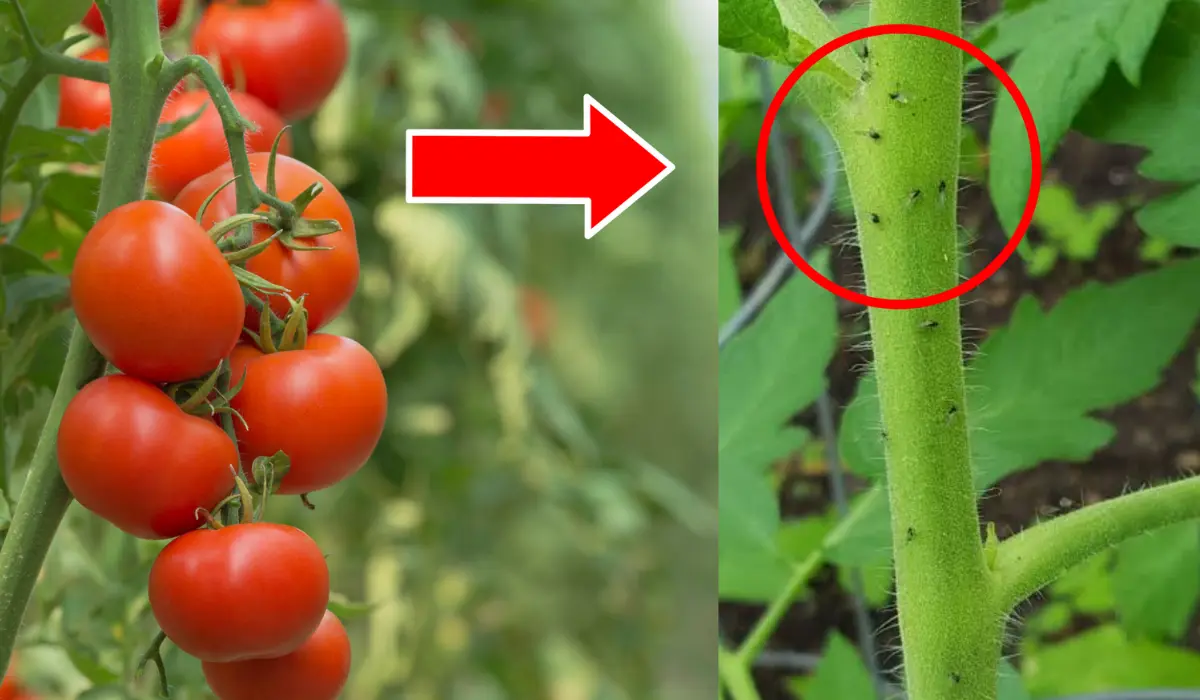
Growing tomatoes is one of the great joys of gardening, but few pests frustrate me more than black flies swarming around my plants.
They weaken the vines, reduce yields, and spread diseases if I don’t deal with them quickly. Over the years, I’ve tested sprays, sticky traps, and even chemical pesticides, but nothing has matched the effectiveness and simplicity of apple cider vinegar.
It’s safe, cheap, and remarkably good at cutting down black fly populations without harming my plants or the environment.
What Are Tomato Black Flies?
When gardeners talk about “tomato black flies,” they often mean small, dark-colored insects that swarm around the leaves and stems.
These pests are usually whiteflies, fungus gnats, or closely related sap-sucking insects that look like tiny black flies. Regardless of the exact species, the effect on tomato plants is the same: they suck out sap, weaken the leaves, and slow down the plant’s growth.
The real danger isn’t just cosmetic damage. Black flies transmit plant diseases through their feeding. They leave behind honeydew, a sticky substance that encourages mold growth on the leaves.
Once mold sets in, the plant’s ability to photosynthesize drops dramatically, leaving the plant even weaker. That’s why I never ignore even a small cluster of flies; left unchecked, they spread quickly from one plant to another.
The most frustrating part about these pests is how fast they multiply. A single female can lay hundreds of eggs on the undersides of leaves.
Within a week, larvae hatch and begin feeding. By the time I notice them, an infestation may already be underway. That’s why I focus on both controlling the adult flies and preventing the next generation from hatching.
Why I Prefer Apple Cider Vinegar Over Chemical Sprays
When I first faced a black fly invasion, my instinct was to grab a chemical pesticide from the store. It worked in the short term, but I soon noticed the side effects: fewer pollinators in my garden, declining soil health, and the unpleasant reality of spraying toxins where I grow food I eat.
That was enough for me to start searching for natural alternatives.
Apple cider vinegar quickly became my go-to solution. It works by attracting black flies with its strong scent, mimicking the smell of fermenting fruit.
Once they land on the vinegar, they get trapped and drown. This method doesn’t just reduce the adult population; it interrupts the reproductive cycle by eliminating the pests before they can lay more eggs.
The beauty of vinegar is its accessibility. I always have a bottle in the pantry, it’s inexpensive, and unlike chemical sprays, I don’t worry about it leaching into my soil.
It’s also safe for children, pets, and pollinators when used correctly. For me, this balance of effectiveness, safety, and sustainability makes it the clear winner over synthetic options.
Also Read: 3 Homemade Ingredients to Eliminate Mealybugs From Your Garden Forever
Setting Up Apple Cider Vinegar Traps the Right Way
The trick to using vinegar traps effectively is setting them up with care. I use a shallow container — even an old jar lid works — and fill it with apple cider vinegar.
To make it more effective, I add a single drop of dish soap. That small addition breaks the surface tension of the liquid, which prevents the flies from escaping once they land. Without soap, I’ve seen pests crawl right back out.
Placement matters just as much as preparation. I set my traps close to the base of tomato plants, where black flies are most active. If I’m dealing with a large infestation, I place multiple traps around the garden so no plant gets overlooked.
Within a day or two, I usually see dozens of flies caught in each trap, which reassures me I’m cutting down their numbers.
I also make sure to refresh the vinegar every few days. The scent fades over time, and the traps become less attractive once they’re filled with drowned flies.
A quick rinse and refill keep the traps effective throughout the season. With this simple routine, I’ve kept even stubborn infestations under control.
Preventing Black Flies from Returning
Traps are only part of the solution. I’ve learned that prevention is just as important as killing the flies I can see. One of the simplest preventive measures is improving airflow around tomato plants.
I prune regularly to avoid dense, crowded foliage where pests thrive. Better airflow not only deters flies but also reduces humidity, which discourages mold and other plant diseases.
Watering practices make a big difference, too. Overwatering creates the damp conditions that fungus gnats love, so I water only when the topsoil feels dry.
By targeting the base of the plant and avoiding splashing the leaves, I make the environment less inviting for pests. Healthy, well-drained soil goes a long way in keeping infestations at bay.
Finally, I encourage beneficial insects in my garden. Ladybugs, lacewings, and parasitic wasps are natural predators of black flies.
By planting flowers like dill, fennel, and marigolds nearby, I attract these allies and let them do part of the work for me. Vinegar traps handle the immediate problem, but building a garden ecosystem ensures long-term control.
Common Mistakes Gardeners Make with Vinegar Traps
Over time, I’ve noticed that many gardeners give up on vinegar traps too quickly because they make small but critical mistakes. The first is using the wrong vinegar.
White vinegar or rice vinegar lacks the same strong, fruity scent that apple cider vinegar has, which means fewer flies are attracted to it. Sticking with apple cider vinegar is essential.
Another common mistake is forgetting the dish soap. I can’t stress this enough: without soap, the flies can float on the surface and eventually escape.
A single drop is all it takes to ensure the trap works as intended. It’s such a simple detail, but it’s the difference between success and disappointment.
Finally, traps don’t work if they’re too far away from the problem. I used to place a single trap at the edge of my garden and wonder why I still had flies swarming my plants.
Now I position traps right next to the tomatoes, and I never hesitate to use multiple traps when the infestation is bad. Being strategic about placement makes all the difference.
FAQs
Every 3–4 days. The scent fades, and the liquid fills with trapped insects, so refreshing them keeps the traps effective. Not usually. They’re specifically attractive to flies, gnats, and similar pests. Bees and ladybugs rarely show interest in them. Yes. Setting traps early in the season catches the first wave of flies, which can stop a full infestation from developing. How often should I replace the vinegar traps?
Will vinegar traps harm beneficial insects?
Can I prevent black flies before they appear with vinegar?