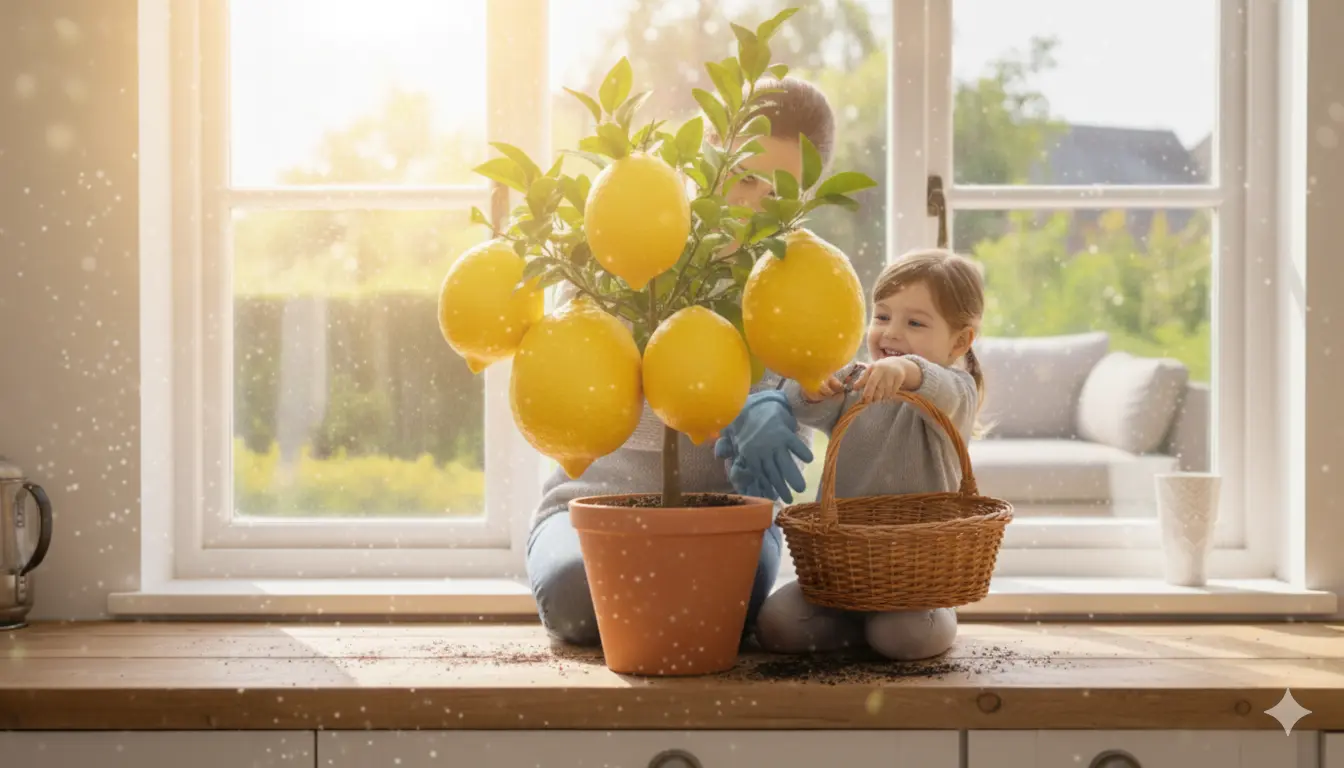
Growing lemons indoors has been one of the most rewarding gardening projects I’ve ever taken on. There’s something incredible about walking into my living room, brushing my fingers across glossy green leaves, and knowing that in a few months I’ll be slicing into lemons I grew myself.
With the right setup, fresh citrus doesn’t have to be a luxury from the grocery store, it can be part of your home year-round.
Choosing the Right Lemon Variety
The first decision I had to make was which lemon variety to grow indoors. Not all lemons are suited for container life, and full-size trees would overwhelm any space.
That’s why I turned to dwarf varieties. Meyer lemons are my favorite, mainly because they’re sweeter than standard lemons and more forgiving when it comes to indoor conditions.
Their compact size makes them perfect for pots, and they produce both fragrant blossoms and juicy fruit.
Another variety I’ve had success with is the Ponderosa lemon. These lemons are larger, with thick rinds and a sharper taste. They’re not as sweet as Meyer lemons, but they’re incredibly productive when given the right care.
For anyone craving that classic lemon tang, Ponderosa can be a great choice. The key is finding a variety that matches your taste preference and indoor space.
What I’ve learned is that it’s not just about choosing a tree that produces good lemons, but also about one that adapts well to the indoor environment.
Dwarf lemon trees have been bred for this very purpose, and by picking the right variety from the start, I set myself up for a much smoother growing experience.
The Right Pot and Soil Setup
Once I had my tree, I had to think about where it would live. Lemons need room for their roots to spread, so I chose a pot that was at least 16 inches wide with a depth to match.
The most important feature of the pot wasn’t the size, though, it was drainage. Lemons hate sitting in soggy soil, and without proper drainage holes, root rot becomes inevitable.
As for soil, regular garden dirt just won’t cut it. Lemons demand a light, airy mix that drains well but still holds some moisture. I prefer a blend of high-quality potting soil mixed with sand and perlite.
This creates the perfect environment for the roots to breathe while preventing compaction. I also make sure the soil leans slightly acidic, since citrus thrives in a pH between 5.5 and 6.5.
I like to refresh the soil every couple of years because it tends to break down over time and lose structure. Repotting also gives me the chance to trim back any circling roots and make sure the tree has space to keep growing.
This routine has made all the difference in keeping my indoor lemon tree healthy and productive.
Also Read: 5 Easy Ways to Save Seeds From Your Favorite Vegetables
Light Requirements and Artificial Lighting
If there’s one thing lemons crave, it’s light. Indoors, this is the hardest condition to replicate. My tree needs at least eight hours of bright, direct light every day.
While south-facing windows give a decent amount, they usually aren’t enough to fuel continuous growth and fruiting, especially in winter. That’s when I turn to grow lights.
I use full-spectrum LED grow lights that mimic natural sunlight. Positioning is key, the light has to be close enough to reach the canopy without burning the leaves.
I keep mine about a foot away and set them on a timer to ensure consistency. Twelve hours of light per day works best for me during the darker months.
The real trick is balancing natural sunlight with supplemental light. On sunny days, I let the tree soak up what it can from the window.
On cloudy weeks, the grow light fills the gap. This balance has been the secret to keeping my lemon tree thriving indoors, no matter the season.
Watering and Humidity Management
Watering lemons indoors is a balancing act. Too much, and the roots suffocate; too little, and the tree struggles to produce fruit. I’ve learned not to follow a strict schedule but instead to check the soil itself.
If the top two inches are dry, that’s my cue to water. When I do, I water deeply until it drains from the bottom, ensuring the roots get a thorough soak.
Indoor air can be drier than lemons prefer, especially in winter when heaters run constantly. Low humidity can cause the leaves to curl or drop.
To counter this, I use a small humidifier near the tree, which helps keep the environment stable. Sometimes I also place a shallow tray of water with pebbles under the pot to add a little extra humidity.
Consistency is key here. I never let the soil stay soggy, and I don’t let it dry out completely either. Finding that middle ground has kept my lemon tree strong and resilient, even through seasonal shifts.
Fertilizing for Steady Growth
Indoor lemons don’t have the luxury of drawing nutrients from the ground, so fertilizer becomes their lifeline. I rely on a citrus-specific fertilizer that’s high in nitrogen, which supports leafy growth and fruit development.
Micronutrients like magnesium and iron are just as important, since deficiencies show up quickly in yellowing leaves.
During the growing season, I feed my tree every four to six weeks. When winter arrives and growth slows, I cut back. This keeps the plant from becoming overfed and stressed when it can’t use the extra nutrients.
The timing of fertilizing really makes a difference in fruiting success.
I’ve also found that foliar feeding, or spraying diluted fertilizer directly onto the leaves, gives a quick boost when the plant looks sluggish. It’s like an energy drink for the tree, especially during periods of heavy blooming or fruiting.
Pollination and Flowering Indoors
One of the biggest surprises when growing lemons indoors was realizing that pollination doesn’t happen automatically. Without bees or wind, the blossoms won’t set fruit on their own.
That’s where I step in with a small paintbrush. I gently transfer pollen from flower to flower, mimicking what insects would do outdoors.
The process is simple but surprisingly effective. Each time I pollinate, I increase the odds of getting fruit. Over time, I’ve also learned that keeping the plant healthy and well-fed encourages more blossoms, which means more chances to pollinate.
In some seasons, the tree bursts with flowers, filling the room with their fragrance. It’s not just about the lemons that follow; it’s also about the atmosphere these blossoms create indoors.
Pollinating feels less like a chore and more like a ritual that connects me to the growing process.
Pest Control and Plant Health
Even indoors, pests find their way to citrus trees. I’ve battled spider mites, aphids, and scale insects more than once. The best strategy is prevention: I inspect my tree regularly, looking for sticky leaves, webbing, or small bumps along the stems.
Catching problems early is the difference between a quick fix and a full-blown infestation.
When pests show up, I start with natural solutions. A spray of soapy water or neem oil usually takes care of the problem. If things get stubborn, I’ll move to stronger treatments, but I rarely need to.
Keeping the tree healthy with proper care naturally makes it less vulnerable to attacks.
Good airflow, clean leaves, and regular monitoring are my top defenses. I’ve learned that pests are more a symptom of stress than the root cause. If my tree is thriving, pests have a much harder time gaining a foothold.
Harvesting and Enjoying Indoor Lemons
The moment I look forward to most is harvesting. I know a lemon is ready when it’s fully yellow and slightly soft to the touch. Picking too early leaves the fruit sour and underdeveloped, so patience really pays off.
I harvest carefully, using scissors or pruners instead of pulling the fruit off. This prevents damaging the branches or accidentally tearing the bark.
Each lemon feels like a reward for the months of attention and care I’ve given the tree.
The flavor of homegrown lemons is incomparable. They’re juicier, more fragrant, and somehow brighter than store-bought ones. From fresh lemonade to zest in cooking, every use reminds me why I keep a lemon tree indoors.
FAQs
Most dwarf lemon trees take 2–3 years to start producing fruit when grown indoors, though a grafted tree may bear sooner. They may drop some leaves if light and humidity levels drop too low, but with stable conditions, they should stay mostly evergreen. Acclimate it gradually by placing it outside for a few hours a day, increasing the time over a week. Sudden exposure to full sun can shock the leaves. How long does it take for an indoor lemon tree to bear fruit?
Do indoor lemon trees lose their leaves in winter?
What’s the best way to move a lemon tree outdoors in summer?