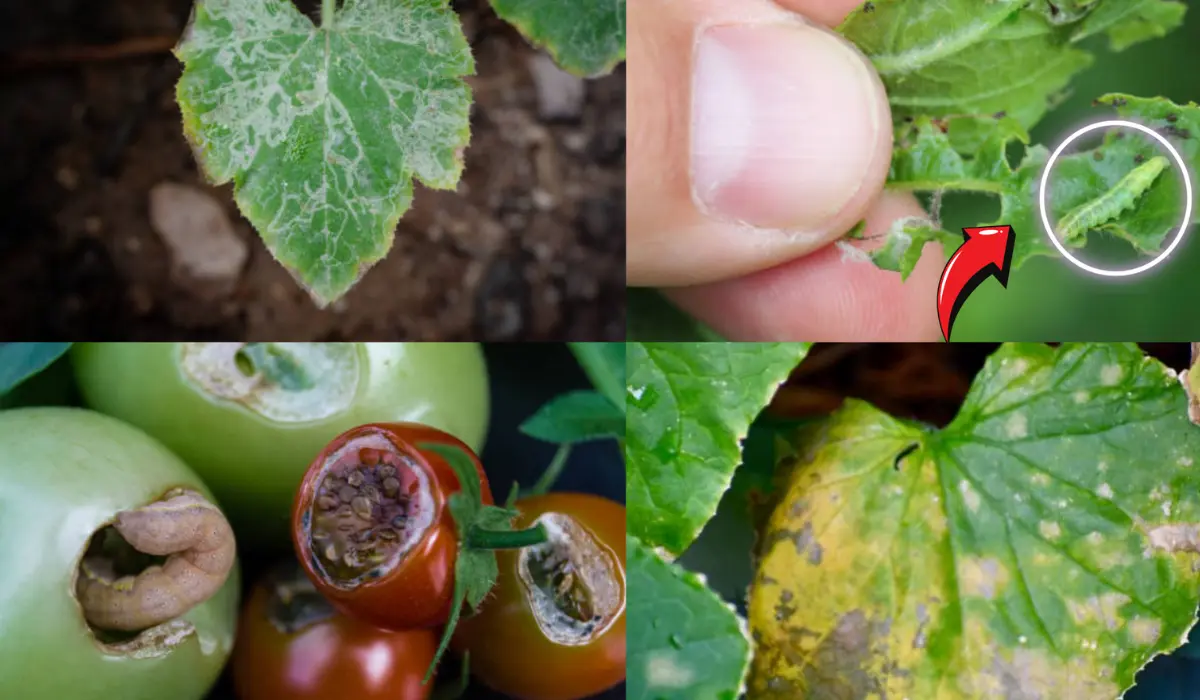
When I walk through my garden, I don’t just look at the flowers or the fruits forming on the vines, I scan the leaves. Leaves tell the truth before anything else does.
They record every visitor, every nibble, every invasion. Over the years, I’ve learned that the quickest way to identify garden pests isn’t by hunting for the insects themselves, but by recognizing the signature they leave behind on foliage.
Once you know these patterns, you can read a garden the way a detective reads clues.
Why Leaf Damage Matters More Than the Bug Itself
I rarely see the actual pest the moment damage appears. Most garden insects work in secret, coming out at night or hiding on the undersides of leaves.
But the leaves always give them away. A chewed edge or a strange discoloration can speak louder than spotting the insect itself.
That’s why learning to read leaf signatures is often more reliable than chasing bugs around with a flashlight.
The type of feeding tells me more about the pest than the bug’s size or color ever could. Chewing insects make obvious holes and missing sections, while piercing-sucking insects leave behind stippling or curling.
Leaf miners carve trails, and skeletonizers strip away tissue like lacework. Each style of damage is consistent and repeatable, which means once you recognize it, you’ll never forget it.
Early identification makes all the difference. If I notice a few chewed edges on a new planting, I can take action before the damage spreads.
If I miss it and wait until the plant looks ragged, it’s often too late. Leaf damage is more than just cosmetic; it’s a flashing warning sign that I can’t afford to ignore.
Also Read: How to Grow Lemons Indoors for Fresh Citrus Anytime
Chewing Damage
One of the most common leaf signatures I come across is chewing damage. Caterpillars, beetles, and grasshoppers are the usual suspects.
Their work shows up as irregular edges where chunks of leaf are missing, or as holes punched right through the middle. It’s messy, and that’s the point, the raggedness is their calling card.
Beetles often leave cleaner, rounded bites. Japanese beetles, for instance, cut perfect circles, while flea beetles pepper leaves with tiny “shot holes.”
Caterpillars, on the other hand, work in uneven patches, often leaving the leaf edges scalloped and rough. I’ve even identified cutworms by the way they chew low leaves right down to the stem.
Once I saw the difference between beetle holes and caterpillar chew marks, it became second nature to tell them apart.
In my own garden, I once noticed irregular, crescent-shaped bites on bean leaves. At first glance, I thought it was grasshoppers, but when I looked closer, I spotted Mexican bean beetles at work.
The shape and neatness of the bites matched their feeding style perfectly. That’s how powerful leaf signatures are, they don’t just tell me something is wrong, they tell me who did it.
Skeletonizing Leaves
Few things catch the eye like a leaf that looks as if it’s been turned into lace. This is the skeletonizing pattern, caused by insects like Japanese beetles, tortoise beetles, and some leaf beetle larvae.
Instead of chewing the whole leaf, they eat everything but the tough veins, leaving a see-through, veiny structure behind.
The early stages look subtle. At first, I see faint “windowpanes,” thin patches where the green tissue has been scraped away but the leaf surface still holds.
Give it a few days, and those spots open up into full skeletons. By then, the damage isn’t just ugly, it weakens the plant’s ability to photosynthesize, and that slows down growth dramatically.
I’ve seen this effect most often on roses, beans, and grapes. In one season, Japanese beetles stripped my grapevines until the leaves looked like delicate lace doilies.
From that point forward, I learned to recognize the first signs of windowing, because if I wait until skeletons appear, the infestation is already out of hand.
Leaf Mining
Unlike chewers and skeletonizers, leaf miners are sneaky. Their larvae live inside the leaf tissue itself, carving tunnels as they feed.
The result is thin, winding trails that look almost like someone doodled on the leaves with a white pen. No other pest leaves a mark like this.
At first, the mines look like pale squiggles, but as the larva grows, the tunnels widen. On spinach or beets, I often find these long winding paths snaking across entire leaves.
If I hold the leaf up to the sun, the mine becomes even clearer, sometimes with the tiny larva still visible inside. That’s the surest way to confirm it isn’t disease.
I’ve had gardeners confuse leaf miner damage with fungal spots, but the difference is in the shape. Fungus tends to leave round, static lesions.
Leaf miner damage moves, it’s a living, winding trail, and it always looks dynamic. Once you see the pattern, you’ll never mistake it again.
Piercing-Sucking Damage
Some of the most frustrating pests aren’t chewers at all, they pierce and suck. Aphids, whiteflies, and spider mites feed by inserting their mouthparts into plant cells and sucking out the sap.
The result is stippling, tiny pale or yellow spots scattered across the leaf surface. Over time, this turns into mottling, curling, and overall weakening of the plant.
In my garden, I often see aphid damage first on the new, tender growth. The leaves start curling inward, almost like they’re folding to protect themselves.
Flip the leaf over, and I’ll usually find the colony sitting there, dripping honeydew. Spider mites, on the other hand, are harder to see.
Instead, I notice a dusty look to the leaf, combined with fine webbing stretched across the stems. That faint webbing is their unmistakable signature.
I always remind gardeners that piercing-sucking insects often leave behind extra clues—sticky residue, black sooty mold growing on honeydew, or silk threads.
Even if I don’t spot the insects immediately, those secondary signs paired with stippling patterns make the ID obvious.
Distinguishing Disease from Insect Damage
One of the hardest lessons I learned early on was not to confuse pest damage with plant disease. Fungal and bacterial issues leave marks too, but they’re different from insect signatures.
The key is to look for patterns, distribution, and frass (insect droppings).
Insects rarely leave uniform spots. Their marks are irregular, chewed edges, random holes, stippling. Diseases, on the other hand, often form circular or angular spots, sometimes with a defined border or a halo.
Another telltale difference is frass. If I see tiny dark specks on or around the damage, I know I’m dealing with insects, not fungus.
Misidentifying the cause wastes time. I’ve seen gardeners spray fungicide on aphid-damaged plants or douse caterpillar-chewed leaves with copper.
Neither solves the real problem. Getting the diagnosis right—reading the leaf signature correctly—saves money, effort, and the plant itself.
Reading Context
Leaf signatures don’t exist in isolation. I always read them in context with the season and the plant type. For example, flea beetles are notorious in spring when seedlings first emerge, but they disappear in midsummer.
Spider mites, in contrast, thrive in hot, dry weather, so I look for stippling during heat waves.
Plant type narrows down suspects even more. Cabbage loopers almost always target brassicas, while Colorado potato beetles stick with potatoes, tomatoes, and eggplants.
When I see chewed edges on cabbage in May, I immediately suspect loopers. If it’s potatoes in June, I know to check for beetle larvae.
Matching leaf signatures with plant preferences is one of the fastest shortcuts in pest identification.
Over time, I’ve built mental profiles of pests tied to both the time of year and the host plant. That knowledge, combined with the leaf damage itself, makes me nearly certain about the culprit before I ever see the insect.
It’s like solving a puzzle with both the picture and the missing pieces in hand.
FAQs
I’ve found early morning or late evening works best. Many pests are more active then, and the lighting makes leaf damage easier to see. Yes. It’s common for a plant to face both chewers and piercers at the same time. That’s why learning to distinguish leaf signatures matters, it helps untangle overlapping problems. The sooner, the better. Early action prevents populations from building up. Even hand-picking a few beetles or rinsing off aphids can save a plant from severe damage later. What’s the best time of day to scout for pests in my garden?
Can one plant show multiple types of leaf damage at once?
How quickly should I act after spotting a pest signature?