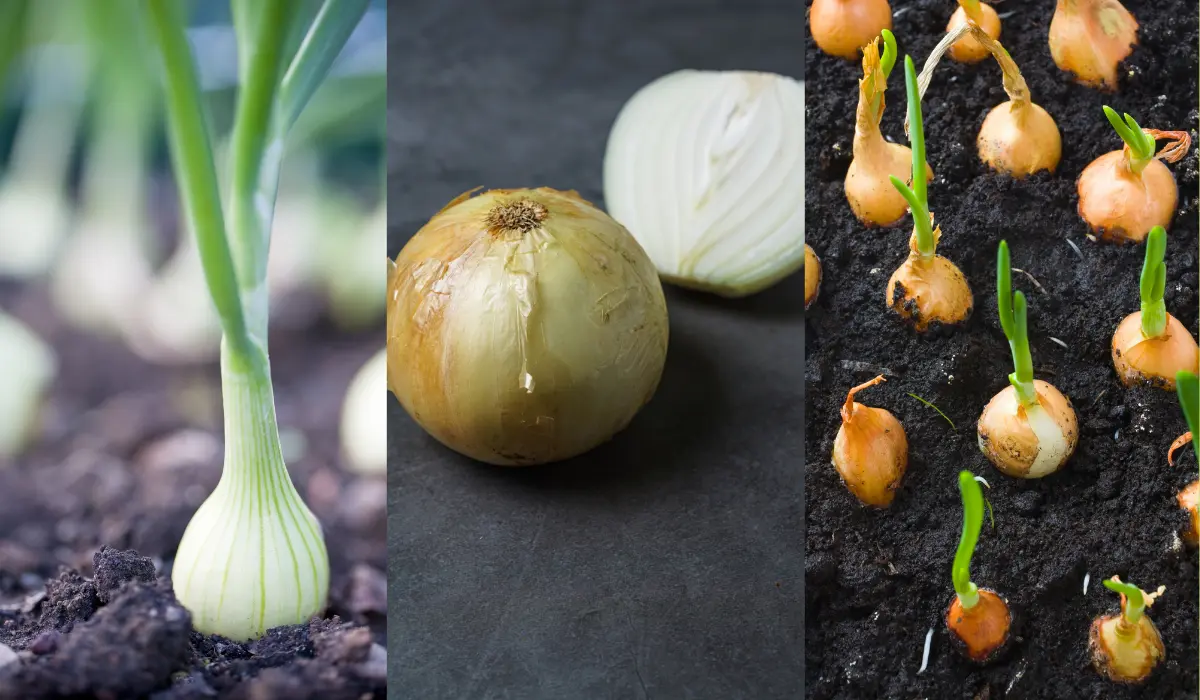
I’ve always believed that growing onions is one of the most rewarding gardening experiences. Onions are a kitchen essential, and having a steady supply from my own garden saves me countless trips to the store.
Over the years, I’ve refined my approach to planting, nurturing, and harvesting onions so they grow strong, flavorful, and store well long after harvest.
Let me walk you through the process, step by step, with all the details I’ve learned from experience.
Understanding Onion Varieties
One of the first things I had to learn was that not all onions grow the same way. Onions are categorized into short-day, long-day, and intermediate-day types.
The difference comes down to how many hours of daylight they need to form bulbs. For example, short-day onions thrive in southern regions with mild winters, while long-day onions perform best in the north, where summer days stretch longer. Intermediate-day onions fall right in the middle, making them versatile in many areas.
When I first started growing onions, I didn’t pay much attention to these differences, and the results were disappointing. Some onions grew leafy but never developed proper bulbs.
Once I began matching the onion type to my local climate, my harvests immediately improved. It was a simple adjustment that made a world of difference.
I encourage every grower to experiment with varieties suited to their region. Over the years, I’ve grown sweet onions like Vidalias, storage onions that last well into winter, and red onions that add color and bite to salads.
Each variety brings something unique, and I enjoy mixing them in my garden to keep things interesting.
Also Read: Plant These 10 Hardy Vegetables if You Want to Have a Productive Winter Garden
Preparing the Soil
Healthy onions start with healthy soil. Onions love loose, well-drained earth that’s rich in organic matter. To get it right, I test my soil’s pH, aiming for a slightly acidic to neutral range (around 6.0 to 7.0).
If the soil is too heavy, I work in compost and sand to improve drainage, since onions won’t tolerate sitting in soggy ground.
Before planting, I give the soil a boost with plenty of compost and a balanced fertilizer. Onions are heavy feeders, and they need nutrients early on to develop strong roots and bulbs.
I’ve found that incorporating well-rotted manure or a high-nitrogen organic fertilizer helps set the stage for vigorous growth.
I also make sure my planting beds are raised slightly to prevent waterlogging. Over time, I’ve learned that soil preparation is not something to rush. A little extra effort at this stage saves me from problems later in the season.
Planting Onions
When it comes to planting, I have three options: seeds, sets, or transplants. Seeds give me the widest range of varieties, but they require more time and patience.
Sets are small, immature bulbs that are easy to plant and grow quickly, although they sometimes bolt.
Transplants fall in between, already started seedlings that give me a head start without the unpredictability of sets.
Personally, I like starting with transplants for reliability, but I still sow some seeds indoors when I want to try unusual varieties.
Timing is critical; I aim to plant early in the season when the soil can be worked, since onions like cool weather at the start of their growth cycle.
I plant them in rows, spacing bulbs or seedlings about four to six inches apart, with a foot between rows. Planting too close together results in smaller bulbs, while giving them room allows each onion to reach its full size.
Depth also matters, just enough to cover the roots and base of the plant without burying them too deep.
Caring for Onion Plants
Onions might seem low-maintenance, but they do need consistent care. Watering is key. I aim for about an inch of water each week, keeping the soil evenly moist without soaking it.
Dry spells can stress the plants, while overwatering can invite disease. I’ve found drip irrigation to be a reliable method, as it delivers water directly to the roots without wetting the foliage.
Weeds are another challenge since onions have shallow roots and don’t compete well. I stay on top of weeding by hand and use a light mulch of straw to keep weeds down and maintain steady moisture levels.
This approach saves me time and reduces stress on the plants.
Feeding onions throughout the season also makes a difference. After the plants establish, I side-dress with a nitrogen-rich fertilizer every few weeks until bulb formation begins.
At that stage, I cut back on nitrogen so the energy goes into developing bulbs rather than more leaves.
Dealing with Pests and Diseases
Like most crops, onions attract their fair share of pests. Onion thrips and maggots have been my biggest headaches. Thrips suck the juices from leaves, leaving them silvery and weak, while maggots attack bulbs underground.
To combat these, I rotate crops yearly and avoid planting onions in the same spot season after season.
When problems arise, I prefer natural solutions. For thrips, I use insecticidal soap and encourage beneficial insects in the garden. For maggots, I rely on floating row covers to protect young plants until they’re established.
Good sanitation, like removing plant debris after harvest, also helps reduce pest pressure.
Diseases such as downy mildew and rot can strike if conditions are too wet. That’s another reason I emphasize soil drainage and spacing.
Once the disease sets in, it’s tough to control, so prevention is always better than a cure. By staying observant and acting early, I’ve kept losses to a minimum.
Also Read: Why You Should Never Plant These 8 Vegetables Near Your Carrot Crop
Knowing When and How to Harvest
Harvesting onions at the right time is critical for flavor and storage. I watch for the tops to turn yellow and fall over naturally, that’s the plant’s signal that the bulbs have finished growing. If I rush and pull them too early, the bulbs won’t keep well.
When it’s time, I loosen the soil with a fork and gently lift the bulbs out, avoiding cuts or bruises. Damaged onions won’t store, so I set those aside for immediate use.
Harvesting on a dry day helps reduce the risk of rot during curing.
After pulling, I lay the onions out in a warm, dry, well-ventilated spot for curing. Over the next two to three weeks, the necks dry down and outer skins harden, sealing in the bulbs for long-term storage.
It’s a step I never skip, because properly cured onions last far longer.
Storing Onions Successfully
Storage is where I’ve learned the most from trial and error. Onions need cool, dry, and dark conditions to last for months.
I keep mine in mesh bags or crates in a basement where the temperature stays around 40–50°F with good airflow.
Early on, I made mistakes by storing onions in plastic or in areas that were too warm, which led to sprouting and rot.
Over time, I refined my system, and now I regularly enjoy my homegrown onions well into the winter.
I also sort onions before storage, keeping the smaller or slightly damaged ones aside for immediate use.
By checking on stored onions every few weeks and removing any that start to spoil, I prevent one bad bulb from ruining the batch.
FAQs
Sets are small, immature bulbs that grow quickly, while seeds take longer but offer more variety. Plant at the right time for your region and avoid stress from inconsistent watering or sudden temperature swings. Yes, they pair well with carrots, beets, and lettuce, but avoid planting them near peas or beans. Depending on the variety and method, onions typically take 90 to 120 days from planting to harvest. What’s the difference between onion sets and seeds?
How do I keep my onions from bolting?
Can I plant onions next to other vegetables?
How long do onions usually take to grow?