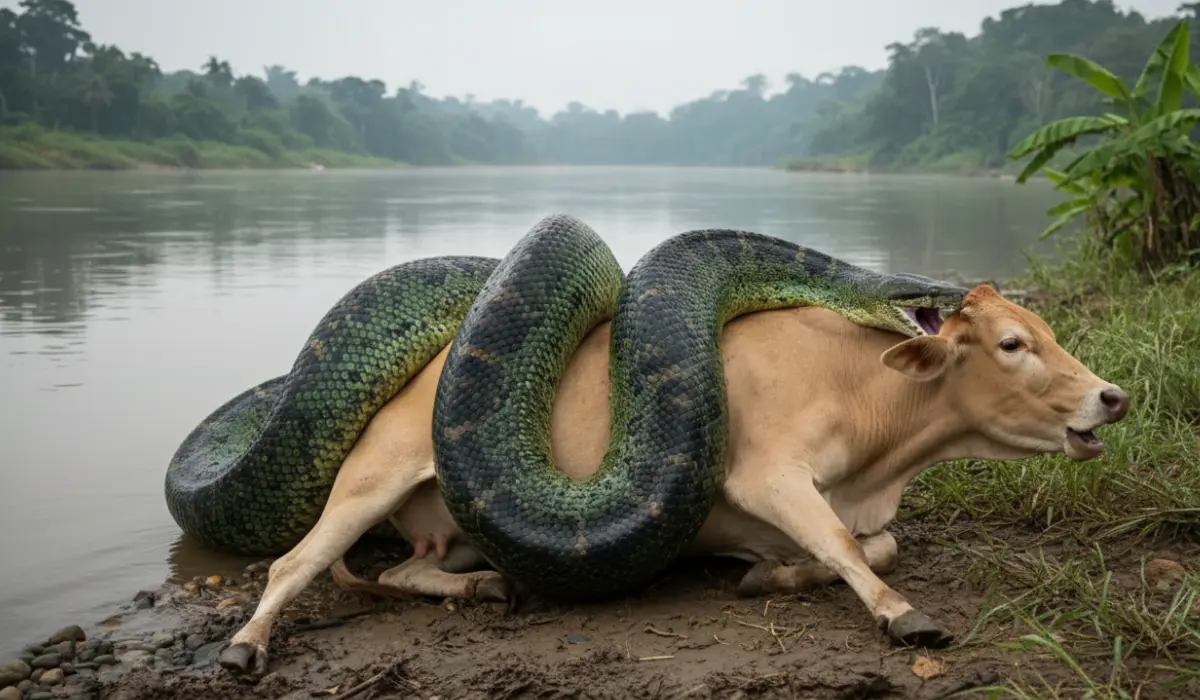
Anacondas are apex predators that can cause serious losses to livestock in parts of South America, especially near swamps, rivers, and floodplains.
Though attacks on cattle are rare, they do happen, and when they do, knowing what to do (and what not to do) can mean the difference between saving your animal or losing it.
Here’s how to recognize, respond, and prevent anaconda attacks on your herd.
1. Know the Threat
Anacondas are semi-aquatic constrictors that ambush prey from water or dense vegetation. The green anaconda, the largest of the species, can grow over 20 feet long and weigh more than 200 pounds. They usually target capybaras, caimans, or deer, but cattle grazing near riverbanks can become easy targets.
Anacondas kill by wrapping around their prey and tightening their coils each time the animal exhales. The victim dies from suffocation or cardiac arrest, not from venom. This means timing is crucial: if you reach the scene early enough, you might still save your animal.
Also Read: Can a Mongoose Defeat a King Cobra in a One-on-One Face Off?
2. Spot the Signs of an Attack
Anaconda attacks usually happen silently, but there are telltale signs:
- Disturbed water or mud: Sudden splashing or commotion in shallow water can indicate a struggle.
- Low, panicked bellows: Cattle under attack often make muffled distress sounds before being dragged down.
- Circular impressions or drag marks: If you find areas where the grass or mud is flattened in a spiral, the snake may have been coiling around its prey.
- Missing livestock near rivers or ponds: Always investigate disappearances quickly.
If you see any of these signs, act immediately, minutes matter.
3. Intervene Safely (and Quickly)
Approaching an anaconda mid-attack is dangerous. These snakes are powerful and can strike if threatened. But if you’re in a position to intervene, here’s what to do:
Step 1: Gather help.
Never approach alone. You’ll need at least two or three people with you, one to distract the snake, one to free the animal, and one to stay alert with a tool or stick.
Step 2: Arm yourself properly.
Use long sticks, metal poles, or machetes (only if absolutely necessary). Avoid getting within striking distance, about one-third of the snake’s body length.
Step 3: Target the coils, not the head.
Trying to grab or strike the head can make the snake tighten its grip. Instead, focus on prying the coils loose, starting from the tail.
Insert poles or sticks between the snake and the animal, then lever the coils upward. Once the snake loosens its hold, pull the animal away quickly.
Step 4: Keep the snake in view.
After releasing the animal, don’t turn your back. The anaconda may retreat or attempt to defend itself. Back away slowly, maintaining eye contact.
Step 5: Tend to the animal.
Even if the cow appears uninjured, it might have internal damage or broken ribs from constriction. Move it to a safe area, keep it calm, and call a veterinarian immediately. Shock or suffocation injuries can worsen within hours.
4. What Not to Do
- Don’t panic and charge the snake. Sudden movements can provoke aggression.
- Don’t try to kill it unless absolutely necessary. In many regions, anacondas are protected by law. Only use lethal force if the snake threatens human life.
- Don’t try to pull the snake off by hand. Its muscles can crush bones; you won’t win by strength.
- Don’t ignore the aftermath. Surviving cattle might experience stress or refuse to graze near water again, monitor behavior and adjust grazing routes if needed.
Also Read: Can a Buffalo Defeat a Lion in a One-on-One Combat?
How to Prevent Future Attacks
Prevention is the best defense. Here’s how to minimize risk:
- Fence off water access points. Limit cattle’s contact with deep or slow-moving water where anacondas hide.
- Clear vegetation near rivers. Snakes use tall reeds and shrubs for cover. Keeping riverbanks open gives you better visibility.
- Rotate grazing areas. Avoid overusing swampy pastures. Move herds regularly to reduce exposure.
- Use night lighting or patrols. Anacondas often hunt at dusk or night; motion lights or dogs can deter them.
- Report sightings. If you live in an area with known anaconda activity, notify local wildlife authorities. They can relocate large snakes humanely.

When to Call for Professional Help
If you encounter a large anaconda or multiple attacks occur, don’t try to handle it yourself. Contact wildlife control or environmental agencies trained to capture and relocate these animals safely.
They have equipment like snake hooks, nets, and tranquilizers that make removal far safer for both humans and the snake.
Final Thoughts
Anacondas are formidable predators, but they’re also part of the natural ecosystem. Most attacks happen because cattle graze too close to the snakes’ habitat. Understanding how these predators behave, and staying alert can prevent tragedy.
The key is fast recognition, careful teamwork, and a calm, methodical response. Rescue what you can, protect your herd, and respect the wild balance that surrounds your land.