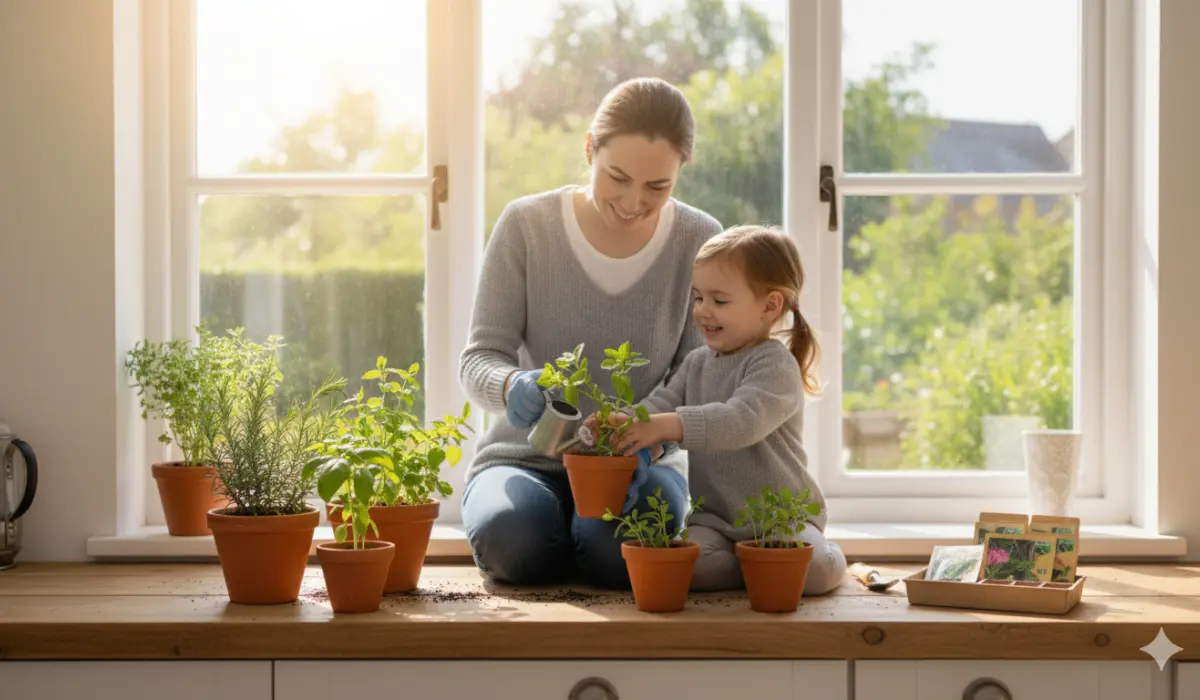
I’ve always believed that food tastes better when it’s made with fresh herbs, and nothing compares to the convenience of snipping basil, mint, or parsley right from my own kitchen windowsill.
Growing herbs indoors isn’t just about flavor, it’s about control, sustainability, and the joy of having greenery around all year long.
Over time, I’ve developed reliable methods for starting and maintaining a thriving indoor herb garden, and I want to share them with you so you can enjoy the same satisfaction.
Choosing the Right Location
The very first decision I make when setting up an indoor herb garden is location. Herbs thrive in environments that mimic their natural outdoor habitats, which means they need plenty of light and good airflow.
I always look for spaces near south- or west-facing windows where my herbs can soak in at least six hours of sunlight a day. If your home doesn’t offer that, don’t worry, there are workarounds that I’ll cover later.
Accessibility is another factor I consider. An herb garden tucked into a dark corner or too far from the kitchen often gets neglected. I prefer to keep my herbs in a place where I naturally pass by daily.
This makes it easy for me to monitor their growth, water them at the right time, and harvest them when I need a quick garnish. Convenience is underrated, but it can make or break your success.
Air circulation matters too. Stagnant air can invite mold or pests, which are the last things I want near my food. By keeping my herbs in a spot with gentle airflow, like near a vent or a slightly cracked window, I create conditions where they can breathe easily.
A balance of light, air, and access is the foundation for everything else.
Also Read: 7 Smart Ways to Use Banana Peels in the Garden, According to Experts
Selecting the Best Herbs for Indoor Growth
Not all herbs are suited to indoor living, so I’ve learned to choose wisely. Herbs like basil, chives, parsley, cilantro, oregano, and mint adapt beautifully to pots and window sills.
They’re resilient, forgiving, and fast-growing, which makes them ideal for beginners. On the other hand, plants like dill or rosemary can be trickier, either because they grow too tall or require more outdoor-like conditions to thrive.
I like to think in terms of growth habits. Annual herbs such as basil and cilantro grow quickly, and I enjoy replanting them periodically for a constant supply.
Perennials like thyme, chives, and mint are slower starters but provide steady harvests for years if cared for correctly. Mixing both types ensures I have a balance of quick gratification and long-term returns.
When I advise someone just starting out, I usually recommend beginning with basil, chives, and mint. Basil offers immediate culinary rewards, chives are nearly indestructible, and mint provides that refreshing aroma that instantly livens up a kitchen.
Once you gain confidence, you can experiment with more delicate herbs like sage or tarragon.
Containers and Soil Setup
The container you choose isn’t just about aesthetics, it directly affects plant health. I always prioritize drainage, because herbs hate having their roots waterlogged.
Pots with drainage holes are a must, and I often place them on trays to catch excess water. As tempting as decorative containers can be, functionality comes first for me.
Soil selection is equally important. Garden soil is too heavy for indoor pots; it compacts easily and suffocates roots. Instead, I use a high-quality potting mix that retains enough moisture while still allowing air to circulate.
I sometimes add perlite or sand to improve drainage, especially for Mediterranean herbs like oregano and thyme that prefer drier conditions.
Maintaining moisture balance is an ongoing practice. I check the soil by touch rather than by schedule. The top inch feels dry, so I water.
This keeps me from overwatering, which is the number one mistake I see beginners make. With the right container and soil, my herbs have a healthy foundation that supports strong growth.
Watering and Feeding Techniques
Watering herbs indoors requires more nuance than just keeping them wet. Too much water drowns the roots; too little stresses the plant.
I’ve found that consistency matters most, and I prefer to water lightly but regularly. By letting the soil dry out slightly between waterings, I mimic the natural conditions most herbs evolved in.
Humidity is another factor I pay attention to, especially during winter when indoor heating dries the air. To keep herbs happy, I sometimes group pots together to create a microclimate, or I place a shallow tray of water nearby to raise local humidity.
These small adjustments make a big difference in keeping leaves lush instead of brittle.
Feeding herbs is where restraint comes in. I use a diluted, all-purpose liquid fertilizer every four to six weeks. Overfeeding encourages excessive leaf growth with less flavor, which defeats the purpose of growing herbs for cooking.
By focusing on steady, modest nutrition, I get herbs that are both healthy and aromatic.
Lighting Solutions for Year-Round Growth
Even the sunniest windowsills have limitations, especially in winter when daylight hours shrink. That’s why I supplement with grow lights when necessary.
Fluorescent or LED grow lights are my go-to choices because they provide the full spectrum of light herbs need without generating too much heat.
I position the lights about six to twelve inches above the plants and keep them on for 12–14 hours a day. This schedule mimics summer daylight and keeps my herbs growing steadily through the darker months.
By putting the lights on a timer, I never have to worry about forgetting to switch them on or off.
The beauty of grow lights is the control they offer. I no longer feel limited by the seasons, and I can start new herbs at any time of the year.
This has transformed my gardening practice into something consistent and reliable, rather than seasonal and uncertain.
Harvesting and Maintaining Freshness
Harvesting herbs correctly ensures that the plants keep producing. I always cut just above a leaf node, which encourages branching and new growth.
Taking too much at once stresses the plant, so I practice moderation, snipping what I need while leaving enough for the plant to recover.
Timing matters, too. I’ve noticed that herbs taste best when harvested in the morning, after the plant has rested overnight but before the sun evaporates essential oils.
This small detail elevates flavor and makes cooking even more enjoyable.
Once harvested, I store herbs in ways that extend their freshness. For short-term use, I place them in a glass of water on the counter, much like a bouquet.
For longer storage, I refrigerate them in a damp paper towel inside a breathable bag. These methods keep herbs fresh for days, giving me time to enjoy their peak flavor.
Troubleshooting Common Indoor Herb Problems
Every indoor gardener encounters challenges, and I’ve had my share. Overwatering leads to yellowing leaves and root rot, while underwatering makes herbs wilt and drop foliage.
By paying attention to the signs, I’ve learned to correct problems early before they spiral out of control.
Pests like aphids or spider mites can sneak in, especially during warm months. I deal with them by rinsing the plants under water or using insecticidal soap made from natural ingredients.
Keeping the environment clean and not overcrowding plants also reduces the risk of infestations.
Nutrient deficiencies are another issue I’ve seen. Pale leaves usually signal a lack of nitrogen, while stunted growth can point to poor soil quality.
A balanced fertilizer applied sparingly usually resolves the problem. With patience and observation, most issues can be corrected without losing the plant.
FAQs
Yes. Grow lights can fully replace natural sunlight and give your herbs what they need year-round. Perennial herbs can last for years if cared for well, while annuals like basil may need replanting every few months. For short-term use, store them in a glass of water on the counter. For longer storage, wrap them in a damp paper towel and keep them in the fridge. Can I grow herbs indoors without a sunny window?
How often should I replace indoor herbs?
What’s the best way to keep harvested herbs fresh?