Growing sweet potatoes indoors is one of the most rewarding gardening experiences I have embraced. These nutrient-rich tubers, known for their versatility in the kitchen and health benefits, adapt surprisingly well to indoor environments if given the right conditions.
Unlike many crops that require sprawling garden beds, sweet potatoes can be cultivated in containers inside the home, making them an ideal choice for anyone who lacks outdoor space or simply wants fresh harvests throughout the year.
Through years of trial, adjustment, and observation, I’ve learned that the secret to successful indoor sweet potato cultivation lies in mastering the environment rather than fighting against it.
By providing the right soil, light, water, and care, I’ve managed to turn a corner of my indoor space into a year-round sweet potato patch. In this article, I’ll share how I do it, step by step, so you too can enjoy endless harvests without ever stepping outside.
Choosing the Right Variety
One of the first lessons I learned was that not every sweet potato variety thrives indoors. While almost any type can technically grow, some are better suited to the limitations of container life.
I always go for compact or bush-type varieties that produce smaller vines and adapt well to pots. These varieties don’t sprawl as aggressively and are easier to train indoors.
For my setup, I’ve had great success with varieties like ‘Beauregard,’ which matures relatively quickly and gives generous yields in containers.
I also like to experiment with ornamental sweet potatoes that, although grown mostly for foliage, can produce small edible tubers when given proper care. Choosing the right variety saves me from the frustration of overcrowded vines and underdeveloped tubers.
The truth is, the variety you choose sets the foundation for your success. I always advise against picking random grocery-store sweet potatoes unless you know the type.
Instead, sourcing certified slips of indoor-friendly varieties ensures a stronger start and a more predictable harvest.
Also Read: 5 Clever Ways to Reuse Tea Leaves in Your Garden, According to Experts
Starting Sweet Potatoes from Slips
Unlike many vegetables that grow from seeds, sweet potatoes are started from slips. These are small shoots that sprout from mature sweet potatoes.
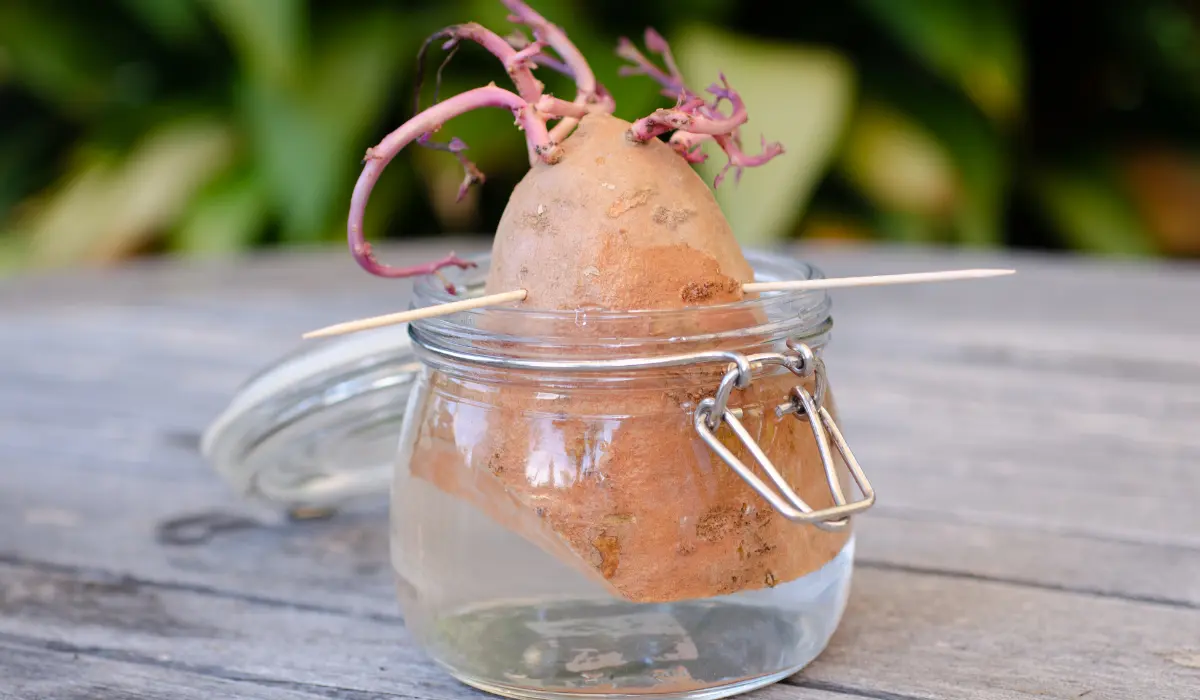
I usually begin by placing an organic sweet potato halfway submerged in water or set in moist soil until it produces healthy sprouts. Once they grow to about six inches, I carefully twist them off and root them in water before transplanting them into containers.
This process might feel a bit delicate at first, but it’s incredibly rewarding. I’ve found that slips are very forgiving; even if one wilts after transplanting, others often thrive and quickly establish themselves.
By starting with multiple slips, I increase my chances of success and ensure that at least several plants take off vigorously.
Over time, I’ve developed a rhythm with this method. By saving a few small tubers from each harvest, I always have stock to start new slips.
This way, I’ve created a self-sustaining cycle, eliminating the need to constantly buy new plants and guaranteeing I always have young sweet potatoes on the way.
The Best Containers for Indoor Growth
Container choice is a critical factor in indoor sweet potato cultivation. I learned early that shallow or narrow pots simply don’t work. Sweet potatoes need depth and room for tubers to swell.
For this reason, I always choose containers that are at least 12–18 inches deep and equally wide. This depth gives the roots ample space to develop into healthy, sizeable tubers.
Drainage is another essential aspect. Sweet potatoes hate soggy soil, so I make sure my containers have several drainage holes. I prefer fabric grow bags because they provide excellent aeration and allow the roots to breathe, which prevents rot.
When I’ve used hard plastic containers, I always ensure they have a layer of gravel or broken pottery at the bottom to promote drainage.
Material matters, too. In my experience, fabric grow bags not only encourage healthy root systems but are also easier to move around indoors.
Their flexibility helps me adjust to the limited space in my growing area, and they store away neatly when not in use. This convenience, paired with their effectiveness, has made them my go-to choice for indoor sweet potato growing.
Soil and Nutrient Needs
Sweet potatoes thrive in loose, well-draining soil that encourages root expansion. I create my own mix by combining high-quality potting soil with sand or perlite to keep it light.
Heavy soils, such as garden loam, compact too easily indoors and restrict tuber formation, so I avoid them completely. My goal is always to give the roots an airy, fertile environment.
To boost nutrition, I incorporate organic amendments like compost, worm castings, and aged manure. These provide a slow release of nutrients, which supports the long growing cycle of sweet potatoes.
I avoid high-nitrogen fertilizers because they encourage leafy growth at the expense of tuber development. Instead, I opt for balanced or slightly phosphorus- and potassium-rich formulas.
Over the growing season, I feed my plants with diluted liquid seaweed or fish emulsion every few weeks. This gentle supplementation keeps them vigorous without overwhelming the roots.
With this system, I’ve consistently harvested sweet potatoes that are not only abundant but also nutrient-dense and flavorful.
Light Requirements and Indoor Setup
One of the biggest challenges indoors is providing enough light. Sweet potatoes are sun-loving plants, and I’ve found that they need at least six to eight hours of strong light daily to thrive.
In my home, I place them near south-facing windows, but even then, natural light alone often isn’t enough year-round.
To solve this, I rely on grow lights. I use full-spectrum LED grow lights that mimic natural sunlight and position them about 12–18 inches above the plants.
This setup ensures my vines stay green and vigorous, and it encourages tuber formation. Without supplemental light, sweet potatoes indoors often become leggy and unproductive.
The investment in grow lights pays for itself when I consider the reliable harvests I get. I treat the light schedule as non-negotiable.
By maintaining consistent lighting, I’ve been able to grow sweet potatoes successfully even during the darkest months of winter.
Also Read: 5 Ways to Use Charcoal in the Garden According to Experts
Watering and Humidity Balance
Sweet potatoes require a careful balance of moisture. I’ve learned the hard way that overwatering leads to root rot, while underwatering stresses the plant and reduces yields.
My rule is simple: I water when the top inch of soil feels dry. This prevents soggy conditions while keeping the soil consistently moist.
Indoors, humidity can fluctuate depending on heating or cooling systems. Sweet potatoes prefer moderate humidity, so I often place a tray of water with pebbles near my plants or run a small humidifier during very dry months.
This prevents the foliage from drying out and keeps the plants comfortable.
I also avoid letting water pool at the bottom of containers. Drainage is my safeguard, but I always double-check to ensure that excess water flows freely. This practice has saved me from losing plants to fungal issues more than once.
Training and Managing Vines Indoors
Sweet potato vines grow long and sprawling if left unchecked. Indoors, this can quickly become unmanageable. To keep them under control, I train the vines up small trellises or allow them to cascade neatly over container edges.
This keeps my growing space tidy while still allowing the plants to photosynthesize effectively.
Occasionally, I prune back excessive vine growth. Pruning doesn’t harm the plant; in fact, it redirects energy toward tuber production.
The trimmed leaves and stems can even be eaten as nutritious greens, which makes this step doubly rewarding. I regularly sauté the young leaves in garlic and oil as a bonus harvest.
Creative training also adds beauty to my indoor garden. With careful placement, the vines create a lush, decorative effect, turning a practical food source into a houseplant-like display.
This dual role of aesthetics and productivity is one reason I enjoy growing sweet potatoes indoors so much.
Harvesting and Curing Indoors
Knowing when to harvest sweet potatoes indoors comes with experience. I typically wait four to five months after planting slips before checking for tubers.
The vines naturally turn yellow and slow down, signaling that the tubers are ready. At this point, I carefully dig into the soil with my hands to avoid damaging the roots.
Harvesting is always exciting. I gently remove the tubers, brush off excess soil, and let them cure in a warm, well-ventilated space for about two weeks.
Curing allows the starches to convert into sugars, giving the sweet potatoes their characteristic flavor. Indoors, I usually cure them in a dry room where temperatures stay between 80–85°F.
Proper curing also improves storage life. Afterward, I keep my sweet potatoes in a cool, dark space where they last for several months. This ensures I can enjoy the fruits of my labor long after the harvest is complete.
Maintaining a Cycle for Endless Harvests
The key to enjoying endless sweet potato harvests indoors is staggered planting. I start slips at different times so that new plants are always in various stages of growth.
This ensures I never run out of sweet potatoes and always have a fresh batch maturing.
I also recycle slips from harvested tubers, which reduces waste and keeps the cycle going. By rooting new slips as I harvest old plants, I create a seamless system.
This way, one harvest transitions smoothly into the next, with no downtime in between.
Through this method, I’ve essentially built a perpetual sweet potato system inside my home. With proper planning, anyone can replicate this approach and enjoy sweet potatoes year-round.
Final Thoughts
Growing sweet potatoes indoors has been one of the most fulfilling gardening ventures I’ve undertaken. It allows me to enjoy a steady supply of fresh, nutritious tubers regardless of the season or outdoor conditions.
The process has taught me patience, consistency, and the beauty of creating self-sustaining food systems.
Even with challenges like light, space, and humidity, the rewards far outweigh the effort. There’s nothing quite like harvesting sweet potatoes from a container in my living room and turning them into a hearty meal the same day.
It’s an empowering reminder that food doesn’t have to come from faraway fields, it can grow right at home.
If you’re considering this journey, I encourage you to dive in. With the right care and setup, growing sweet potatoes indoors can become a reliable and deeply satisfying part of your life.
FAQs
On average, a single container can produce 3–6 medium-sized sweet potatoes, depending on care and variety. No, when grown under the right conditions, the taste is just as sweet and rich as outdoor-grown sweet potatoes. It usually takes 4–5 months from slips to harvest, though some varieties may take longer. Only if your indoor temperature remains consistently above 65°F. Sweet potatoes are warm-weather plants and won’t thrive in cold environments. How many sweet potatoes can I expect from one container?
Do indoor sweet potatoes taste different from outdoor-grown ones?
How long does it take to grow sweet potatoes indoors?
Can I grow sweet potatoes indoors during winter without heating?