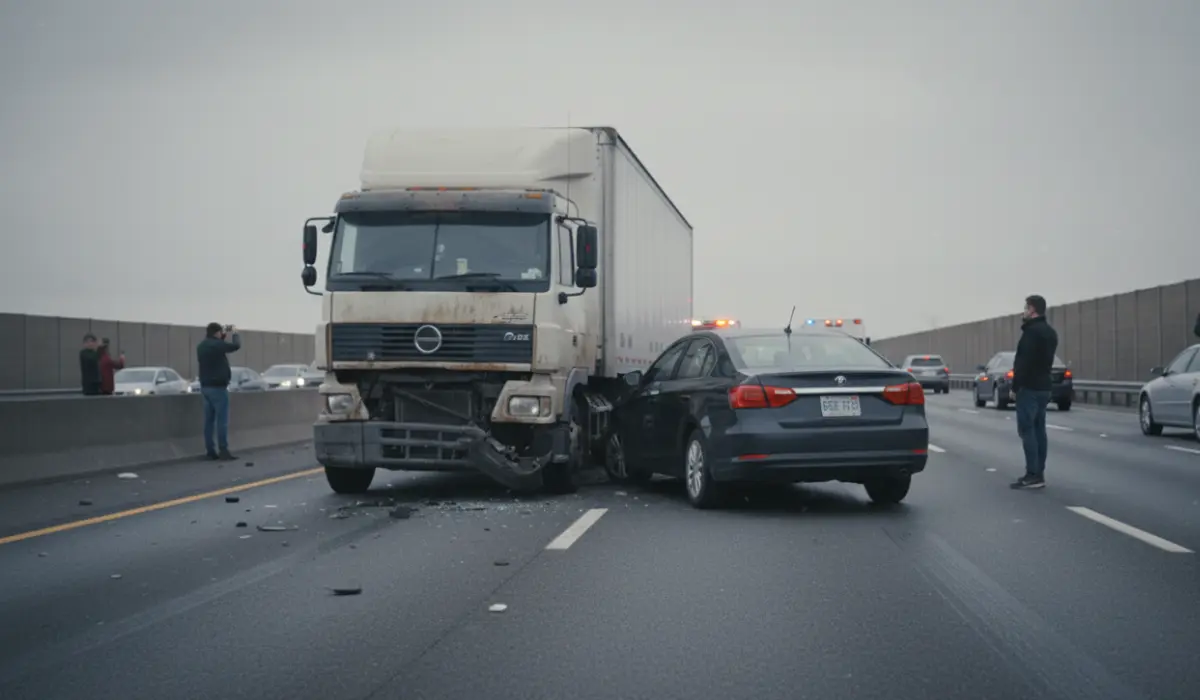
A truck accident is one of the most dangerous events a driver can face. Trucks carry massive weights, take longer to stop, and can cause life-changing damage in seconds.
While no guide can guarantee safety in every situation, there are smart steps you can take before, during, and after a crash that improve your odds. Survival is not about luck alone. It is about awareness, preparation, and quick thinking when it matters most.
Stay alert long before anything goes wrong
Most truck accidents begin long before impact. They start when a driver lets their guard down. The best way to survive a crash is to avoid one in the first place.
Stay out of a truck’s blind spots whenever you can. If you cannot see the driver’s mirrors, the driver cannot see you. Pass with purpose.
Never linger alongside a trailer. Keep a safe following distance so you have time to react if the truck swerves, brakes hard, or loses its load.
Do not assume a truck can maneuver like a car. A truck needs more room to turn, merge, and stop. Give that space without hesitation. If the weather turns rough or traffic grows heavy, increase your distance even more. These small choices reduce the chances of ending up in a dangerous position with no escape.
Recognize trouble as fast as possible
Many people freeze when they sense a crash coming. The brain struggles to catch up. You can give yourself an edge by training your focus. If a truck drifts in its lane, rocks from side to side, or slows without brake lights, treat it as a warning. If cargo looks loose or the trailer swings, back off right away.
Your goal is to create time. Even one second of added reaction time can change everything. If you notice smoke from wheels, debris falling, or the truck making sudden corrections, assume the worst and act early.
Move away if the lane next to you is clear. Reduce your speed and put distance between you and the truck. Do not wait to see what happens next.
If a crash is unavoidable, position your vehicle wisely
When a collision cannot be avoided, the way you position your vehicle can reduce the impact. Never try to beat a truck through a turn or cut across its path. If a truck begins to jackknife toward you and you have room, steer toward the rear of the trailer rather than the front.
The back has less force than the tractor. If a head-on collision is possible, angle your car slightly so you do not take the hit straight on. A glancing blow often means less severe injuries than a direct strike.
Keep both hands on the wheel, stay low behind the steering column if airbags deploy, and focus on guiding the car rather than slamming the brakes in panic.
Hard braking is important, but steering with control matters just as much. Your job is to limit the angle and severity of the impact.
Protect yourself immediately after the crash
The moments after a truck accident can be chaotic. You may feel shaken or disoriented. The first priority is to check yourself for injuries and move only if it is safe.
If the vehicle is still in traffic or leaking fuel, exit as soon as you can and move to a secure location. If you cannot move, stay still and wait for help.
Call emergency services right away. Even if injuries seem minor, truck accidents often hide internal harm that shows up hours later.
If you can, turn on hazard lights, warn others nearby, and keep passengers calm. Do not discuss fault at the scene. Your focus is survival and safety, not blame.
Document everything once you are safe
If you are able, gather information without putting yourself at further risk. Take photos of the vehicles, road conditions, and any cargo spills.
Note the truck’s company name and license numbers. Get contact details for witnesses. These steps protect you later, but only take them if you are stable and out of danger. Your health always comes first.
Get medical care and follow up
Even if you feel fine, get checked by a doctor. The adrenaline rush after a crash can mask pain and symptoms. Keep records of your injuries, treatments, and limitations. Truck accidents often cause delayed problems, and early medical care can prevent long-term issues.
Final thought
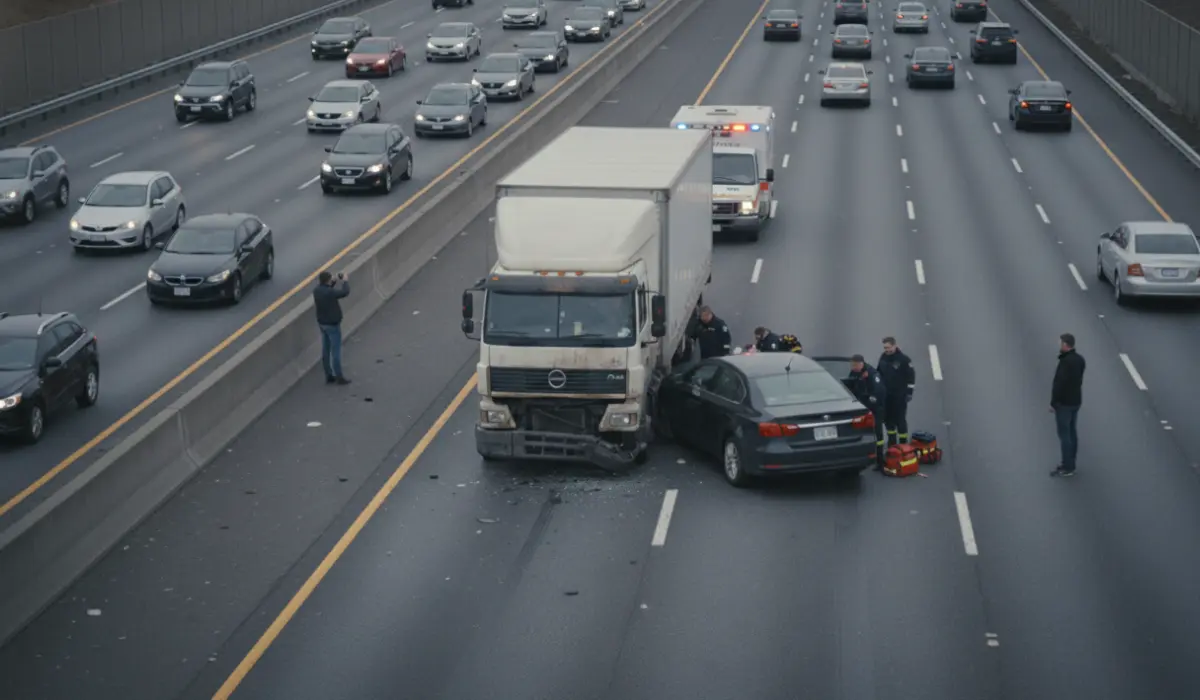
Surviving a truck accident is a mix of preparation, awareness, and decisive action. Give trucks space, stay alert, react early, protect yourself during impact, and handle the aftermath with care. You cannot control every factor on the road, but you can control how ready you are when danger appears.