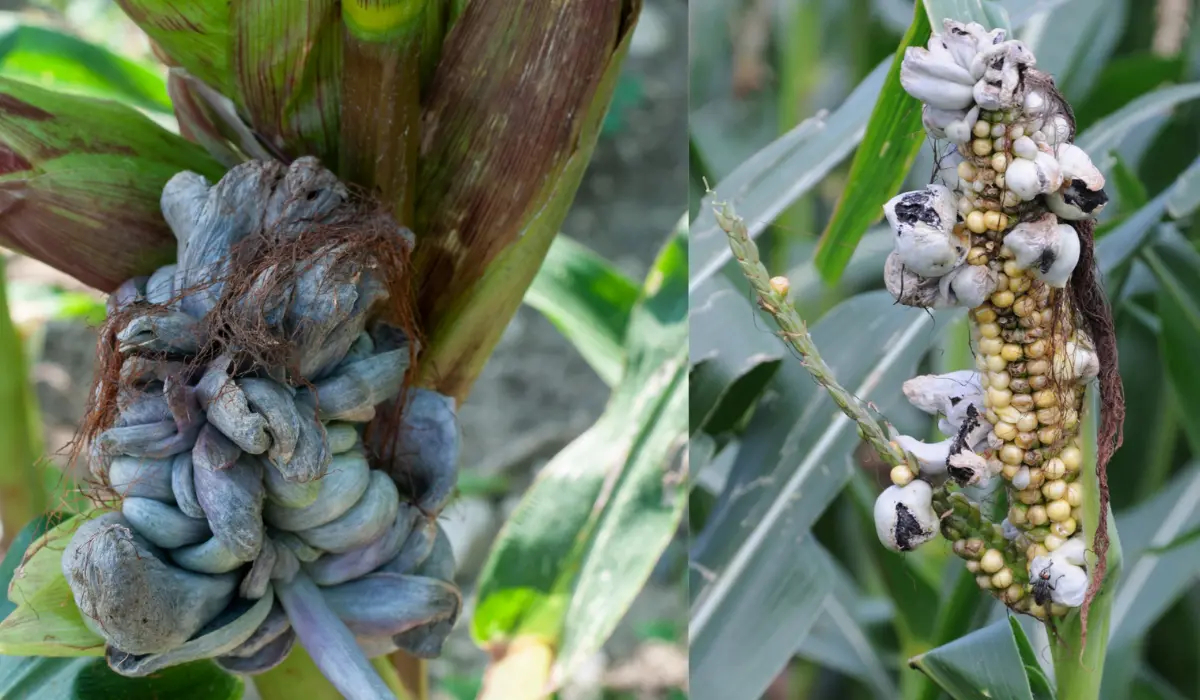
Corn smut is one of those diseases I’ve had to wrestle with more times than I’d like to admit. Caused by the fungus Ustilago maydis, it’s notorious for disfiguring corn plants with swollen gray galls that destroy yields if left unchecked.
Over the years, I’ve learned that beating corn smut requires more than a quick fix, it demands a combination of awareness, prevention, and smart management. In this article, I’ll share what has worked for me in treating and preventing this stubborn disease.
What is Corn Smut Disease?
To understand how to fight corn smut, I had to first learn its biology. The fungus Ustilago maydis attacks healthy tissue in corn plants, creating galls filled with dark spores.
These spores can linger in the soil or on plant debris for years, waiting for the right conditions to strike again. This is what makes smut so persistent and frustrating, it’s not just about this season’s crop but also about the long-term health of the field.
The disease thrives in warm, moist conditions, especially when plants are stressed. Drought, insect wounds, and mechanical injuries make the corn more vulnerable to infection.
Once the fungus has found an entry point, it develops those swollen galls that can appear on nearly any part of the plant: stalks, leaves, tassels, and ears. The damage can be devastating when the ears are infected, because it directly reduces the grain yield.
Interestingly, in some parts of the world, particularly in Mexico, corn smut (huitlacoche) is actually harvested as a delicacy. While I respect that culinary tradition, my goal as a grower has always been to minimize its impact on my fields. That means treating smut as a disease first and a potential specialty product second.
Identifying the Early Signs
Catching corn smut early makes all the difference in controlling it. The first signs usually appear as small, whitish swellings on the leaves or stalks. Over time, these swellings expand into large galls that turn silvery gray and eventually black as they fill with spores.
At this stage, they’re highly infectious, and the spores can easily spread throughout the field.
One of the challenges I faced early on was distinguishing smut galls from other plant issues. For example, insect damage or nutrient deficiencies can sometimes create deformities that look suspicious.
But unlike those problems, smut galls always have that distinct swollen, blister-like appearance that eventually ruptures. Once I trained my eye to recognize it, I became much faster at spotting and removing infected plants.
The sooner I identify an infection, the more effective my treatment efforts are. Waiting until galls have matured means spores have already begun spreading, setting the stage for another outbreak the following year.
That’s why regular scouting is non-negotiable for me, it’s not just about looking at the ears but also checking stalks, tassels, and leaves carefully throughout the season.
Also Read: How to Prevent and Treat Cabbage Worm Infestation
Treatment Options in the Field
When I find smut in the field, my immediate response is to remove the infected tissue before the galls mature and burst. If it’s just a small gall on a leaf, I’ll cut it off and dispose of it far from the field.
If the ear or stalk is badly infected, I pull out the entire plant. The key is never letting the spores return to the soil where they can lie dormant for years.
Chemical fungicides, in my experience, aren’t particularly effective against corn smut. The fungus is systemic once it infects the plant, and surface fungicides don’t reach the developing galls.
While seed treatments may provide some early protection, I’ve found that they are not a silver bullet. Instead, the most effective treatments are cultural practices combined with vigilance.
I’ve also experimented with crop rotation to break the disease cycle. Planting non-host crops like soybeans or wheat for a few years has helped reduce smut pressure.
While this doesn’t eliminate spores completely, it does give me breathing room and lowers the likelihood of severe outbreaks when I return to corn.
Long-Term Prevention Strategies
Over time, I’ve realized that prevention is where the real battle is won. Choosing resistant hybrids has been one of the most effective ways to keep smut at bay. Breeders have developed corn varieties with improved resistance, and planting these makes a noticeable difference in the number of infections I see.
Soil health also plays a major role. I make sure to maintain balanced fertility and avoid stressing the plants with nutrient deficiencies. Strong, healthy corn plants are less likely to succumb to infection.
I also pay attention to spacing, crowded plants trap humidity and create conditions smut loves. By keeping my rows and spacing consistent, I give air circulation a chance to dry the foliage and reduce disease pressure.
Planting conditions matter too. I avoid planting in overly wet soils, and I time my planting to avoid the peak of smut-favoring weather. This isn’t always perfect, since weather can be unpredictable, but it helps me stack the odds in my favor.
The Role of Farm Hygiene
One of the simplest but most powerful lessons I’ve learned is the importance of hygiene. Smut spores cling to crop residues, equipment, and even boots, which means careless management can spread the problem across fields.
After harvest, I make it a priority to properly manage residues instead of leaving infected debris on the soil surface.
Infected plant material should never be tilled back into the soil. Instead, I remove and destroy it, either by burning (where permitted) or carefully composting under conditions hot enough to kill the spores. Anything less just recycles the problem for next year.
Even equipment hygiene matters. I’ve gotten into the habit of cleaning down planters, harvesters, and tools when moving between fields. It might feel tedious, but I’d rather spend extra minutes cleaning than risk transporting millions of spores from one field to another.
Environmental and Weather Considerations
Weather is a factor I can’t control, but I’ve learned to work with it. Corn smut outbreaks tend to spike in warm, humid conditions, particularly after storms that leave plants injured.
When I know the season is trending toward higher humidity, I double down on scouting and prevention efforts.
Irrigation practices also play a role. Overhead irrigation can create the perfect moist environment for infection, especially if done late in the day. Switching to drip or scheduling irrigation earlier helps keep foliage dry and reduces smut pressure. It’s a small adjustment that makes a big difference.
Timing of planting is another tool in my toolbox. By adjusting sowing dates to avoid periods of peak stress or high humidity, I can sometimes sidestep the worst of the disease. While not foolproof, this strategy has helped me reduce losses in years when conditions favored outbreaks.
Working with Nature
Over time, I’ve also leaned into biological methods to support plant resilience. Healthy soils rich in beneficial microbes can help suppress fungal pathogens naturally. I’ve incorporated organic amendments and cover crops that boost soil life, and I’ve seen stronger plant health as a result.
Another natural approach I’ve tried is encouraging diversity within my crop rotations. Rather than cycling corn back too soon, I use rotations that introduce different root structures and microbial communities.
This not only helps with smut but also builds overall soil fertility and resilience.
For me, managing corn smut isn’t just about fighting one fungus, it’s about fostering a healthier farming system. By integrating biological practices, I’ve reduced my reliance on interventions and built fields that can handle stress more gracefully.
FAQs
Yes, but only if the compost pile reaches high enough temperatures to kill spores. Otherwise, it’s safer to burn or dispose of the material. Not realistically. Spores can survive for years. The goal is suppression and prevention, not total eradication. No, it isn’t toxic. In fact, it’s eaten as a delicacy in some cultures. The main issue is yield loss, not food safety. Is there a safe way to compost infected plant material?
Can smut be completely eliminated from a field?
Is corn smut harmful if consumed accidentally?