Fusarium wilt is one of the most frustrating diseases I face when growing tomatoes. It creeps in silently, crippling otherwise healthy plants and ruining what could have been a promising harvest.
Over the years, I’ve learned that there’s no quick fix for Fusarium wilt, but there are practical, science-backed strategies to manage it.
What follows is my complete approach to treating Fusarium wilt in tomato plants, drawn from both research and hands-on experience.
What is Fusarium Wilt?
Fusarium wilt is caused by the soil-borne fungus Fusarium oxysporum f. sp. lycopersici. Once it takes hold, it attacks the plant’s vascular system, clogging the channels that transport water and nutrients.
This is why affected plants look thirsty even when the soil is adequately moist. Unlike some foliar diseases that remain external, Fusarium lives inside the plant, making treatment especially challenging.
The fungus thrives in warm conditions, which is why outbreaks are common in late spring and summer. I’ve noticed that in areas where tomatoes are grown repeatedly without crop rotation, Fusarium pressure is always higher.
It’s also highly host-specific, which means while it devastates tomatoes, it won’t necessarily harm unrelated crops. Still, its persistence in soil is what makes it a long-term enemy.
Understanding the biology of Fusarium wilt is key. It isn’t just about knowing your plant is sick, it’s about realizing why common remedies don’t work.
Spraying leaves with fungicides or watering more won’t reverse the damage because the fungus is inside the plant’s tissue. To manage it, I always look at prevention and long-term soil strategies as much as I focus on the plant itself.
Also Read: Grow These 10 Herbs to Naturally Protect Your Plants from Pests
Recognizing Symptoms Early
One of the first things I train myself to watch for is yellowing leaves that start at the bottom of the plant and creep upward. Unlike nutrient deficiencies, which often affect leaves more uniformly, Fusarium wilt usually causes a one-sided yellowing or wilting. This uneven progression is one of its telltale signs.
On hot days, infected plants often wilt dramatically, but when the sun goes down, they may appear to recover. That temporary bounce-back can trick many growers into thinking the problem is simply water stress.
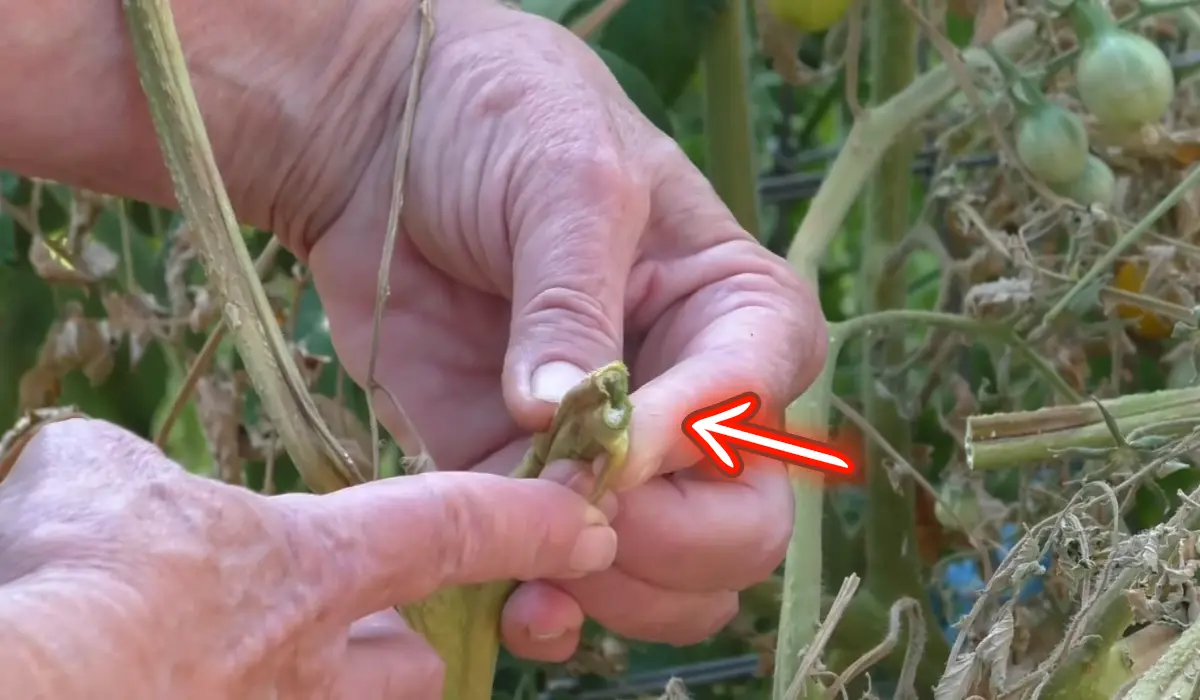
By the time the wilt becomes permanent, the fungus has already taken full control inside the plant. Cutting open a stem usually reveals brown streaks in the vascular tissue, another clear diagnostic clue.
It’s also important to distinguish Fusarium wilt from similar diseases. Verticillium wilt, for example, looks almost identical, but it usually appears later in the season and prefers cooler conditions.
Bacterial wilt, on the other hand, causes rapid collapse of the whole plant. Spotting these differences early helps me tailor my management plan and avoid wasting time on the wrong solutions.
Why Fusarium Wilt Persists in Soil
The persistence of Fusarium wilt in soil is one of the reasons it haunts tomato growers year after year. The fungal spores, known as chlamydospores, can survive in soil for a decade or longer without a host.
That means even if I skip tomatoes for a few years, the fungus may still be there waiting for the right conditions.
Monocropping, growing tomatoes or closely related plants like peppers in the same soil year after year, only strengthens Fusarium’s grip.
I’ve seen cases where growers kept using the same beds for tomatoes, and despite removing infected plants, the wilt returned stronger each season. This is because the fungus doesn’t just vanish when we pull out a sick plant; it sheds spores back into the soil.
The real challenge is that Fusarium doesn’t need to be active all the time. It lies dormant when conditions aren’t right and reemerges when warmth, moisture, and a susceptible host align.
That’s why ignoring it isn’t an option. I think of it as a hidden reservoir in the soil, always present, always waiting.
Cultural Practices for Management
Cultural practices form the backbone of my Fusarium wilt strategy. Crop rotation is one of the most effective tools, but it must be done thoughtfully.
Rotating tomatoes with non-solanaceous crops like beans, corn, or brassicas helps reduce disease pressure over time. However, rotating only with peppers or eggplants won’t work, since they’re also susceptible.
Soil health is equally important. By building up organic matter through compost and cover crops, I encourage beneficial microbes that naturally compete with Fusarium.
I’ve had good success with soils rich in microbial diversity, they seem to suppress the pathogen better than depleted soils. Healthy soil isn’t a guarantee, but it tilts the odds in my favor.
Sanitation is another critical practice. Whenever I see an infected plant, I remove it carefully and never compost it. I also make sure to clean my tools after working with infected plants, since spores can hitch a ride from one bed to another. These small habits add up and reduce the spread dramatically.
Resistant Tomato Varieties
Choosing resistant varieties is one of the simplest ways I reduce losses. Many modern tomato varieties are bred with resistance genes, often labeled as “F,” “FF,” or even “FFF,” which indicate resistance to different races of Fusarium.
This doesn’t mean immunity, but it does mean these plants are less likely to succumb under moderate disease pressure.
I’ve noticed, however, that resistance has its limits. Fusarium has multiple races, and new ones can emerge. Planting the same resistant variety over and over can lead to breakdowns in resistance if the pathogen adapts.
That’s why I rotate resistant varieties and mix in others to avoid giving Fusarium a single target to overcome.
When selecting varieties, I don’t only look at resistance but also flavor and yield. It’s a balancing act, because some of the most disease-resistant tomatoes don’t always taste the best.
My strategy is to grow a mix: a few highly resistant types for security, and some heirlooms that may be more vulnerable but reward me with exceptional quality.
Biological and Organic Solutions
I’ve become a big believer in biological tools against Fusarium. Products containing Trichoderma harzianum or beneficial Bacillus strains can colonize plant roots and outcompete the pathogen.
Mycorrhizal fungi also help by improving root health and creating a protective barrier. These aren’t silver bullets, but they add resilience.
Organic amendments like compost teas, neem cake, or biochar can also improve soil conditions. By creating a more hostile environment for Fusarium, these inputs indirectly protect tomatoes.
I apply them as part of my soil-building program, not just as a crisis response. It’s the steady, long-term application that makes the difference.
What I appreciate about biological and organic solutions is their sustainability. They don’t just suppress Fusarium; they build an ecosystem where good microbes thrive.
Over time, I’ve seen my soils become more balanced, and my crops handle stress better. It takes patience, but the payoff is worth it.
Chemical Control
Chemical fungicides are often the first thing people think of, but they have limited value against Fusarium wilt. Because the fungus lives inside the plant’s vascular tissue, sprays on the leaves do little to nothing.
Soil drenches can offer some protection, but they rarely provide a cure once infection has begun.
I’ve used chemical seed treatments in the past, and they can help protect seedlings during their most vulnerable stage. However, once the roots reach untreated soil, the protection fades.
Relying solely on chemicals creates a false sense of security and can lead to disappointment.
That’s why I view chemical control as a minor tool, not a main strategy. At best, it buys me time; at worst, it wastes resources.
Integrated approaches, combining resistant varieties, cultural practices, and biological tools, always outperform chemicals alone in my experience.
Also Read: Early Signs of Root Rot (and How to Save Your Plants in Time)
Long-Term Soil Management
The real battle against Fusarium wilt is won in the soil. I invest in practices that build diversity and resilience, such as cover cropping with grasses or legumes, which improve soil structure and microbial life.
Green manures, when incorporated into the soil, also add organic matter that shifts the microbial balance away from pathogens.
Soil solarization, covering moist soil with clear plastic during hot months, has been another useful tool.
The trapped heat can kill Fusarium spores near the surface, though it won’t reach deeper layers. For shallow-rooted crops or raised beds, this method is particularly effective.
In the long term, I’ve come to see soil not as a medium to grow plants, but as a living ecosystem that needs constant care.
Every practice I use, from rotation to organic amendments, is aimed at creating soil that naturally suppresses disease. It’s a slow process, but once soil health improves, Fusarium becomes less of a constant threat.
FAQs
Unfortunately, no. The spores can persist for many years. The goal is suppression and management, not total eradication. Check for one-sided yellowing and brown streaks inside the stem. Fusarium-infected plants may temporarily recover at night, unlike drought-stressed ones. Yes, grafting onto resistant rootstocks is a proven way to bypass soil-borne Fusarium. It’s especially useful for heirloom varieties. Hydroponics can reduce the risk since there’s no soil, but Fusarium can still enter through contaminated water or tools, so hygiene is crucial. Is it possible to completely eradicate Fusarium wilt from soil?
How can I tell if my tomato wilt is due to Fusarium and not drought stress?
Will grafting tomatoes onto resistant rootstocks help?
Can hydroponic systems prevent Fusarium wilt?