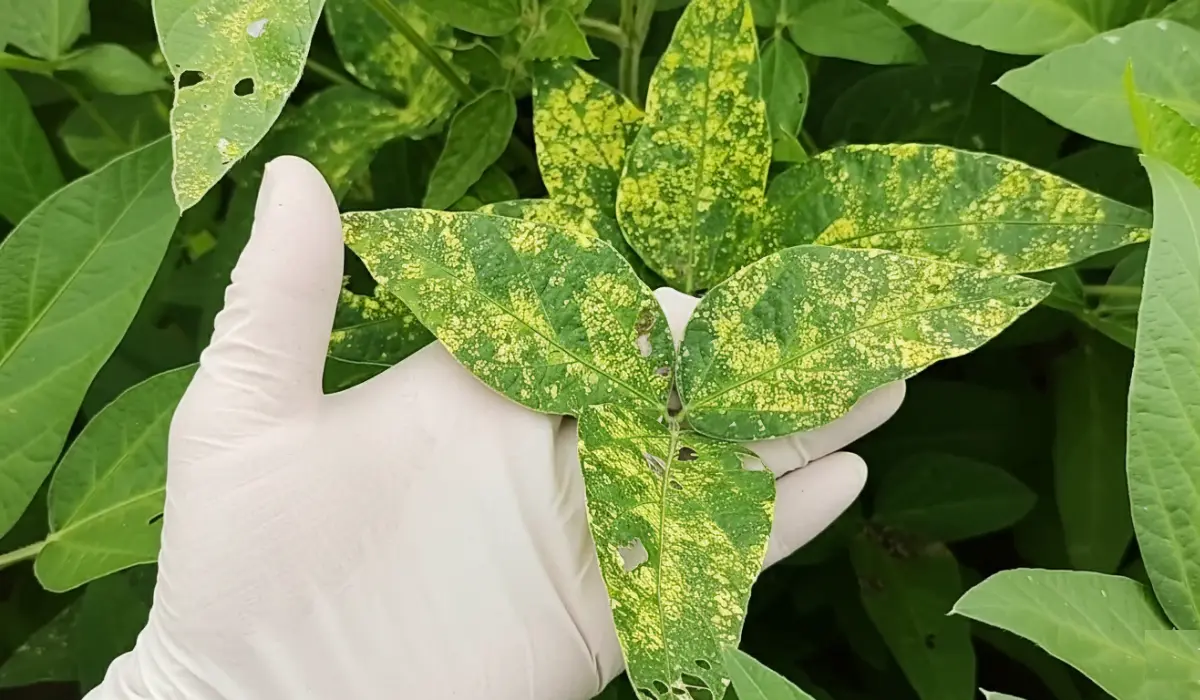
Yellow Mosaic Virus (YMV) is one of the most frustrating problems I deal with in soybean farming. Once it shows up in a field, it doesn’t just reduce yields, it threatens the stability of the whole crop season.
Over the years, I’ve learned that treating YMV isn’t about curing plants once they’re infected, because there’s no cure. It’s about prevention, control, and smart management strategies that protect my fields before the damage becomes irreversible.
What is Yellow Mosaic Virus in Soybeans?
The first thing I remind myself is that YMV is a viral disease, and viruses behave very differently from fungi or bacteria. I can’t spray a fungicide or antibiotic and expect the problem to go away.
This virus spreads mainly through whiteflies, which act as carriers moving from one plant to another. Once it enters the plant system, it disrupts the ability of soybeans to photosynthesize efficiently, and that’s why I see yellow patches spreading across the leaves.
What makes YMV so destructive is its speed. Whiteflies reproduce quickly, especially under warm and humid conditions, and they don’t respect field boundaries.
A neighboring farm with poor management can put my soybeans at risk just as easily as anything I do in my own plots. When populations explode, they create the perfect conditions for the virus to move fast and far.
I can usually spot YMV early by watching for characteristic symptoms: mosaic yellowing patterns on leaves, stunted plants that fail to reach their expected height, and pods that don’t fill properly.
Once I see these signs, I know it’s too late to save the infected plants, but it’s not too late to protect the rest of the crop. That’s why early detection and preventive action are everything.
Also Read: How To Treat Potato Virus Y (PVY) – Full Guide
My Approach to Early Detection and Monitoring
The backbone of my management strategy is field scouting. I make it a routine to walk my fields regularly, not just once a month but weekly during critical growth stages.
I don’t rely on what I see from a distance; I get down to leaf level and check for patterns of yellowing or clusters of whiteflies. This hands-on approach has saved me from bigger losses more times than I can count.
I also pay attention to field edges, because that’s often where pests invade first. Whiteflies don’t just appear in the middle of a field; they move inward from surrounding vegetation or infested crops.
By monitoring the borders closely, I often catch early signs before the problem spreads too far. I’ve even found it useful to keep small notes and photographs so I can compare what I see week to week.
Quick detection doesn’t eliminate the virus, but it gives me a fighting chance to act. When I know an outbreak is beginning, I can target whitefly populations early, strengthen my cultural practices, and alert other farmers nearby.
Acting late almost always means watching large patches of the field go yellow while feeling powerless. Acting early means staying in control.
Controlling the Whitefly Vector
Since YMV relies on whiteflies to spread, controlling the vector is my most effective line of defense. I use integrated pest management (IPM) rather than depending on one method alone.
That means I combine chemical sprays, natural predators, and cultural techniques in a balanced way. Each tool has strengths, but together they create stronger protection.
When I use insecticides, I’m careful about timing and rotation. I don’t spray randomly; I spray when whitefly populations cross a threshold where economic damage is likely.
I also rotate active ingredients so the pests don’t develop resistance. I’ve seen neighbors overuse one chemical until it stopped working entirely, which makes management much harder in the long run.
But chemicals are just one piece. I encourage biological control agents, like parasitoid wasps that naturally keep whiteflies in check. I also adjust planting density and avoid crops nearby that serve as alternate hosts.
This way, the pressure of whiteflies doesn’t overwhelm the system, and I don’t find myself locked into endless cycles of spraying.
Resistant Varieties and Seed Selection
One of the smartest decisions I make every season is choosing the right seed. Resistant soybean varieties are not perfect, but they’re a critical layer of protection.
By planting varieties that show tolerance to YMV, I reduce the chances of large-scale infection even if whiteflies make their way into my field.
I don’t pick seeds blindly. I test varieties in small plots, evaluate their performance, and watch how they respond in different weather conditions. Some varieties that look promising on paper may not adapt well to my soil type or local climate.
Keeping records of how they perform year after year gives me confidence in the varieties I commit to on a larger scale.
Of course, resistance doesn’t mean immunity. If vector pressure is high, even resistant varieties can show symptoms.
But by combining resistance with other management strategies, I greatly reduce my risk. It’s like building layers of defense, no single wall is enough, but together they form a barrier that holds strong.
Crop Management Practices That Reduce YMV Risk
Cultural practices play a bigger role than many farmers realize. I rotate soybeans with non-host crops to break the cycle of both the virus and the whiteflies.
If I keep planting soybeans or other susceptible crops back-to-back, I’m basically feeding the problem. By rotating with cereals or other resistant crops, I reduce the reservoir of infection.
Weed management is equally important. Many weeds act as alternate hosts for both the virus and the whiteflies.
If I ignore them, I’m providing a safe harbor for pests even when my main crop is not in the field. That’s why I keep my fields clean, not just during cropping but in the off-season as well.
Balanced nutrition also strengthens plant defenses. I’ve noticed that plants under stress from poor fertilization or uneven irrigation tend to show more severe symptoms.
By maintaining healthy soil fertility and water management, I give my soybeans the strength to withstand low levels of infection without collapsing completely.
Also Read: How to Treat Fusarium Wilt in Tomato Plants
Biological and Eco-Friendly Measures
Over the years, I’ve experimented with eco-friendly options like neem-based sprays and botanical extracts. They may not act as fast as synthetic chemicals, but they provide a safer, sustainable option for managing whiteflies. I use them especially in the early stages of infestation or when I want to minimize chemical residues.
Encouraging natural predators has been one of the most rewarding strategies. Lady beetles, lacewings, and parasitoid wasps thrive when I avoid blanket chemical sprays.
By creating a balanced ecosystem, I allow nature to take some of the pressure off me as a farmer. It doesn’t replace other measures, but it reduces my reliance on synthetic inputs.
I see these eco-friendly measures as long-term investments. They build resilience into the system and reduce the chance of pest resurgence.
While they may not deliver overnight results, they fit into a sustainable strategy that keeps my farm productive without exhausting the environment.
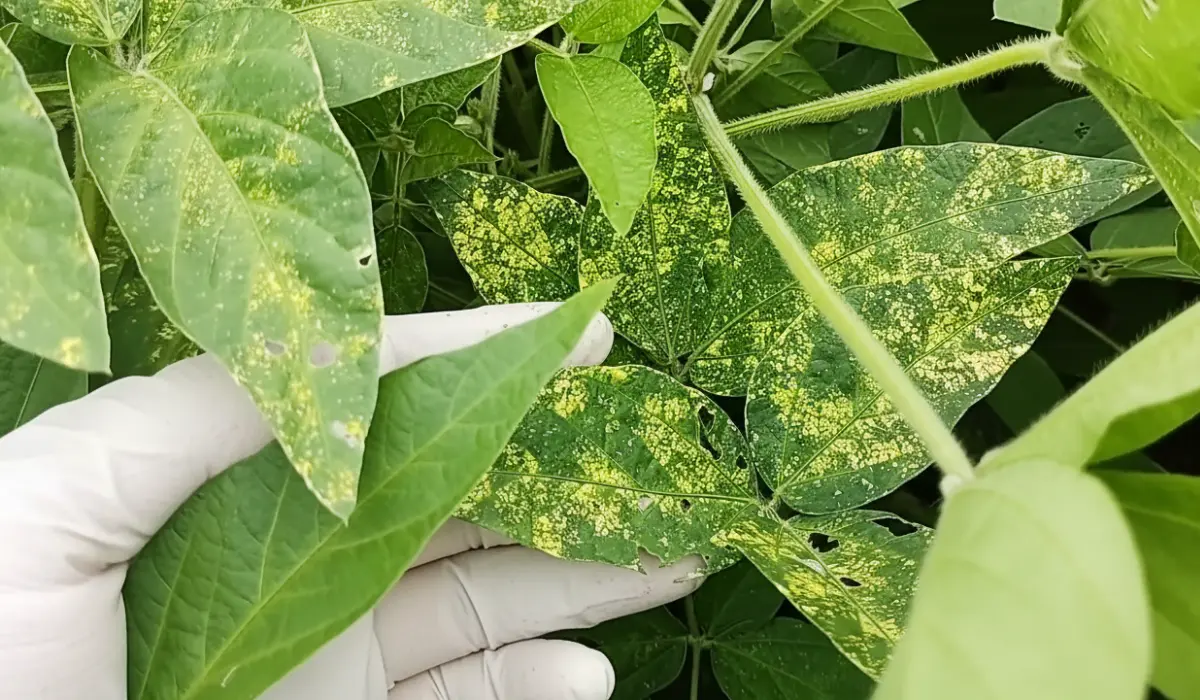
Severe symptoms of YMV in soybean leaves
The Role of Education and Collaboration
YMV control isn’t just about what I do individually; it’s also about how the whole farming community responds. If my neighbors ignore whiteflies, I’ll be fighting a losing battle no matter how hard I work.
That’s why I share what I know, attend local workshops, and stay connected with extension officers who bring new insights.
I’ve learned that farmer-to-farmer communication is one of the most effective tools against YMV. When one of us spots an outbreak, spreading the word quickly allows others to act before it spreads.
We don’t compete against each other when it comes to disease management; we stand together against a shared threat.
Collaboration also helps in accessing resistant seeds, bulk-buying eco-friendly inputs, and sharing lessons on what works in specific conditions.
By working collectively, we don’t just reduce YMV in our own fields, we reduce it across the region, which benefits everyone.
FAQs
Nutrient deficiencies usually show uniform yellowing, while YMV causes irregular mosaic patterns and stunted growth. Early intervention is best. Act as soon as populations cross threshold levels, not after symptoms have spread widely. No, they help but need to be combined with vector control and good management practices for full protection. Warm, humid conditions favor whitefly multiplication, which increases the spread of YMV significantly. How can I tell the difference between nutrient deficiency and YMV?
What’s the best time to apply control measures for whiteflies?
Are resistant varieties enough to control YMV on their own?
How does weather influence the spread of Yellow Mosaic Virus?