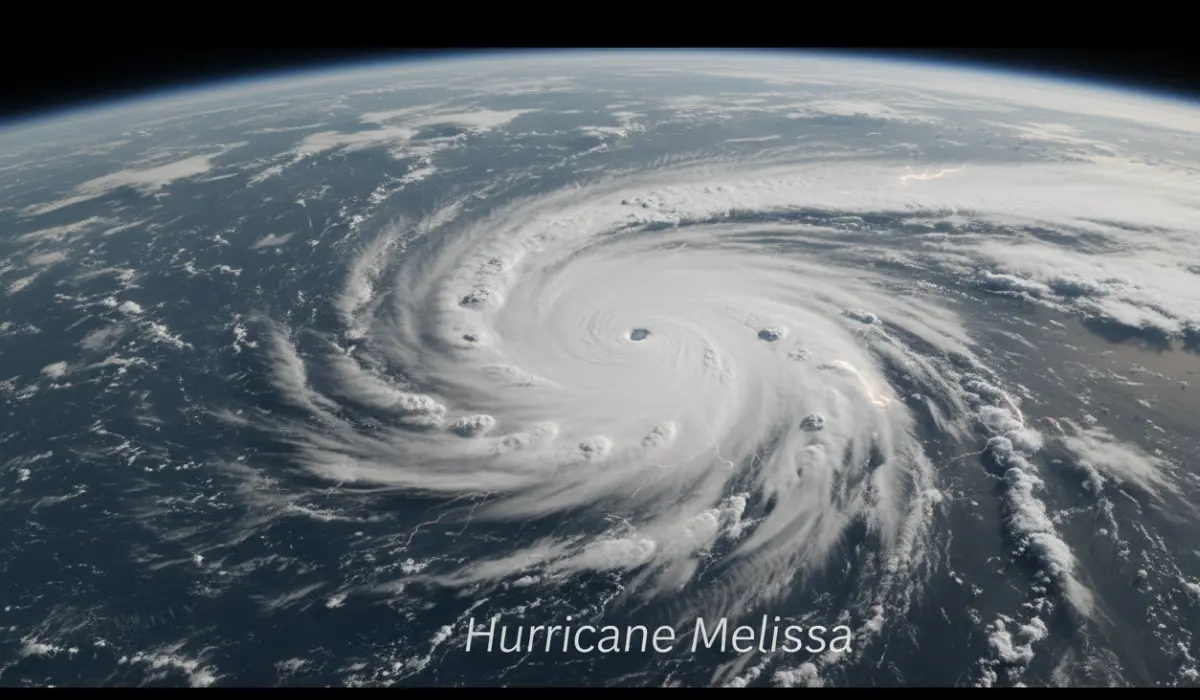
As Hurricane Melissa barrels toward Jamaica with Category 5 strength, the island nation braces for a potentially devastating landfall that meteorologists warn could bring “catastrophic and life-threatening” conditions.
According to the National Hurricane Center (NHC), Melissa is packing sustained winds of 185 miles per hour, making it one of the most powerful storms to threaten the Caribbean in years.
At 11 a.m. ET, the NHC confirmed that Melissa was nearing Jamaica’s southern coastline, already unleashing destructive winds, torrential rain, and life-threatening storm surges. Authorities have issued the highest-level warnings, urging all residents to take immediate shelter.
“This is an extremely dangerous and life-threatening situation. Take cover now,” the NHC said in its 10 a.m. advisory, emphasizing that anyone within the storm’s path must remain indoors even if the eye passes overhead.
Officials cautioned that the calm during the eye’s passage is temporary and that winds would intensify sharply once the eyewall resumes.
Also Read: Destructive SEQ storms, 5cm hail leave thousands without power
Jamaica Under Siege From Powerful Winds
Daryl Vaz, Jamaica’s Minister of Energy, Telecommunications, and Transport, confirmed that widespread power outages were already occurring across the country as the storm’s outer bands lashed the island.
Vaz reported that the nation’s sole electricity provider, Jamaica Public Service (JPS), had suffered significant damage to its infrastructure due to violent winds and lightning strikes.
“Several generation units, critical high-voltage substations, and transmission lines have been forced out of service by hurricane-force winds,” Vaz told reporters. He estimated that roughly 240,000 customers, about 35% of JPS’s network, were without power even before the storm’s eye made landfall.
Emergency repair crews have been pulled from the field for safety, with restoration work expected to begin only after conditions improve.
Evacuation Warnings Largely Ignored
Despite repeated government warnings, officials say many Jamaicans have chosen to remain in their homes rather than move to emergency shelters.
Desmond McKenzie, Jamaica’s Minister of Local Government and Community Development, expressed deep concern about low shelter occupancy.
“Jamaica, this is not the time to be brave,” McKenzie warned during a Tuesday press briefing. “Don’t bet against Melissa, it is a bet we can’t win.”
McKenzie, who has been overseeing emergency operations, revealed that only 133 of the island’s more than 800 designated shelters were occupied as of Tuesday morning. He urged residents in flood-prone or coastal areas to seek safety immediately if it was still possible to travel safely.
“There is still a small window of opportunity,” he said. “Let us see if we can use it wisely.”
Regional Toll Mounts as Melissa Tears Through the Caribbean
Before reaching Jamaica, Hurricane Melissa had already claimed at least seven lives in its deadly sweep across the northern Caribbean.
In Haiti, three people were killed over the weekend as torrential rains triggered flash floods and landslides. Another death was reported in the Dominican Republic, where one person remains missing.
In Jamaica, authorities confirmed three fatalities linked to the storm’s approach, though details remain limited as emergency teams struggle to respond amid worsening conditions.
The NHC said that Melissa is expected to maintain its intense strength as it crosses Jamaica and moves toward southeastern Cuba later tonight.
The storm will likely continue as a major hurricane when it reaches the southeastern Bahamas. While its trajectory keeps it away from the U.S. mainland, forecasters stress that nearby islands could experience severe flooding, landslides, and prolonged power disruptions.
Officials Urge Vigilance and Cooperation
Emergency management agencies across Jamaica remain on high alert, coordinating response efforts with local authorities and community volunteers.
The Jamaica Defence Force and disaster response teams have been deployed to assist with evacuations and secure vital infrastructure, though operations are being hampered by strong winds and poor visibility.
Government officials have repeatedly called for unity and cooperation in the face of what could be one of the most destructive storms in Jamaica’s modern history.
“This storm is not just powerful, it is unpredictable,” Vaz noted. “We must prioritize safety over everything else.”
Residents have been advised to stay off roads, avoid flooded areas, and monitor official updates through local media and emergency alerts.
Looking Ahead
Forecasters predict that Hurricane Melissa will continue to produce torrential rainfall, flash flooding, and deadly storm surges across Jamaica through Wednesday.
Recovery efforts are expected to be extensive, with significant damage likely to power lines, homes, and road networks.
The NHC reiterated that “little change in strength is expected” before Melissa’s full landfall, warning that the system will remain a “highly dangerous Category 5 hurricane” as it moves through the region.
For now, Jamaica stands on the frontline of nature’s fury, a nation bracing for impact and hoping that preparation and resilience will see it through one of the most powerful storms to ever test its shores.