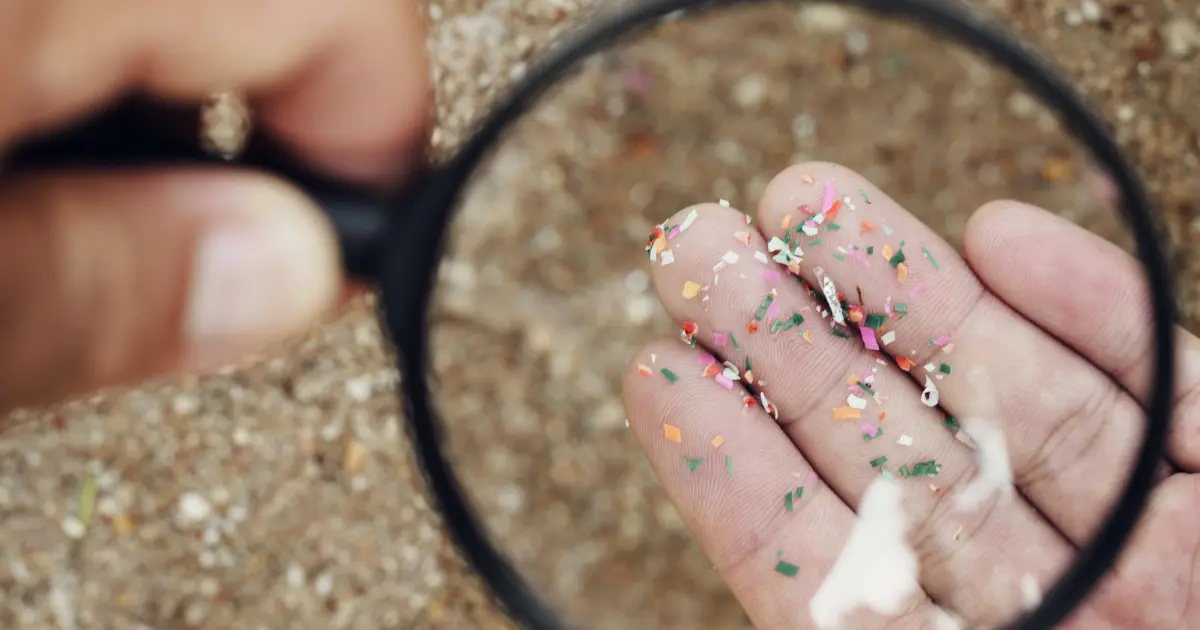
Microplastics are no longer just a problem for oceans, they are steadily degrading the world beneath our feet. A new scientific study has found that tiny plastic fragments accumulating in soil not only diminish its fertility but also accelerate the release of nitrous oxide, one of the most harmful greenhouse gases.
The research, published in Environmental Science & Technology, reveals that microplastic contamination could compromise food production and worsen climate change.
Plastic’s Silent Invasion of Soil
While plastic pollution is often associated with marine environments, an overwhelming majority, more than 90 percent, ends up on land. Over time, bottles, packaging, and synthetic fibers fragment into microplastics that settle invisibly into farmland and natural soils.
These particles interact with the very microorganisms that regulate soil fertility, setting off cascading effects that scientists are only beginning to fully understand.
Until now, most studies have examined the impact of single types of plastic on soil ecosystems. But microplastics do not exist in isolation in the environment; they mix and interact.
Recognizing this gap, Yi-Fei Wang and Dong Zhu of the Chinese Academy of Sciences led a team to investigate how multiple types of plastics, when combined, affect critical soil functions, especially the nitrogen cycle.
Also Read: Corn Cash Markets Surprise as Harvest Begins
Testing How Plastics Reshape Soil Health
To explore the impacts, the researchers designed a controlled laboratory experiment. They prepared soil microcosms and added varying combinations of six plastics, including polyethylene terephthalate (PET) and polyvinyl chloride (PVC).
The soils were incubated for 40 days under four different conditions: one group without plastic (serving as the control) and three groups with increasing levels and mixtures of microplastics.
After incubation, the team conducted a detailed analysis of the soil’s physical and biological properties. They examined acidity levels, measured enzyme activity, and used DNA sequencing to identify microbial communities and their genetic functions. The results painted a troubling picture of how microplastic diversity reshapes soil chemistry and biology.
Shifts in Soil Chemistry and Microbial Communities
The study found that as the diversity of plastics increased, so did changes in soil health. The mixture of plastics made soils more alkaline by raising pH levels and boosted soil carbon content.
While these changes might seem neutral, or even beneficial, on the surface, the hidden impacts were more severe.
Most concerning was the effect on bacteria involved in nitrogen cycling. Microplastic contamination significantly increased the activity of bacterial genes linked to denitrification.
This process converts plant-available nitrogen into gaseous forms, robbing crops of essential nutrients while simultaneously releasing nitrous oxide into the atmosphere.
A Potent Climate Threat
Nitrous oxide is no ordinary greenhouse gas. It has nearly 300 times the warming potential of carbon dioxide and plays a major role in accelerating climate change.
According to the researchers, the rise in nitrous oxide emissions under microplastic exposure was strongly connected to the bacterial family Rhodocyclaceae, which thrives under altered soil conditions.
This dual effect, weakening soil fertility while intensifying greenhouse gas emissions, highlights a dangerous feedback loop. Soils contaminated with microplastics not only lose their ability to sustain healthy crop growth but also contribute more heavily to global warming.
Implications for Agriculture and Policy
The findings underscore how overlooked soil pollution could undermine both food security and climate goals. Agricultural land is particularly vulnerable, given the widespread use of plastic mulches, fertilizers in plastic-coated pellets, and runoff from urban and industrial sources. Over time, these materials fragment and accumulate in soils, often unnoticed.
The researchers stress that soil management strategies need to account for the complexity of microplastic pollution. Instead of treating it as a single-substance problem, policymakers and farmers must consider the combined effects of multiple plastics. Otherwise, efforts to conserve soil fertility and cut greenhouse gas emissions will fall short.
An Urgent Call for Attention
Microplastics have long been recognized as a danger to marine life, but this study shows that terrestrial ecosystems face equal, if not greater, threats. The fact that plastics can disrupt the very microbial processes that underpin food production and climate regulation should serve as a wake-up call.
“Understanding the ecological consequences of microplastic diversity is essential,” the study’s authors noted, emphasizing that targeted strategies are needed to reduce nitrogen loss and preserve soil ecosystem services.
As plastic use continues to rise globally, so too does the urgency of addressing its afterlife. Soil, the foundation of human survival, is quietly absorbing the brunt of this pollution, transforming a waste crisis into a direct threat to food systems and the climate.