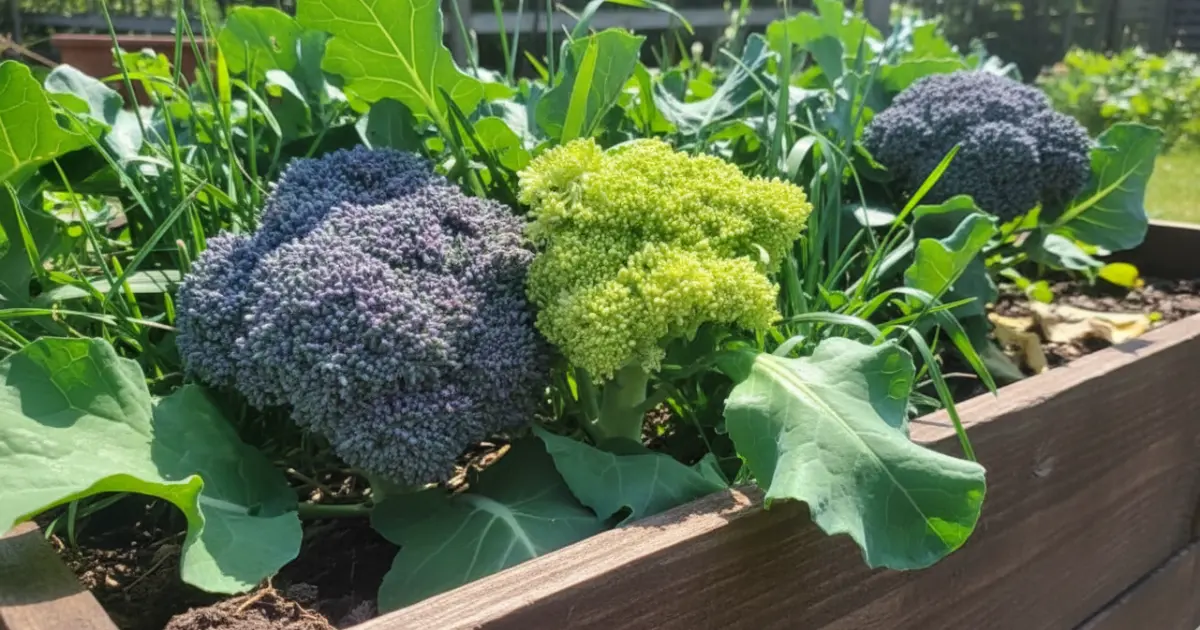
Broccoli may be a dinner table divider, but there’s no denying its popularity. In the United States, it consistently ranks among the top consumed vegetables, with nearly 90 percent of the nation’s supply grown in California.
That heavy dependence on one region, however, has become a mounting concern as climate change reshapes weather patterns, increasing the frequency of heatwaves, wildfires, and other extreme events that threaten reliable harvests.
Now, a breakthrough hybrid known as Northstar could transform the geography of broccoli farming. Developed through a collaboration between Cornell University and Dutch seed company Bejo Zaden, the new variety has been bred to withstand both warmer temperatures and unpredictable conditions, while also thriving in colder environments where broccoli has traditionally struggled.
Tackling Climate Pressures in Agriculture
Broccoli is a temperate crop, finicky about its environment. It grows best in areas with mild days and cool nights, conditions that are becoming increasingly rare. Warmer nighttime temperatures, in particular, interfere with the plant’s ability to develop properly.
According to Phillip Griffiths, a plant breeder at Cornell AgriTech, the limitations of conventional broccoli varieties have kept production concentrated in temperate regions like California’s Central Valley.
But as climate volatility places California’s vegetable industry at risk, researchers and seed developers have been seeking alternatives.
Griffiths said the Northstar project shows how resilience-focused breeding can expand growing zones. “Improving broccoli varieties that are more tolerant of heat and environmental stress can drastically increase the regions where it can be cultivated,” he noted.
Also Read: Microplastics Reduce Soil Fertility and Boost Production of a Potent Greenhouse Gas, Study Shows
A Decade of Joint Innovation
The Northstar hybrid is the product of a 24-year effort that began at Cornell. Griffiths and his team worked with broccoli lines that had been bred in New York’s fluctuating climate, deliberately selecting plants that could tolerate warm nights without stunted development. These traits were unusual in commercial broccoli programs, but essential for building resilience.
In 2012, Cornell partnered with Bejo Zaden, sending its parent plants to breeder Cees Sintenie. Bejo contributed its own high-quality commercial line, and together the teams worked to combine the best features of both.
Griffiths compared the process to cooking: each breeder brought different “ingredients” and techniques, with the shared goal of creating something greater than the sum of its parts.
The outcome was Northstar, a hybrid that merges Cornell’s environmental hardiness with Bejo’s emphasis on market traits like appearance and harvest efficiency. The collaboration underscores the value of public-private partnerships in agricultural innovation, Griffiths added.
Expanding Beyond California
Unlike conventional broccoli, Northstar is suited for cooler climates such as New York, New England, and even Quebec. Adaptation to a wider range of conditions could allow farmers across the northeastern United States to produce broccoli more consistently, reducing reliance on West Coast fields.
Trials are already underway across the Northeast, from southern New Jersey to the northern edges of Maine. Early results are encouraging. At Kludt Brothers Farms in Kendall, New York, crop manager Jay Collier reported that Northstar endured an unusually hot and dry growing season, maintaining quality while other vegetables struggled.
The hybrid’s longer stems also simplified harvesting and produced higher-grade bunches without the hollow stems that often render broccoli unsellable.
“It’s a learning experience for everyone,” Collier said, noting that he plans to expand plantings next year based on this year’s performance.
A Promising Future for the Hybrid
Bejo’s breeders are confident that Northstar will succeed in the commercial marketplace. Sintenie described the variety as vigorous, healthy, and well-suited to handling heat stress, particularly during warmer-than-average years. He believes its adaptability makes it stand out in ways other broccoli hybrids do not.
Beyond individual farms, the arrival of Northstar highlights a broader shift in agricultural strategy. As global temperatures climb and weather extremes become the norm, crops once thought to be tied to narrow climate bands may find new homes through targeted breeding programs.
For broccoli, that could mean the Northeast becomes not just a consumer stronghold but a significant production hub.
Broccoli’s Changing Landscape
For decades, California’s dominance in broccoli production has left the U.S. food system vulnerable to climate disruptions. Northstar represents a step toward diversifying supply chains and reducing that dependence.
If it performs as expected in new regions, consumers could see more locally grown broccoli in their markets, potentially fresher and less expensive, with fewer transportation-related emissions.
While it is still early days, farmers, breeders, and researchers alike are optimistic. With climate change forcing agriculture to adapt, Northstar is more than just a new variety, it’s a proof of concept for how collaboration and long-term research can prepare staple crops for a less predictable future.
At a time when one of America’s most popular vegetables faces mounting threats, the emergence of a hybrid that can thrive under a wider range of conditions signals a hopeful shift.
Northstar could change not only where broccoli is grown, but also how food systems respond to the challenges of a warming world.