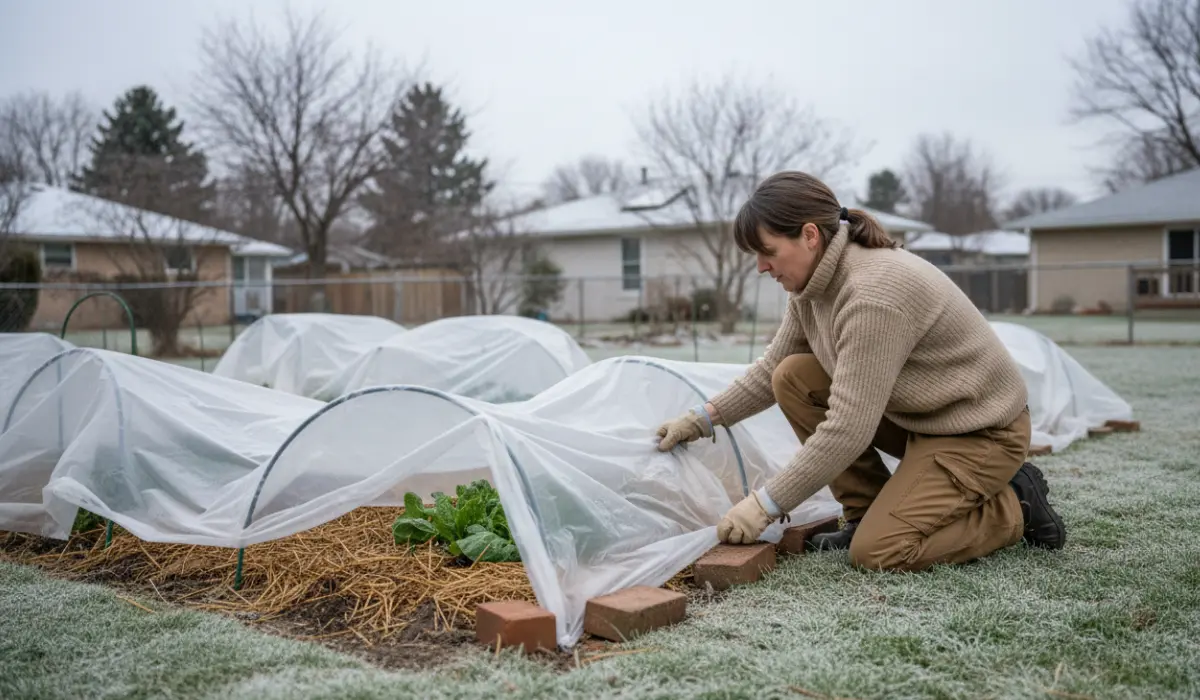
Every fall, I face the same question that many gardeners wrestle with: should I cover my garden beds for the winter or leave them bare? After years of experimenting with both methods, I’ve learned that the answer isn’t black and white.
It depends on your soil type, your climate, and what kind of garden ecosystem you’re building. Still, there are clear reasons to choose one approach over the other, and the key is understanding what happens beneath the surface when temperatures drop.
What Happens to Soil in Winter?
When the first frost hits, most of the action above ground slows to a crawl. But beneath the surface, the soil is still alive. Microbes, worms, and fungi work year-round to keep that ecosystem functioning.
In cold months, the freeze-thaw cycle plays a big role in shaping soil structure. When the ground freezes, water inside the soil expands, breaking up compacted areas. As it thaws, the soil contracts again, a natural aeration process that can be beneficial.
However, when soil is left exposed to the elements, it becomes vulnerable. Rain, snowmelt, and wind can wash away topsoil, leach nutrients, and destroy the delicate structure that roots depend on.
In bare beds, organic matter breaks down faster and leaves the surface crusted and compacted by spring. This can make planting season more difficult, especially if your soil tends to be heavy.
On the flip side, covered soil is more stable. Whether you use mulch, leaves, or a living cover crop, a protective layer insulates the ground, holds moisture, and prevents erosion.
It also shelters beneficial organisms that might otherwise perish during hard freezes. By spring, that cover often breaks down into rich organic matter, the kind that feeds your plants naturally.
Also Read: When Is the Latest I Can Plant Daffodil Bulbs?
The Case for Covering Garden Beds
Covering your beds in winter is like giving your soil a blanket and a meal at the same time. One of the main benefits is erosion control.
Even mild winter rains can strip away topsoil, and once that layer is gone, it takes years to rebuild. A good cover, especially organic mulch or leaf litter, locks the soil in place and reduces runoff.
It’s not just about physical protection. Covering also protects the biological life within the soil. Microbes and earthworms are the foundation of healthy soil, and they need some level of warmth and moisture to survive the winter.
A layer of mulch or a cover crop helps regulate temperature fluctuations, so the soil doesn’t freeze as deeply or as often. This allows microbial activity to continue longer into the season, and it resumes faster in spring.
There’s also a weed advantage. Winter weeds are opportunists that thrive in bare, exposed ground. A cover keeps sunlight off dormant weed seeds, reducing the problem before it starts.
When you uncover your beds in spring, the soil is soft, living, and ready to plant, not crusted over or choked with weeds.
The Case Against Covering Beds
That said, there are situations where leaving your beds uncovered makes sense. Some gardeners, especially in regions with long, cold winters, prefer to let the freeze-thaw cycles do their natural work.
The freezing action can help break up clods and improve drainage over time. For heavy clay soils, this can be beneficial, as it helps create a finer texture without tilling.
There’s also the risk of trapping too much moisture under thick covers. In poorly drained soils, excess winter wetness can create anaerobic conditions that harm soil life rather than help it.
Rodents can also find cozy homes under mulch or plastic covers, chewing on roots and stems through the winter. If you’ve dealt with vole damage before, you know how frustrating that can be.
Finally, if your soil is already well-structured and you garden in a dry, mild winter climate, you may not need to cover at all.
In these cases, simply leaving a light scattering of plant debris or compost on the surface might be enough to protect your soil without smothering it. It’s about balance, and knowing when “less” does more good.
Choosing the Right Covering Method
If you decide to cover, the next question is how. Organic materials like straw, leaves, or wood chips are classic choices. They protect the soil, feed microbes as they decompose, and can be easily removed or mixed in the coming spring.
I personally favor shredded leaves, they break down beautifully and add structure without matting down too heavily.
Living covers, or cover crops, are another powerful option. Plants like winter rye, hairy vetch, or crimson clover anchor the soil while feeding it with nitrogen and organic matter.
They’re especially effective in vegetable gardens because they leave behind a nutrient-rich residue when mowed or turned in before planting. Cover crops also attract beneficial insects, giving your garden a head start in spring.
Then there are synthetic covers like tarps or plastic sheeting. These are useful if you want to solarize the soil or suppress weeds, but they don’t feed the soil biology the way organic covers do.
I use them occasionally for beds I plan to rework in early spring, but for long-term soil health, I prefer living or organic methods.
Timing and Technique: How to Do It Right
Timing matters as much as the material you choose. The best time to cover your beds is after your final harvest, once the soil has started to cool but before it freezes solid.
If you cover too early, you might trap active pests or diseases; too late, and the ground will already be too cold to benefit fully.
When applying organic mulches, I aim for about three to four inches deep. That’s enough to insulate but not so thick that it cuts off airflow.
For cover crops, I sow the seeds while daytime temperatures are still consistently above 45°F, giving them time to establish roots before the first hard frost. Synthetic covers, if used, should be secured well to prevent winter winds from lifting them.
The main idea is to protect, not suffocate. A breathable layer lets moisture and air exchange naturally, which keeps soil life active without creating rot or mold. If I see pooling water or signs of compaction, I adjust, winter care is about watching and responding.
Also Read: 5 Things You Should and Shouldn’t Do When Starting Tomato Seedlings Indoors
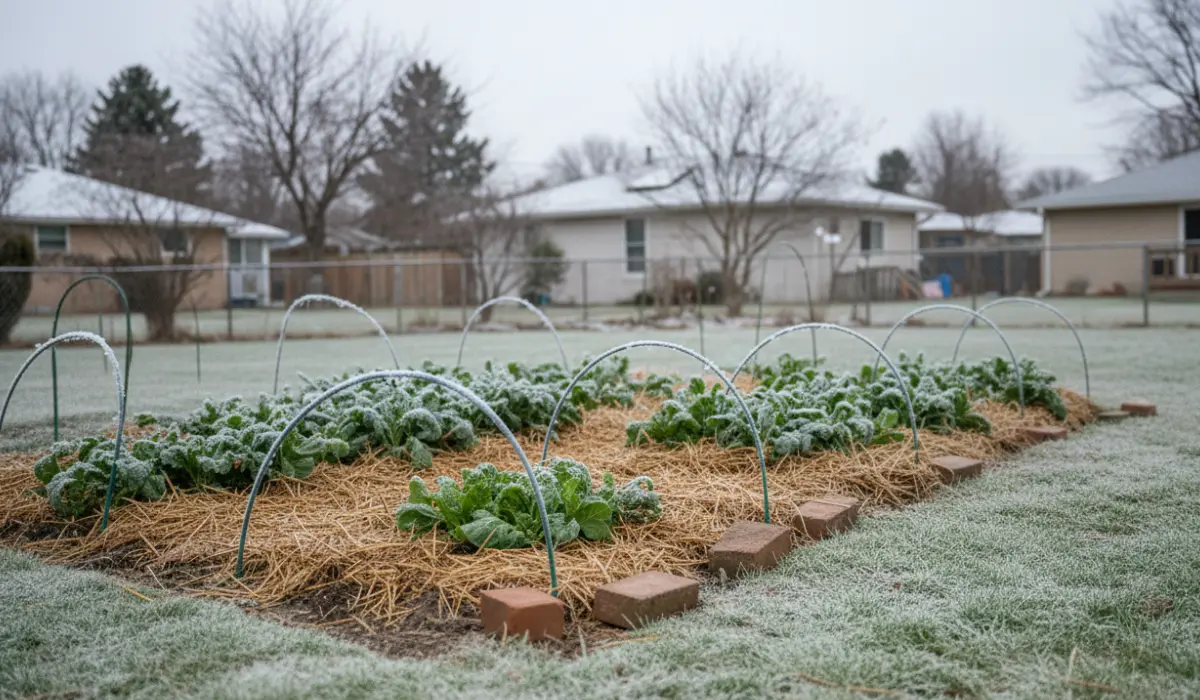
What Happens if You Don’t Cover
Leaving beds uncovered through the winter can be a useful experiment. I’ve done it myself on a few test plots, and the results are eye-opening.
The uncovered beds always lose more topsoil and dry out faster. By spring, the structure feels tighter, almost sealed, and requires more work to loosen before planting.
Microbial activity also drops sharply in bare soil. Without protection, the top few inches become a hostile environment for beneficial life.
You’ll often see a grayish crust form on the surface, a sign that oxygen exchange is limited. In contrast, covered beds stay soft and teeming with life once the ground thaws.
Over time, this difference compounds. The more winters a bed spends covered, the richer and more resilient it becomes.
I can now tell at a glance which sections of my garden were protected and which weren’t. The covered ones need less fertilizer, less water, and bounce back faster after heavy rains or dry spells. That’s a long-term payoff worth the effort.
FAQs
Yes, raised beds lose heat and moisture faster. A layer of straw, compost, or leaves helps stabilize temperature and moisture levels. You can if you choose hardy types like winter rye or hairy vetch. Just make sure to seed them before the ground freezes solid. Do raised beds need covering as much as in-ground beds?
Can I plant cover crops late in the season?