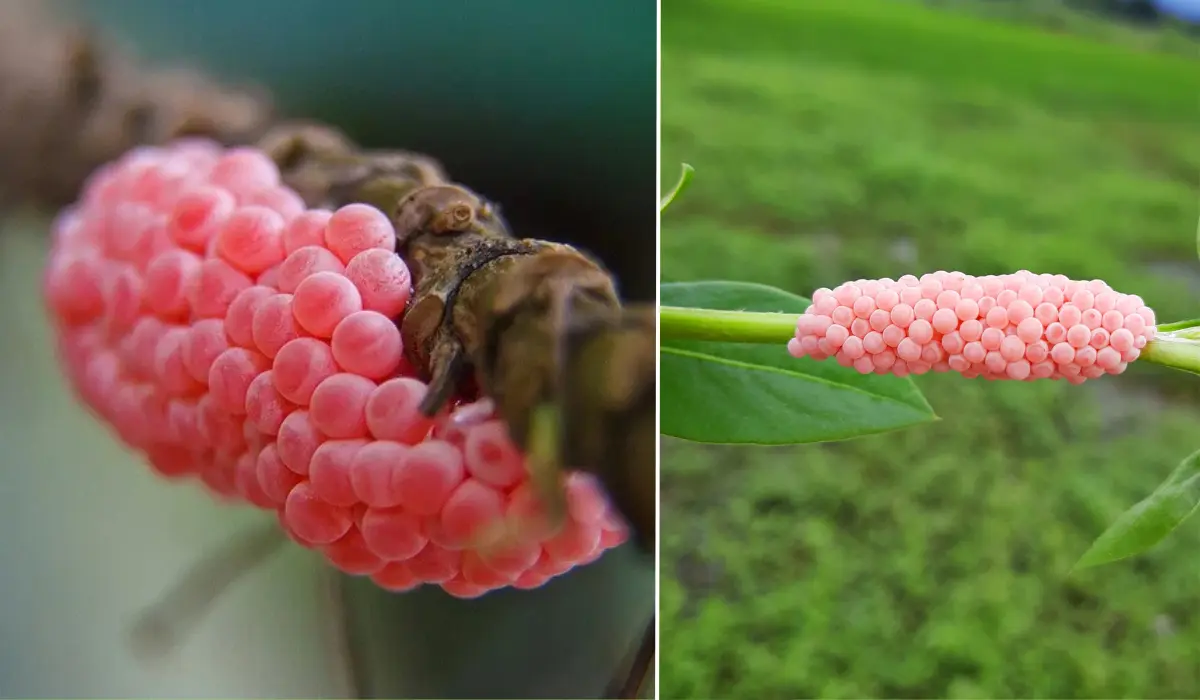
Across gardens and backyards in several parts of the United States, a curious and alarming sight has begun to appear: clusters of bright pink eggs clinging to walls, aquatic plants, and garden structures.
While their color may look harmless or even decorative, these vivid egg masses are anything but innocent. They are the unmistakable warning signs of the golden apple snail, a highly invasive species that poses a growing threat to local ecosystems, agriculture, and even public health.
The Arrival of a Global Pest
The golden apple snail, scientifically known as Pomacea canaliculata, is native to South America but has become one of the world’s most destructive aquatic invaders.
It was first introduced to other regions through the global aquarium trade, where its unusual size and appearance made it popular among collectors.
However, once released into the wild, often by pet owners disposing of aquarium contents, it rapidly adapted to new environments, spreading far beyond its original range.
The species was first confirmed in the United States in 2018, marking the beginning of a slow but steady spread into both natural wetlands and private gardens.
Despite being listed as a prohibited organism across the European Union since 2012, Pomacea canaliculata continues to expand in other parts of the world, including the U.S., where warmer and wetter regions offer perfect breeding conditions.
Also Read: How to Naturally Keep Pests Away from Garden Vegetables
A Snail Built for Survival
What makes the golden apple snail particularly difficult to control is its extraordinary adaptability. Unlike most aquatic snails that remain confined to water, this species can survive both submerged and on land. It thrives in freshwater ponds, rice paddies, canals, and even home garden water features.
When conditions become unfavorable, such as during droughts or low water levels, the snail can burrow into the mud and remain dormant for weeks until moisture returns.
Its breeding strategy adds to the problem. Female apple snails are prolific reproducers, laying hundreds of eggs at a time. These eggs are usually attached to solid surfaces just above the waterline, on rocks, vegetation, bridge supports, or even concrete garden walls.
The clusters, coated in a shocking pink hue, are designed by nature to deter predators by signaling potential toxicity. For humans, however, that color serves as a crucial visual cue to act fast.
Each female can lay thousands of eggs throughout her life, leading to explosive population growth. Once established, these snails can form dense colonies capable of overwhelming an ecosystem within a single season.
Environmental Consequences
The ecological impact of the golden apple snail extends well beyond aesthetic damage to gardens. These snails are voracious herbivores that devour aquatic vegetation, the backbone of many freshwater habitats.
Their feeding habits strip away vital plant cover, which in turn disrupts food chains, reduces oxygen levels, and accelerates the growth of harmful algae. The result is often a cascade of environmental damage that can take years to reverse.
Algal blooms triggered by the loss of plant life create murky, oxygen-depleted water that suffocates fish and other aquatic species. In some regions, these blooms also release toxins that threaten both wildlife and humans who come into contact with contaminated water.
Because these snails can easily move between wet and dry environments, they bring the potential for damage into ornamental ponds, fountains, and any humid garden setting.
Their impact on biodiversity is particularly severe in areas lacking natural predators capable of keeping their numbers in check. With no local species adapted to feed on them effectively, golden apple snails multiply unchecked, forcing native snails and aquatic invertebrates out of their habitats.
Risks to Human Health and Agriculture
Beyond their ecological impact, golden apple snails also pose significant health and agricultural risks. They are known carriers of dangerous parasites, including rat lungworm (Angiostrongylus cantonensis), which can cause a rare but serious brain infection known as eosinophilic meningitis in humans.
Contact with contaminated water or improper handling of the snails and their eggs can expose people to infection. In regions where the snail has become established, health authorities advise wearing gloves when removing egg masses and thoroughly washing hands afterward.
In agricultural zones, the damage is even more alarming. The species is notorious for destroying rice fields, a problem that has devastated farmers in Southeast Asia for decades.
Young rice shoots are especially vulnerable, and even moderate infestations can wipe out entire crops. The U.S. Department of Agriculture has warned that similar damage could occur domestically if the snails spread into commercial rice-growing regions.
Vegetable growers and small-scale farmers are not immune either. The snails feed on a variety of leafy plants and seedlings, undermining food production and creating costly pest management challenges. For organic gardeners and commercial farmers alike, prevention and early detection have become top priorities.
Recognizing and Reporting the Threat
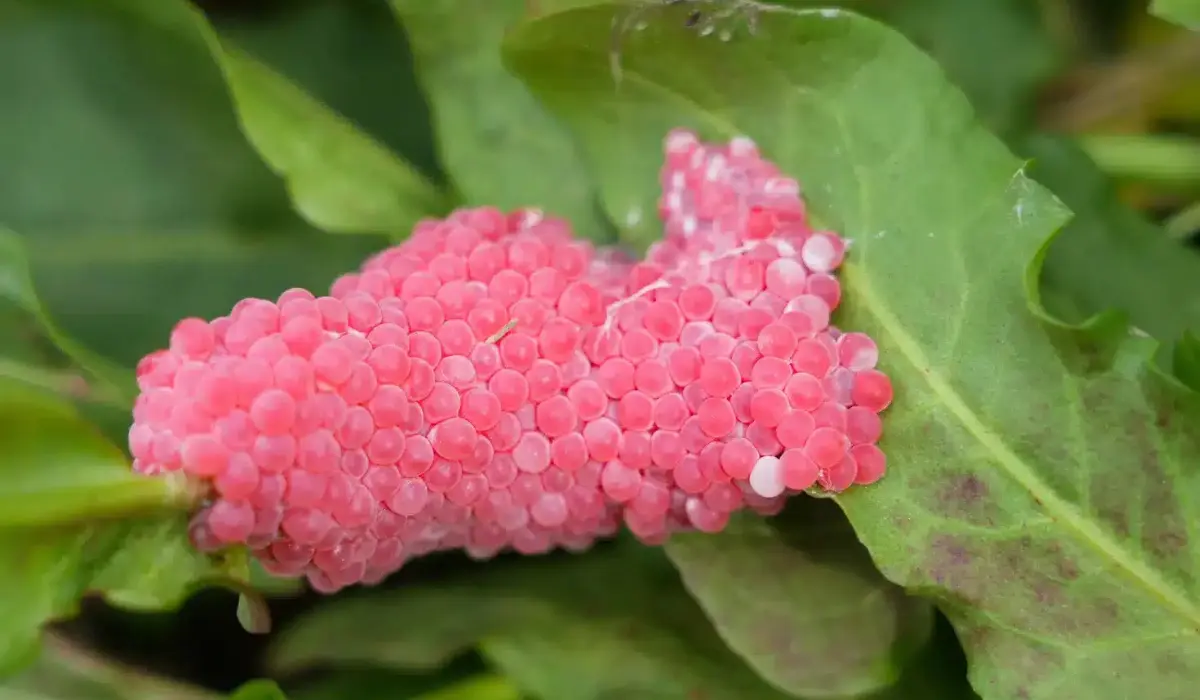
Early identification of the golden apple snail is critical to stopping its spread. The most recognizable sign is the presence of bright pink egg clusters, typically found just above water level on hard or semi-hard surfaces.
These eggs are small, bead-like, and tightly packed in rows, forming a sponge-like mass that stands out vividly against natural backgrounds.
Experts recommend taking immediate action upon discovery. Gardeners are advised not to touch the eggs with their bare hands, as the substance coating them can cause skin irritation.
Instead, sightings should be documented with photographs and reported to local environmental or agricultural authorities for verification.
In some cases, laboratories may analyze samples to confirm whether the eggs belong to Pomacea canaliculata or to less harmful native species.
Containing the threat requires coordination between individuals, communities, and government agencies. Once reported, professionals can oversee safe removal procedures to ensure that neither adult snails nor eggs are accidentally spread to new areas.
How Gardeners Can Protect Their Spaces
For homeowners and gardeners, vigilance is the first line of defense. Regular inspection of ponds, fountains, and other damp environments can help detect early signs of invasion.
Experts recommend draining and cleaning water features periodically, especially during warmer months when snails breed most actively.
Any visible eggs should be carefully scraped off with protective tools and disposed of in sealed bags, never thrown into natural waterways.
Maintaining healthy, balanced garden ecosystems can also reduce susceptibility to invasion. Replacing water-intensive plants with more resilient ground covers, such as clover, and limiting standing water where snails can breed, helps make gardens less appealing to these pests. Collaborating with neighbors to monitor shared water sources ensures broader protection across communities.
It’s also crucial to avoid releasing aquarium species into outdoor environments. Many invasive organisms, including the golden apple snail, were introduced through well-intentioned but harmful releases by pet owners unaware of the consequences.
Proper disposal of aquarium contents, through local pet stores or environmental programs, prevents new outbreaks from starting.
Building Long-Term Defenses
Long-term control of the golden apple snail depends on consistent regional cooperation and public awareness. Once the snails establish a population, eradication becomes nearly impossible; therefore, prevention remains the most effective strategy.
Environmental agencies are developing monitoring programs that track sightings, measure spread rates, and assess the effectiveness of containment efforts.
Education plays a central role in this process. Workshops, online resources, and community watch initiatives help property owners learn to recognize early warning signs and take immediate action.
In some areas, local governments are distributing informational materials urging residents to report pink egg clusters as soon as they appear.
Scientific research is also underway to explore biological control methods that could provide sustainable long-term solutions.
However, introducing new species to combat invaders carries its own ecological risks, meaning that such approaches must be carefully evaluated before implementation.
An Urgent Call for Awareness
The sudden appearance of pink eggs in gardens might seem like a minor curiosity, but it signals a much larger environmental concern.
The spread of Pomacea canaliculata represents yet another chapter in the growing global challenge of invasive species reshaping ecosystems faster than they can recover.
Without early recognition and coordinated action, these small, seemingly harmless snails could trigger long-lasting ecological and economic consequences.
Gardeners, farmers, and residents are being urged to remain alert, share information, and take preventive steps whenever possible.
In the fight against the golden apple snail, quick reporting and informed action are not just responsible choices, they are essential measures to protect local biodiversity and safeguard the health of both people and the environment.