Banana Bunchy Top Virus (BBTV) may not sound like a global crisis, but it’s a silent threat creeping across banana fields worldwide.
Spread by banana aphids and infected planting material, BBTV stunts plants, halts fruit production, and eventually kills them.
Bananas aren’t just a snack; they’re the fourth most important staple crop after rice, wheat, and maize, feeding hundreds of millions daily and powering billion-dollar economies.
Ignoring BBTV isn’t an option, it could upend food systems, devastate livelihoods, and reshape global agriculture in ways we can’t afford.
What is Banana Bunchy Top Virus (BBTV)?
Banana Bunchy Top Virus is one of the most destructive diseases affecting bananas. Infected plants show stunted growth, “bunched” narrow leaves at the top, and often fail to produce fruit.
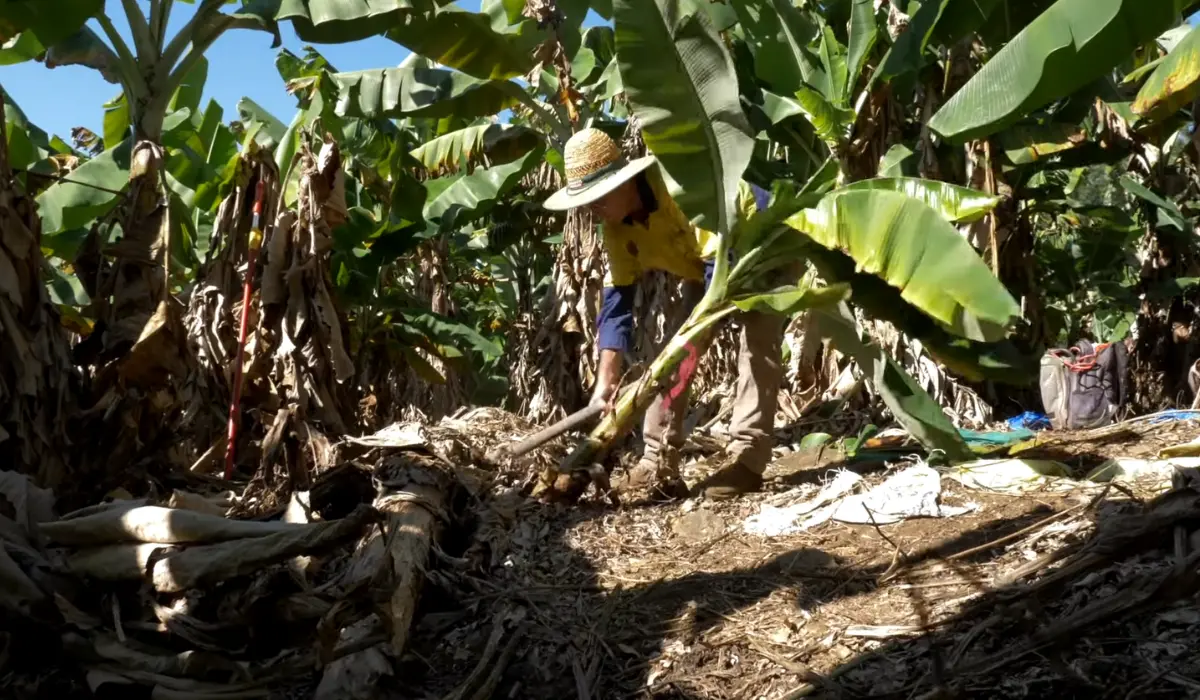
Once a plant is infected, there is no cure, removal is the only option to stop further spread. This makes BBTV uniquely devastating compared to other banana diseases.
The virus spreads mainly through banana aphids, which transfer the disease as they feed on plant sap. Infected suckers (young banana plants) also act as carriers, accelerating transmission when farmers unknowingly replant diseased material.
Because bananas are propagated vegetatively rather than by seed, once the virus is present in a region, containment becomes extremely difficult.
BBTV is no longer a localized issue. Originally detected in Asia, it has spread across the Pacific Islands, Australia, Africa, and beyond.
As global trade and plant movement increase, so does the risk of new outbreaks. Without strong international control measures, BBTV has the potential to establish itself wherever bananas grow, especially in smallholder farming communities that rely on the crop most.
Also Read: Don’t Let Carrot Fly Ruin Your Harvest: Here are Some Effective Ways to Protect Your Plants
Why Bananas Matter in Global Food Security
Bananas are more than just fruit for supermarket shelves. They are a daily staple for over 400 million people, particularly in parts of Africa, Asia, and the Pacific.
In Uganda and Rwanda, for example, bananas account for more than a quarter of calorie intake, making them as vital as rice or wheat in other regions.
The loss of bananas in these regions isn’t just inconvenient, it’s catastrophic.
Beyond food, bananas are a lifeline for smallholder farmers. Millions of families depend on banana sales for income, education, and basic survival.
Unlike cash crops such as coffee or cocoa, bananas provide both nourishment and earnings, making them irreplaceable in rural economies.
A disease that wipes out bananas is effectively wiping out both food security and financial stability.
Globally, bananas are also a multi-billion-dollar export commodity. The Cavendish variety dominates supermarket trade, shipped worldwide, and sustains entire supply chains.
If BBTV spreads unchecked, the collapse of local production will ripple into international markets, raising prices and creating shortages that hit consumers far beyond banana-producing nations.
What Happens If We Ignore BBTV?
1. Collapse of Local Food Systems
Ignoring BBTV risks the complete collapse of banana-based food systems. For subsistence farmers, a banana mat infected with BBTV translates to an immediate loss of both food and planting stock.
Over time, this shrinks production to the point where communities can no longer sustain themselves, forcing reliance on imported food they cannot afford. Malnutrition and hunger would inevitably rise, particularly in countries where bananas are a staple calorie.
2. Economic Devastation
The economic cost of inaction is staggering. Smallholder farmers, already operating on tight margins, cannot absorb yield losses caused by BBTV.
As plantations shrink and exports fall, rural economies unravel, leaving families without livelihoods. Countries dependent on banana exports face declining GDP contributions, reduced trade revenue, and higher unemployment.
This economic fallout doesn’t stop at borders, it disrupts global banana supply chains, increasing prices for everyone.
3. Biodiversity Erosion and Instability
Bananas are already dangerously dependent on monocultures, particularly the Cavendish variety, which has little resistance to disease.
If BBTV continues unchecked, it could wipe out local varieties that have sustained communities for centuries, eroding biodiversity and making bananas even more vulnerable to future threats.
This biodiversity crisis, combined with food and income losses, risks fueling migration, land abandonment, and political instability in regions hardest hit.
Lessons from Ignoring Crop Diseases in the Past
History provides stark warnings. The Irish Potato Famine of the 19th century, caused by potato blight, devastated Ireland’s population and economy.
Millions died or migrated because a staple crop was left defenseless. The lesson: ignoring plant diseases comes with human costs that last for generations.
Bananas themselves carry a cautionary tale. The Gros Michel variety, once the global banana of choice, was wiped out in the mid-20th century by Panama disease.
The switch to Cavendish kept the industry alive, but it also revealed how fragile monoculture systems are. Ignoring BBTV risks repeating this mistake on an even larger scale.
The pattern is clear: delay equals disaster. The longer the world takes to address BBTV, the harder and more expensive it becomes to manage. Unlike pests that can sometimes be controlled, viruses spread silently and relentlessly until they dominate.
History tells us that ignoring BBTV will not make it go away, it will make it unstoppable.
What Needs to Be Done Now
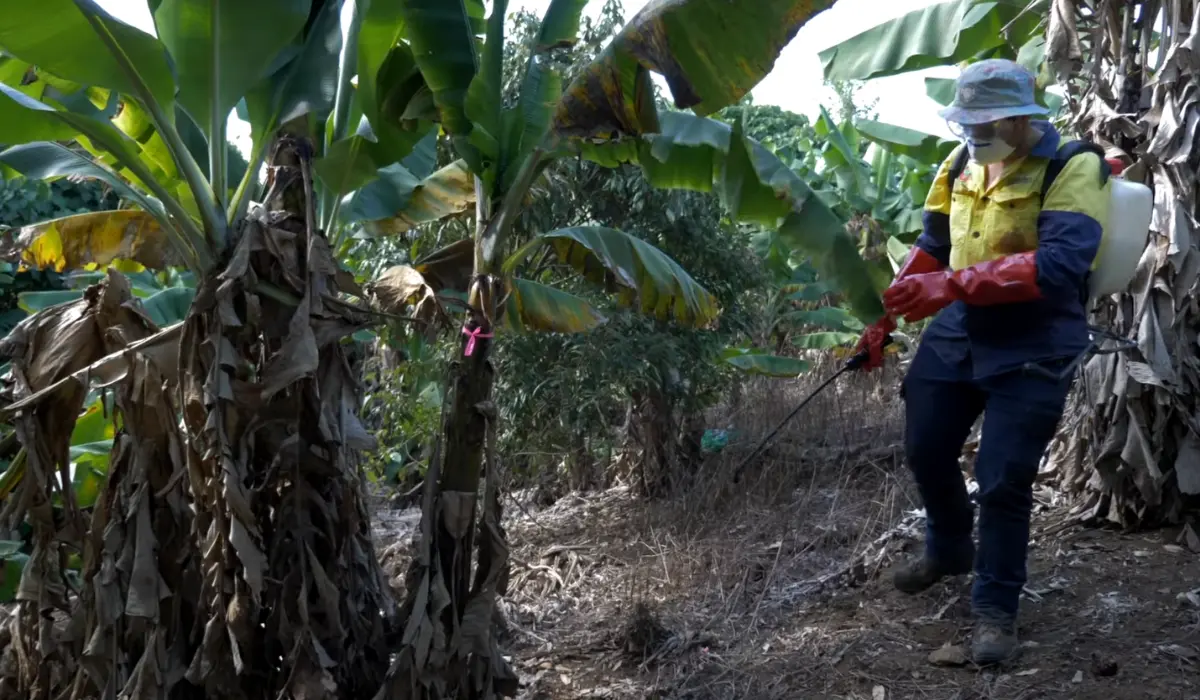
The first step is strengthening early detection and quarantine measures. Farmers and agricultural agencies must be trained to identify symptoms quickly and remove infected plants before the virus spreads.
This requires government investment and international cooperation, as diseases don’t respect borders.
Next, research is vital. Breeding and deploying BBTV-resistant banana varieties could provide long-term solutions, but progress requires funding and collaboration across countries.
Biotechnology, traditional breeding, and local varietal preservation must all be part of the effort.
Finally, farmer education and support are key. Without training, resources, and compensation, farmers have little incentive to remove infected plants.
Empowering them with knowledge and providing financial safety nets will make community-level disease management feasible. Only a united, global response can prevent BBTV from becoming the next agricultural catastrophe.
FAQs
Bananas are a staple food for over 400 million people and provide critical income for millions of smallholder farmers worldwide. No. Infected plants must be removed to prevent further spread, making prevention and early detection essential. By strengthening quarantine measures, breeding resistant varieties, educating farmers, and investing in international cooperation and research. Why are bananas so important to food security?
Can BBTV be cured once a plant is infected?
How can BBTV be stopped?