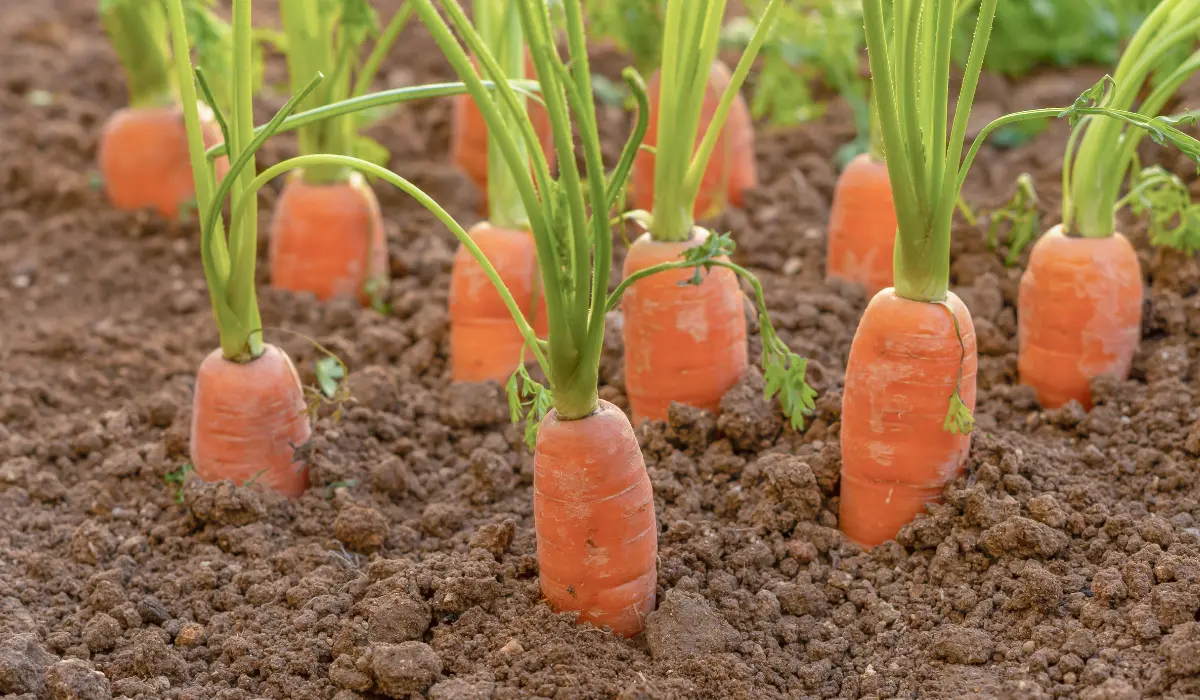
Carrots are one of my favorite crops to grow, but they’re also among the most sensitive. Unlike some vegetables that thrive regardless of their neighbors, carrots demand a little more strategy when it comes to companion planting.
They have delicate roots, are slow to germinate, and are particularly vulnerable to pests. Because of this, the plants I choose to grow around them can make or break the harvest.
I’ve learned the hard way that not every vegetable belongs in the same bed as carrots. While some plants, like onions or leeks, make excellent companions, others disrupt growth, attract the wrong pests, or hog resources.
Today, I want to walk you through eight vegetables that should never share space with your carrot crop, and more importantly, why keeping them apart is essential for a healthy, abundant harvest.
1. Dill
At first glance, dill might seem like a natural ally for carrots. It’s feathery, doesn’t take up much space, and even belongs to the same family. But that’s exactly where the problem starts.
When dill is young, it can appear harmless, but as it matures, it begins competing with carrots for nutrients and sunlight. That competition leads to weaker carrot roots and poor flavor development.
There’s also a pest factor I’ve had to wrestle with in my own beds: dill attracts the carrot rust fly. Once they arrive, they don’t just stick to dill, they move right onto your carrot crop.
The larvae tunnel through roots, leaving them riddled with dark channels that make them unappetizing and sometimes inedible. Planting dill nearby is like putting out a welcome sign for pests.
The final issue is timing. Carrots are slow growers, and dill matures faster. Once the dill bolts and sets seed, it tends to drop those seeds into the soil, spreading itself aggressively.
This throws off the careful balance of a carrot patch and creates chaos for the gardener who wants a neat, reliable crop.
2. Parsnips
Parsnips are another root vegetable that looks innocent enough, but they’re one of the worst neighbors carrots can have. Because they’re from the same family, they share vulnerabilities to many of the same pests and diseases.
When they’re planted together, it’s like laying out a buffet for carrot rust flies, canker, and other root diseases that spread easily between the two crops.
One of the main issues I’ve observed is root canker. If it hits either parsnips or carrots, it doesn’t stay isolated, it spreads, devastating both crops. Instead of healthy, sweet roots, you end up with stunted, blackened ones.
And because parsnips take longer to mature than carrots, the soil remains occupied for months, prolonging the window for disease and pest buildup.
Beyond pests and diseases, there’s the matter of competition. Both crops dig deep into the soil and demand similar nutrients, particularly potassium.
Growing them side by side drains the soil more quickly than if either were grown alone or with a better companion, leaving both weaker than they should be.
Also Read: Why Every Gardener Must Grow These 6 Root Vegetables According to Experts
3. Potatoes
Potatoes are aggressive underground growers, and that makes them terrible neighbors for carrots. Their spreading tubers push into the surrounding soil, disrupting the fine root systems that carrots depend on.
This root disturbance often leads to crooked, forked, or stunted carrots, nothing like the smooth, straight roots we aim for.
On top of that, potatoes bring their own set of pests to the party. Wireworms and nematodes are particularly problematic, and unfortunately, carrots are just as attractive to them as potatoes are.
If you plant these two crops together, you’re essentially doubling the chances of an infestation. Once these pests are in the soil, they’re difficult to control without sacrificing your harvest.
Nutrient competition is another hidden problem. Potatoes are heavy feeders, especially when it comes to potassium and phosphorus.
Carrots also rely heavily on these nutrients for sweetness and strong root development. When potatoes hog them, your carrots end up bland, stunted, or both.
4. Celery
Celery and carrots share many similarities, but that’s precisely why they clash when planted together. Both have shallow root systems and demand consistent moisture, which sets up direct competition in the soil.
If you’ve ever grown celery, you know it’s a water-hungry plant. Place it next to carrots, and the carrots almost always lose out.
The pest overlap is just as concerning. Celery attracts aphids, leaf miners, and carrot rust flies, the very pests you want to keep away from your carrot patch.
Instead of protecting one another, celery and carrots create a hotspot for infestation, which can quickly spiral out of control.
Then there’s the issue of light. Celery grows tall and bushy, shading out slower-growing carrot seedlings. Carrots need plenty of sunlight to fuel root development.
When overshadowed, they put more energy into weak top growth and less into the roots, leaving you with disappointing results at harvest.
5. Fennel
Few plants are as notorious in the companion planting world as fennel. It produces allelopathic chemicals—substances that inhibit the growth of neighboring plants.
Carrots are particularly sensitive to these compounds. Planting fennel nearby often results in stunted, bitter-tasting carrots.
What makes fennel even trickier is its reputation as a pollinator attractor. While it does bring in beneficial insects, it also disrupts the balance in the garden by drawing attention away from crops that need pollination more.
Worse, those same insects don’t always distinguish between helpful and harmful feeding habits, so your carrots may still take damage.
I learned long ago that fennel doesn’t play well with almost anything, and carrots are especially vulnerable. For best results, I keep fennel in its own isolated corner of the garden, far from my root crops.
6. Asparagus
Asparagus is a perennial crop, which means once it’s in the ground, it stays there for decades. That longevity makes it fundamentally incompatible with carrots, which require rotation to avoid pest and disease buildup.
Once asparagus has claimed a space, it limits your ability to rotate carrots or other vulnerable crops through that bed.
Root depth is another factor. Asparagus develops a deep, extensive root system that taps into moisture and nutrients far below the surface.
Carrots may not reach as deep, but they still depend on consistent access to those same resources. When grown together, asparagus outcompetes carrots almost every time.
The mismatch in life cycles also creates challenges. Carrots are annuals, and asparagus shoots dominate in spring when carrots are just germinating.
This overlap leaves carrots struggling to establish themselves in soil already occupied by a demanding perennial crop.
7. Parsley
Parsley may seem like a harmless herb, but when planted next to carrots, it causes more trouble than it’s worth. Because it’s from the same family, it shares pest issues like the carrot rust fly. Instead of reducing risk, planting them together amplifies it, as pests quickly multiply in an environment where their favorite hosts are plentiful.
The growth habit of parsley also creates competition. It forms dense clumps that overshadow small carrot seedlings. This shading slows germination and reduces the early vigor that carrots need to establish strong roots.
In my experience, parsley’s tendency to dominate its immediate space leaves little room for carrots to thrive.
Even the insects parsley attracts can be a double-edged sword. While it may bring in beneficial predators, it also lures pests. The mix often leaves carrots worse off, struggling in an environment where too many variables are working against them.
Also Read: How to Successfully Grow Sweet Potatoes Indoors and Enjoy Endless Harvests
8. Carrots
It may sound odd, but carrots don’t do well when planted back-to-back in the same soil. Continuous planting leads to soil exhaustion, where essential nutrients become depleted.
Because carrots are slow growers, they depend on nutrient-rich soil, and repeated planting leaves them undernourished.
Another issue is pest buildup. Carrot rust fly populations increase dramatically when carrots are planted in the same place year after year.
Instead of giving pests a reason to move on, you’re providing them with a consistent food source. Over time, the damage compounds, leaving entire crops unusable.
Crop rotation is the solution. By moving carrots to different beds each year, you break pest cycles, allow soil nutrients to recover, and ensure your carrots grow healthier and sweeter.
Final Thoughts
Growing carrots successfully is about more than just soil preparation and watering. It’s about creating the right environment, which includes choosing neighbors wisely.
When the wrong plants are nearby, carrots lose their edge, whether through pests, competition, or chemical interference.
By avoiding these eight vegetables around your carrot beds, you give your crop the best chance to thrive. Pair carrots with friendly companions like onions, leeks, or lettuce, and you’ll see the difference in flavor, yield, and root quality.
FAQs
Ideally, keep them in different beds or at least 3–4 feet apart to reduce pest transfer and nutrient competition. Onions, leeks, chives, lettuce, and radishes all work well alongside carrots. Use row covers, practice crop rotation, and interplant with strong-smelling allies like onions. No, composting diseased plants risks spreading pathogens back into your soil. Dispose of them away from your garden. How far apart should I separate conflicting plants?
What are the best carrot companion plants?
How do I naturally prevent carrot rust fly?
Is it safe to compost diseased carrot plants?